




span style=”font-weight: 400;”>Law Offices of Anidjar and Levine handle Orlando head-on truck collision claims by acting quickly to preserve driver logs, black-box data, dash-cam footage, and maintenance records before they disappear.
We coordinate crash reconstruction and medical documentation to prove fault, identify every liable party, and demand compensation for emergency care, future treatment, lost income, and long-term limitations.
We also manage insurer communications and medical liens to protect your recovery.
Next, we explain the steps, deadlines, and evidence that matter most, and how an Orlando Truck Accident Lawyer can help.

Key Takeaways
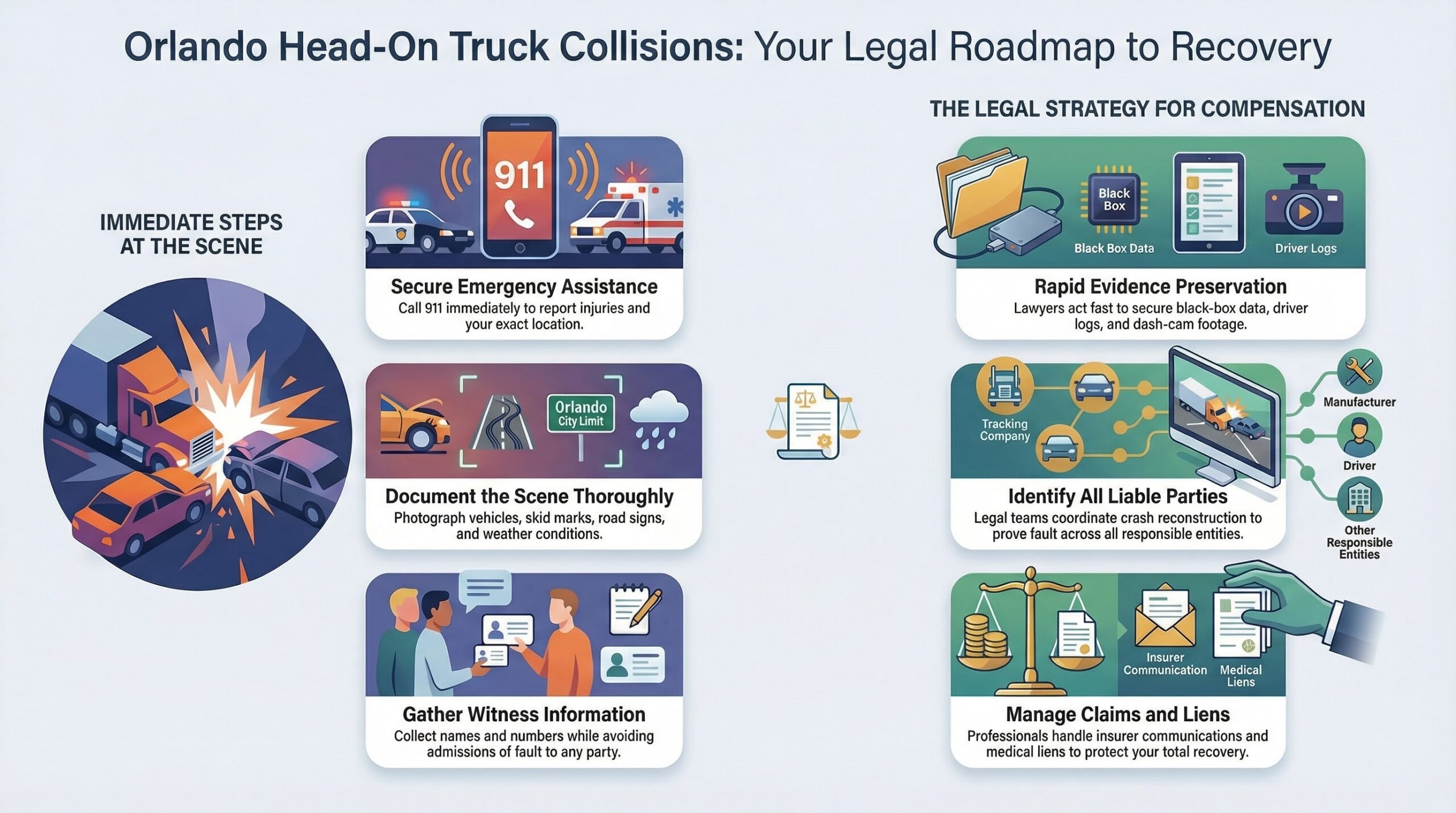
- Get medical help and call 911 immediately; move to safety only if stable, and report exact location, vehicles involved, and urgent injuries.
- Document everything: photos of vehicles, skid marks, debris, road signs, weather, truck markings, and visible injuries as they develop.
- Collect witness names and numbers, write your recollection quickly, and avoid guessing or admitting fault when speaking to police or insurers.
- An Orlando truck collision lawyer can preserve critical evidence fast, including driver logs, black-box data, dash-cam video, and maintenance records.
- A lawyer handles insurers, identifies all liable parties, calculates full damages, manages liens, and negotiates or litigates for fair compensation.
How We Can Help With Your Orlando Head-On Truck Collision Claim
When a head-on truck collision upends your life, we can step in quickly to protect your claim and start building a persuasive case.
We’ll secure essential records, preserve vital evidence, and coordinate with qualified professionals so your story is documented with clarity and accuracy.
We’ll communicate with insurers and opposing counsel, allowing you to focus on medical care and family responsibilities.
We’ll evaluate the full scope of your losses, including income disruption, future treatment needs, and post accident rehabilitation, so your demand reflects what you truly face.
We’ll guide you through settlement negotiation with a steady, service-minded approach, seeking fair terms while preparing as if trial is necessary.
If deadlines or pressure tactics arise, we’ll respond promptly and firmly.
Throughout the process, we’ll keep you informed, explain options in plain language, and act with the diligence your recovery and community commitments require.
Understanding Orlando Head-On Truck Collision Cases
Head-on truck collision claims in Orlando often turn on a clear understanding of how these wrecks happen and why the evidence tends to be heavily disputed.
We work with you to map the timeline, identify every involved party, and preserve vital records before they disappear.
Because commercial carriers control many of the documents, we act quickly to secure driver logs, inspection reports, and trucking company policies that may relate to truck maintenance and safety compliance.
We map the timeline, identify every party, and move fast to preserve logs, inspections, and carrier safety policies.
We also examine the physical scene in detail, including lane markings, sight lines, and any features tied to road design that may shape how investigators interpret the impact.
Medical documentation matters as much as crash proof, so we align treatment records with the mechanics of the collision and the full scope of harm.
Throughout the process, we keep your goals centered on accountability, so the claim supports your recovery and the safety of others.


Common Causes of Orlando Head-On Truck Collisions
We often see Orlando head-on truck collisions begin with preventable driver errors, and we’ll help you understand how they occur.
Driver fatigue and drowsiness, impaired or distracted driving, and unsafe passing or wrong-way actions frequently place a truck into oncoming lanes with little time to react.
Poor visibility and severe weather can intensify these risks, so we’ll explain how these factors combine and why they matter when evaluating liability.
Driver Fatigue And Drowsiness
Driving for long hours without adequate rest remains one of the most dangerous contributors to severe truck crashes in Orlando.
When a commercial driver pushes past safe limits, reaction time slows, judgment weakens, and lane control can fail, creating the perfect conditions for a head-on impact.
We encourage a safety-first mindset because protecting the public is part of serving the community.
Strong sleep management should be treated as a professional obligation, not a personal preference. Even brief lapses can be catastrophic, so microsleep awareness matters for drivers, carriers, and dispatchers who set schedules.
We also look closely at logbooks, delivery deadlines, and rest opportunities to determine whether fatigue played a role.
When you’re harmed, we’ll pursue accountability and promote safer practices across Orlando roads.
Impaired Or Distracted Driving
Long shifts and missed rest often set the stage, but impairment or distraction can be the immediate trigger that sends a commercial truck across the centerline in Orlando.
When a driver looks down to answer a cell phone, adjusts a GPS, or reads a dispatch message, attention drifts for seconds that matter.
Impairment is equally dangerous, whether tied to substance use, misused prescriptions, or alcohol, because it slows reaction time and distorts judgment.
We encourage you to prioritize community safety by reporting unsafe driving and supporting policies that reduce roadway risks.
If a head-on crash occurs, we’ll work to identify the contributing factors, secure essential records, and hold responsible parties accountable, so your recovery can also protect others.
Unsafe Passing Or Wrong-Way
Although many head-on truck collisions start with a brief decision, unsafe passing or wrong-way travel can create a high-speed conflict with almost no time to react.
When a driver attempts to overtake in a no-passing zone, a passing misjudgment can place a truck and oncoming traffic in the same lane, leaving both parties with limited escape options.
Wrong-way crashes often follow a lane reversal on divided roads, at ramps, or after an improper turn, and the size of a commercial truck magnifies the impact.
We help you identify the decisions, signage, and roadway markings involved, then connect them to the duties drivers must follow.
Poor Visibility And Weather
Visibility is a fragile safeguard on Orlando roads, and weather can erase it in seconds.
Heavy rain, fog, and glare can create reduced visibility that hides lane markings and oncoming traffic, leaving truck drivers with little time to correct drift or avoid a crossover.
When windshield wipers, defrosters, or headlights aren’t used properly, that risk escalates, and a head-on impact can occur without warning.
We encourage careful trip planning and disciplined speed control, especially near construction zones and rural stretches where lighting is limited.
Proper weather forecasting matters, because carriers and drivers can adjust routes, delay departures, or add rest breaks before conditions deteriorate.
When a crash happens, we work to identify whether the driver ignored conditions, exceeded safe speed, or failed to maintain required equipment.
Legal Rights of Orlando Head-On Truck Collision Victims
Accountability matters most after a head-on truck collision in Orlando, because the injuries and financial losses can escalate quickly.
We help you understand your legal rights so you can protect your family, support your recovery, and continue serving others without carrying an unfair burden.
After an Orlando head-on truck collision, accountability protects your family, recovery, and future from escalating injuries and financial strain.
Your rights may include pursuing full compensation when a truck driver, carrier, or contractor caused the crash through negligence.
We can also address tactics that delay or underpay valid claims, including Insurance Badfaith, and we work to manage Medical Liens so treatment costs don’t consume your recovery.
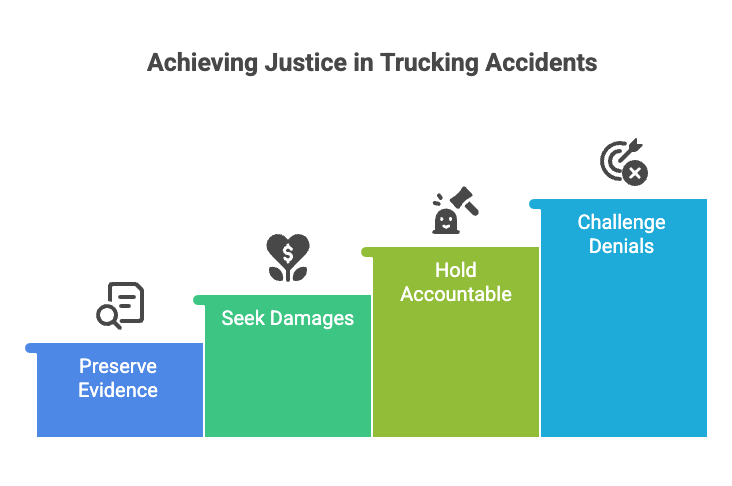
- Demand preservation and disclosure of essential trucking evidence
- Seek damages for medical care, lost income, and future needs
- Hold all responsible parties accountable, not only the driver
- Challenge improper denials, delays, and low settlement offers
We’ll pursue a resolution that reflects the true impact of your injuries and the value of your time, health, and service to others.


Steps to Take After a Orlando Head-On Truck Collision
After an Orlando head-on truck collision, we’ll want to prioritize safety, move to a secure location if we can, and call 911 so emergency responders and law enforcement can document the incident.
We should then document the scene and our injuries, taking photos, noting road and weather conditions, and collecting witness contact information while details remain fresh.
Finally, we’ll notify our insurers promptly and contact a lawyer, so we protect our rights and avoid statements that could compromise a claim.
Ensure Safety And Call 911
In the first moments following a head-on truck collision in Orlando, we need to secure everyone’s safety and call 911 without delay.
We should check ourselves and others for urgent dangers, remain calm, and keep seat belts fastened until it’s safe to exit.
If the vehicle is stable and there’s no fire, we can move to a safer location away from traffic, helping passengers who can walk, and avoiding sudden movements for anyone who may be seriously hurt.
We should activate hazard lights, set out warnings if available, and keep children and bystanders protected.
When we speak with the dispatcher, we must provide our location, the number of vehicles, and any immediate medical needs.
We should also notify our emergency contacts once help is en route.
Document Scene And Injuries
Once 911 has been called and everyone is as safe as possible, we should begin documenting the scene and our injuries while details remain clear and conditions allow.
We’ll take photos and video of vehicle positions, skid marks, debris, road signs, lighting, and weather, and we’ll capture close-ups of damage, license plates, and company markings on the truck.
We should also photograph visible injuries as they develop, noting pain levels, limitations, and any first aid provided, because early images often support later medical documentation.
If we’re able, we’ll write down the time, location, and what we remember about speeds and lane positions.
We can respectfully ask bystanders for names and contact details, and request brief witness statements in their own words.
Notify Insurers And Lawyer
We should follow up quickly by notifying our auto insurer and contacting a lawyer, because early reports and preserved communications often shape how a head-on truck collision claim develops.
We’ll report the crash facts promptly, without guessing about fault, and we’ll note every known injury so coverage questions don’t arise later.
Proper insurance timing matters, since delayed notice can invite denials, reduced payments, or disputes over medical causation.
Next, we’ll prioritize attorney notifications so counsel can send preservation letters, request driver logs and black-box data, and coordinate recorded statements on our terms.
We’ll direct insurers and trucking representatives to communicate through counsel, which reduces pressure and protects consistency. By acting with discipline, we serve our family, our passengers, and the broader community by supporting a fair, accountable claims process.
How a Orlando Head-On Truck Collision Lawyer Can Help You
Although a head-on truck crash can seem straightforward at first glance, the legal and factual issues often become complicated within days.
When we step in, we protect you from pressure, preserve vital evidence, and keep your focus on caring for your family and community.
We apply disciplined Investigation Techniques to identify fault across drivers, carriers, and contractors, then pursue fair outcomes through proven Settlement Strategies, without letting insurers control the narrative.
- We secure crash reports, electronic logging data, and maintenance records promptly.
- We coordinate qualified experts to analyze scene evidence and vehicle damage.
- We handle all insurer communications, preventing harmful recorded statements.
- We calculate losses and demand accountability, then negotiate or litigate as needed.
We’ll also monitor deadlines, file required notices, and prepare a clear case theme that reflects service, responsibility, and safety. Our goal is a resolution that supports your next steps and honors the harm done.
Long Term Effects of Orlando Head-On Truck Collision Injuries
After a head-on truck crash in Orlando, we often see injuries that continue long after the initial treatment ends, and we’ll help you understand what to expect.
We’ll discuss how chronic pain can limit mobility, how brain and nerve damage may affect memory, balance, and daily function, and how these complications can require ongoing care.
We’ll also address psychological trauma and PTSD, which can disrupt sleep, work, and relationships, and may warrant long-term support.
Chronic Pain And Mobility
Living with chronic pain can become one of the most persistent long-term consequences of an Orlando head-on truck collision, especially when injuries involve the spine, hips, knees, or soft tissue.
Even after initial healing, you may face Chronic stiffness that limits bending, lifting, and prolonged standing, which can disrupt work, caregiving, and volunteer commitments.
We encourage you to document daily limitations and flare-ups, because consistent records often clarify how pain affects function over time.
Mobility challenges can also require Mobility aids such as braces, canes, or walkers, along with home modifications to reduce fall risks.
We can help you pursue compensation that supports ongoing therapy, adaptive equipment, and transportation needs, so you can remain engaged in serving others while protecting your long-term independence and dignity.
Brain And Nerve Damage
Uncertainty often defines the early months following an Orlando head-on truck collision when the brain and nervous system absorb traumatic forces that don’t always appear on initial scans.
Even mild concussive injuries can disrupt concentration, sleep, and balance, and symptoms may intensify with exertion or missed rest.
We encourage you to document changes, follow neurologic care, and share updates with your treatment team so providers can tailor rehabilitation and protect your long-term functioning.
Nerve damage may also surface later, with numbness, burning pain, or weakness that signals peripheral neuropathy.
When sensation and motor control decline, everyday service to family, coworkers, and community becomes harder, yet structured therapy and consistent follow-through can restore capacity.
We’ll help you connect medical findings to real-life limitations and future needs.
Psychological Trauma And PTSD
When an Orlando head-on truck collision forces the mind to process sudden threat, psychological trauma can persist long after visible injuries stabilize.
We often see PTSD symptoms such as intrusive memories, hypervigilance, sleep disruption, and avoidance that limits work, driving, and relationships.
We encourage you to watch for Trauma Triggers, including braking sounds, headlights, or specific intersections, because unaddressed reactions can deepen isolation and strain family support systems.
We can help document emotional harm through consistent treatment records and credible accounts from caregivers, coworkers, and clinicians, which may support a full recovery plan.
Effective Therapy Options may include trauma-focused counseling, EMDR, medication management, and structured peer support, coordinated with your medical care.
With steady care and accountability, we can protect your well-being and help you keep serving others safely.
Proving Liability in Orlando Head-On Truck Collision Cases
Establishing fault in an Orlando head-on truck collision demands swift, disciplined fact-gathering, because vital evidence can disappear within days.
We move quickly to secure the police report, scene photos, dashcam footage, and witness statements, then send preservation letters to the carrier to prevent spoliation of central records.
To prove liability, we connect conduct to causation using objective proof.
We review driver logs, hours-of-service records, inspection reports, maintenance files, and cargo documentation to identify fatigue, mechanical failure, or improper loading.
We often rely on forensic reconstruction to map impact angles, speeds, and lane positions, and we corroborate timing with ECM data, toll records, and cellular data when distraction is suspected.
We also evaluate negligent hiring, training, and supervision, because safety failures at the company level can place the public at risk.
Throughout, we present a clear narrative that honors your need for accountability and community safety.
Compensation for Orlando Head-On Truck Collision Damages
Because a head-on truck collision can trigger cascading medical, financial, and personal losses, we build a compensation claim that captures the full scope of harm and ties every dollar to reliable proof.
We document emergency care, surgeries, prescriptions, and post impact rehabilitation, then connect those costs to records, provider statements, and life-care planning when long-term support is needed.
We also pursue wage loss, diminished earning capacity, and out-of-pocket expenses, supported by payroll data and vocational analysis.
For your home and vehicle, we pursue property restoration through repair estimates, valuation reports, and replacement evidence, while accounting for towing, storage, and rental transportation.
When the harm changes daily life, we present pain, suffering, and loss of normal activities with credible narratives, journals, and witness accounts.
Our goal is service-driven: secure resources that help you heal and protect your family’s stability.
The Statute of Limitations for Orlando Head-On Truck Collision Cases
Strong evidence and complete damage documentation only matter if we file your claim on time, and Florida’s statute of limitations sets that deadline for Orlando head-on truck collision cases.
In most situations, the clock begins on the crash date, and waiting too long can bar recovery regardless of fault or need.
Because we serve families and communities best when we act promptly, we encourage you to preserve records, identify witnesses, and seek medical evaluation without delay.
Florida’s filing deadlines can involve statute nuances that affect the correct timeline, including whether the claim sounds in negligence, wrongful death, or another theory tied to the collision.
Certain tolling exceptions may pause or extend the period, such as when the injured person is a minor, when a defendant can’t be located for service, or when fraud conceals pivotal facts.
Even so, tolling is limited, and courts apply it narrowly, so timely action remains vital.
Why You Need an Experienced Orlando Head-On Truck Collision Lawyer
While a head-on truck collision may look straightforward on a police report, these cases rarely are, and the outcome often turns on early, disciplined legal work.
We help you act quickly to preserve dash-cam footage, driver logs, maintenance records, and electronic data that can disappear or be overwritten.
We also coordinate medical documentation so your care reflects the full scope of harm, not just the first emergency visit.
Because trucking claims involve multiple parties and layers of insurance, experience matters when we identify every liable actor and counter tactics designed to minimize responsibility.
We use Local resources, including crash reconstruction professionals and treating providers, to develop clear proof and credible damages.
We also manage Settlement timelines with a service-minded approach, balancing prompt resolution with the patience required to value your losses accurately.
By handling communication, evidence, and negotiations, we protect your time and energy, so you can focus on recovery and caring for others.
How to Choose the Right Orlando Head-On Truck Collision Lawyer for Your Case
Early evidence work and disciplined claim handling set the foundation for a head-on truck collision case, but your results will still depend on who leads that effort.
We should choose counsel who treats the case as a service obligation, protecting your recovery so you can care for your family and community.
We can start by evaluating experience with trucking litigation, including federal safety rules, crash reconstruction, and insurer tactics.
During initial client interviews, we should notice whether the lawyer asks focused questions, listens carefully, and explains next steps without overpromising.
We should also confirm who’ll manage the file day to day, how often you’ll receive updates, and how the team coordinates medical records, wage proof, and damage documentation.
Transparent fee structures matter, so we should request the written agreement, learn what costs may be advanced, and clarify how settlement funds are distributed.
Finally, we should review professional standing and trial readiness, because serious cases require credible preparation.
About the Law Offices of Anidjar and Levine
Anidjar and Levine’s team approach brings structure and accountability to truck collision claims, and we use it to move cases forward without needless delay.
We assign clear roles, maintain steady communication, and track deadlines so you’re not left wondering what happens next.
Our goal is to serve you with consistency, professionalism, and respect at every stage.
Our firm history reflects a practical focus on helping injured people recover and regain stability after serious crashes.
We investigate liability, preserve evidence, and coordinate with medical providers so your damages are presented accurately and responsibly.
We also prepare each claim as if it will be tried, because thoughtful preparation supports fair negotiation.
If litigation becomes necessary, we advocate firmly while staying mindful of the impact your case has on your family and community.
We invite you to review client testimonials, because they show how we keep our promises and follow through.
Frequently Asked Questions
Will My Immigration Status Affect My Ability to File a Claim?
In most cases, your immigration status won’t prevent you from filing a claim. We can pursue compensation based on the facts of the injury, while handling immigration documentation carefully and limiting unnecessary disclosure.
If language barriers exist, we’ll arrange qualified interpretation so your statement stays accurate and complete. We’ll also advise you on risks, protect your privacy, and coordinate with trusted resources so you can focus on healing.
Can I Recover Damages if I Wasn’T Wearing a Seatbelt?
Yes, we can still pursue damages if you weren’t wearing a seatbelt. Florida’s comparative negligence rules may reduce your recovery based on how much the lack of a seatbelt worsened your injuries, but it doesn’t automatically bar a claim.
We also address common seatbelt myths by focusing on medical evidence and crash dynamics, then presenting a fair allocation of fault. We’ll advocate firmly, so resources can support healing.
What if the Truck Driver Was an Independent Contractor, Not an Employee?
If the truck driver was an Independent Contractor, we can still pursue compensation, but Liability Allocation may require deeper investigation.
We’ll examine who controlled the driver’s work, maintained the vehicle, set routes, or required specific safety practices.
We can also evaluate the carrier’s hiring, supervision, and compliance duties, and identify any responsible brokers or shippers.
How Do I Handle Medical Bills if I Have No Health Insurance?
We handle medical bills without health insurance by coordinating prompt care while controlling costs.
We request itemized statements, dispute improper charges, and negotiate discounts with providers.
When cash flow is limited, we set payment plans that match your budget and prevent collections.
We may also use medical liens, allowing treatment now while repayment comes from any settlement or judgment, preserving resources so you can focus on recovery and serving others.
Can I Pursue Compensation if the Crash Worsened a Pre-Existing Injury?
Yes, we can pursue compensation when a crash worsens a prior condition, because the law recognizes pre existing aggravation and holds the at-fault party responsible for added harm.
We’ll document your baseline health, then compare it to post-crash symptoms, treatment, and functional limits.
Even if comparative liability reduces recovery, it doesn’t bar it outright.
We’ll act promptly, coordinate records, and present clear medical causation evidence.
———————————
If you’ve been hurt in an Orlando head-on truck collision, Law Offices of Anidjar and Levine can help you protect your rights and pursue full compensation.
We’ll investigate the crash, preserve essential evidence, and address insurers and trucking companies that may try to limit your recovery.
We’ll also explain deadlines, document your losses, and build a claim grounded in the facts and Florida law.
Learn more by visiting our Orlando Truck Accident Lawyer page, and when you’re ready, we’ll review your options and move forward with purpose.


We Can Help.