




If you’ve suffered a small bowel obstruction injury in Miami, Law Offices of Anidjar and Levine can help protect your rights while you focus on recovery.
You’ll get help gathering complete medical records and imaging, documenting symptoms, lost income, and daily limitations, and identifying whether negligence, delayed diagnosis, surgical error, or unsafe conditions caused your harm.
Your attorney can manage insurers, challenge denials, negotiate firmly, and prepare to file suit before deadlines, all on a contingency-fee basis. Learn more from a Miami Medical Malpractice Lawyer.
Main Takeaways
- A Miami small bowel obstruction injury lawyer evaluates whether negligence caused delayed diagnosis, surgical error, improper discharge, or unsafe conditions leading to harm.
- Counsel gathers complete records, imaging, and timelines, then uses medical experts to prove duty, breach, causation, and damages.
- Your lawyer handles insurers, denials, and settlement demands while you focus on treatment and recovery, protecting your privacy and dignity.
- Damages are documented for medical needs, lost income, and daily impacts, with readiness to escalate to litigation if negotiations stall.
- Expect contingency fees with clear cost terms, plus strict deadline tracking, including possible pre-suit requirements and discovery-rule issues in Florida.
How We Can Help With Your Miami Small Bowel Obstruction Injury Claim
When a small bowel obstruction is tied to another party’s negligence, you don’t have to manage the legal and insurance fallout on your own.
You can focus on recovery while you let counsel organize the claim, communicate with insurers, and protect your time and dignity.
Focus on healing while counsel manages the claim, handles insurers, and safeguards your time and dignity.
You’ll get structured help from the start, including evidence coordination, record review, and clear timelines for next steps.
You can rely on a transparent Fee Structure, so you understand costs, contingency terms, and what happens if the claim doesn’t resolve.
You’ll also receive practical Settlement Strategies designed to support fair compensation, such as documenting medical needs, loss of income, and the real impact on daily service to others.
If negotiations stall, you can expect firm advocacy, disciplined correspondence, and readiness to escalate without unnecessary conflict.
Throughout, you’ll stay informed, your questions will be answered promptly, and your goals will guide each decision.
Understanding Miami Small Bowel Obstruction Injury Cases



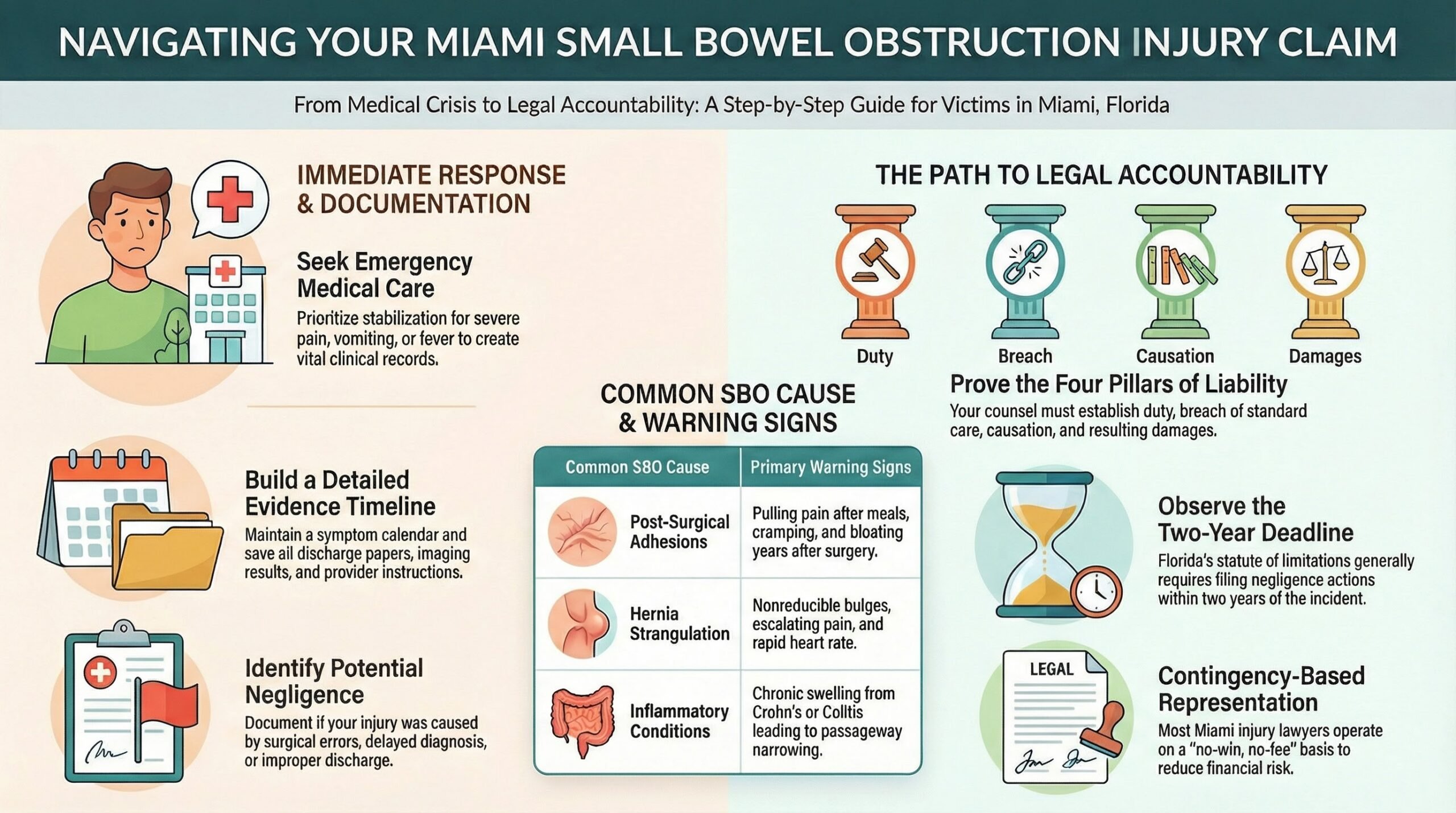
Although a small bowel obstruction is a medical emergency, Miami injury cases often turn on whether someone’s carelessness caused the condition or delayed proper treatment long enough to worsen the outcome. You must show duty, breach, causation, and damages, and you should expect close review of timelines, symptoms, and handoffs between providers.
Diagnostic imaging often becomes central because films and CT results may confirm the obstruction, reveal warning signs, or show when escalation is required.
| Focus area | What you document |
|---|---|
| Medical timeline | Onset, reporting, reassessments, and response times |
| Clinical decisions | Orders, consults, imaging reads, and discharge rationale |
| Communication | Informed consent, patient education, and follow-up instructions |
You serve others best when you preserve records early, document what you observed, and identify all organizations involved. If delays, misreads, or inadequate instructions increased complications, those details can clarify responsibility and support a just resolution.

Common Causes of Miami Small Bowel Obstruction Injuries
If you’re facing a small bowel obstruction in Miami, you should know that several common causes often appear in injury claims, and each can shape how fault and damages are evaluated.
You may be dealing with post-surgical adhesions, a hernia that traps and strangulates the bowel, or tumors and other growths that narrow the intestinal passage. You could also have an inflammatory bowel condition that triggers swelling and blockage, so you’ll want to identify the precise cause early and document how it developed.
Post-Surgical Adhesions
Because abdominal surgery can trigger a strong repair response, post-surgical adhesions remain one of the most common causes of small bowel obstruction injuries in Miami. You may develop bands of scar-like tissue that tether loops of intestine, limiting motion and narrowing passages, even years after a procedure.
When you serve others, you also protect yourself by recognizing early warning signs, reporting persistent cramping, vomiting, and bloating, and seeking prompt evaluation.
| What you might notice | What it can mean |
|---|---|
| Tight pulling pain after meals | Bowel loops bound by adhesions |
| Swelling with nausea | Passageway partially blocked |
| Sudden worsening symptoms | Higher risk of complete obstruction |
You can ask surgeons about adhesion barriers and preventive techniques, and you should keep careful records if care fell below accepted standards.
Hernias And Strangulation


Post-surgical adhesions aren’t the only structural problem that can block the small intestine, as hernias can trap bowel segments and cut off normal passage. When you serve others, you also need to recognize warning signs early, because delayed care can turn a manageable condition into an emergency.
Inguinal hernias may bulge with standing or lifting, then become painful, firm, and nonreducible when bowel becomes trapped. This “incarceration” can progress to strangulation, where blood flow falls, and bowel ischemia begins.
You may notice escalating abdominal pain, nausea, vomiting, bloating, or inability to pass gas, along with fever or rapid heart rate.
You can help protect your community by encouraging prompt evaluation, imaging, and surgical consultation, since timely repair can prevent tissue death and serious infection.
Tumors And Growths


Although adhesions and hernias often draw the most attention, tumors and other abnormal growths can also narrow the small intestine and trigger a dangerous obstruction. You may face blockage when a mass grows within the bowel lumen, compresses it from outside, or disrupts normal motility.
Benign neoplasms can still cause significant narrowing, bleeding, or intermittent symptoms that delay diagnosis. More concerning, a lesion can undergo Malignant transformation, leading to faster growth, invasion, and a higher risk of complete obstruction.
You should seek prompt evaluation if you notice persistent vomiting, worsening abdominal pain, distention, or inability to pass stool or gas. When you serve others, you protect families by urging timely care, documenting symptoms, and ensuring follow-up that doesn’t lapse.
Inflammatory Bowel Conditions
When chronic inflammation repeatedly irritates the intestinal lining, it can narrow the small bowel and set the stage for a serious obstruction.
If you live with Crohn’s disease or Ulcerative Colitis, ongoing swelling and scar formation can tighten the passageway, slowing digestion until it stops.
You’ll often notice cramping, bloating, nausea, and an inability to pass gas, and you should treat these signs as urgent.
You can also reduce risk by identifying Dietary Triggers that intensify flares, following a clinician’s plan, and staying alert to dehydration and weight loss.
When an inflammatory condition leads to an obstruction, your careful documentation and prompt treatment protect not only your health, but also the people who rely on your steady service.
Seek evaluation early, because delays increase complications and recovery time.

Legal Rights of Miami Small Bowel Obstruction Injury Victims
How do you protect your future after a small bowel obstruction turns a routine medical course into a life-altering injury? In Miami, you hold legal rights that can restore stability and help you continue serving your family and community.
You may seek compensation for medical costs, lost income, and reduced earning capacity, and you can also pursue damages for pain, impairment, and loss of enjoyment of life.
You retain Privacy Rights over your health information, and you can control who accesses records beyond what the law requires.
If an insurer denies coverage or a claim, you can challenge that decision through an Appeals Process, often with strict deadlines and documentation requirements.
- Demand complete medical records and billing transparency
- Request an internal review and, when available, an external appeal
- Preserve your right to a fair evaluation of long-term limitations
- Assert accountability when negligent care or delay caused harm

Steps to Take After a Miami Small Bowel Obstruction Injury
After a Miami small bowel obstruction injury, you should seek immediate medical care, since prompt evaluation and treatment can protect your health and create vital clinical records.
You should also document your symptoms and timeline, noting when the pain began, what you ate, any prior procedures, and any medical visits or instructions you received.
Once you’re medically stable, you should contact a Miami lawyer so you can preserve evidence, avoid missteps with insurers, and assess potential liability.
Seek Immediate Medical Care
Although it may feel manageable at first, a suspected small bowel obstruction demands immediate medical attention because delays can quickly lead to serious complications.
You should go to an emergency department or call 911 if you notice emergency indicators such as severe abdominal pain, persistent vomiting, fever, a rigid abdomen, fainting, or inability to pass gas.
Acting promptly protects your health and helps you remain able to serve others who depend on you.
At the hospital, you’ll receive immediate stabilization, including critical sign monitoring, IV fluids, pain control, and diagnostic imaging to confirm the blockage.
Clinicians may place a nasogastric tube to relieve pressure, and they’ll evaluate whether surgery is necessary.
Follow every medical instruction, ask clear questions about restrictions and follow-up care, and don’t attempt home remedies or delayed self-transport.
Document Symptoms And Timeline
Once your condition is stabilized, you should start documenting your symptoms and building a clear timeline of events, since these details can shape both your medical care and any future legal claim.
Use a Symptom Calendar to record pain level, nausea, vomiting, fever, abdominal distention, bowel changes, and what you ate or drank, noting time, duration, and triggers.
Save discharge papers, test results, prescriptions, and follow-up instructions, and write down every provider visit, phone call, and transport time.
If you’re supported by family or volunteers, ask them to keep Caregiver Notes describing what they observed, what you reported, and how symptoms affected daily tasks.
Take dated photos of swelling or bruising when appropriate.
Keep everything organized and secure.
Contact A Miami Lawyer
When should you contact a Miami lawyer following a small bowel obstruction injury? You should reach out as soon as you’re medically stable and you’ve documented symptoms and your timeline, especially if you suspect negligent care, a defective device, or unsafe premises.
Early counsel helps you protect evidence, avoid harmful statements, and meet strict filing deadlines.
You can serve your family and community by acting responsibly and seeking guidance that supports fair accountability.
During the first call, share your hospital records, imaging dates, discharge instructions, and any expenses or missed work.
Discuss your communication preferences, including phone, email, or secure portal updates, so you stay informed without added strain. Request prompt appointment scheduling, and bring a concise list of questions, witnesses, and insurance contacts to streamline the consultation.

How a Miami Small Bowel Obstruction Injury Lawyer Can Help You
Handling a small bowel obstruction injury claim can feel overwhelming, especially if you’re managing ongoing symptoms, mounting medical bills, and time away from work.
A Miami small bowel obstruction injury lawyer helps you regain control by organizing evidence, guiding decisions, and protecting your ability to serve your family and community.
A Miami small bowel obstruction injury lawyer restores control—organizing evidence, guiding choices, and safeguarding your ability to support family and community.
You’ll receive clear counsel, steady communication, and a plan designed to move your claim forward efficiently.
- Coordinate records and appointments as a medical liaison to ensure your treatment story is documented accurately.
- Handle insurance navigation, including calls, forms, denials, and settlement demands.
- Investigate fault, preserve critical evidence, and work with qualified experts when needed.
- Calculate current losses, negotiate firmly, and prepare the case for court if talks stall.

You don’t have to face insurers alone or guess at deadlines.
With focused advocacy, you can prioritize recovery while your lawyer pursues accountability and fair compensation.
Long-Term Effects of Miami Small Bowel Obstruction Injuries
After a Miami small bowel obstruction injury, you may face chronic digestive complications that disrupt normal eating patterns and limit daily activity.
You can also experience recurrent episodes of obstruction, which often require ongoing monitoring, repeat imaging, or additional procedures.
Over time, you may develop nutritional deficiencies that affect energy, recovery, and overall health, making consistent medical follow-up necessary.
Chronic Digestive Complications
Although a small bowel obstruction may resolve with prompt treatment, many Miami injury victims don’t return to normal digestion because the underlying damage can persist long past the initial emergency.
You may develop ongoing bloating, abdominal pain, and unpredictable bowel habits when inflammation, scarring, or disrupted motility interferes with nutrient movement and absorption.
Your care team may pursue an SIBO diagnosis if bacteria overgrow in stagnant segments, and that overgrowth can worsen fatigue, weight loss, and food intolerance. Gut dysbiosis may also follow hospitalization, antibiotics, or reduced intake, leaving you vulnerable to chronic diarrhea or constipation.
You can better serve your family and community by documenting symptoms, following dietary guidance, and seeking coordinated gastroenterology care that addresses long-term function, not just the crisis.
Recurrent Obstruction Episodes
When scar tissue, adhesions, or lingering inflammation remain in your abdomen, a small bowel obstruction can recur without much warning, even months or years after the initial Miami injury.
You may cycle between relative stability and sudden flare-ups that require urgent evaluation, imaging, or hospitalization, disrupting routines you’ve rebuilt to care for others.
Each episode can intensify pain, nausea, and dehydration, and it can leave you cautious about meals, activity, and access to nearby medical care.
Recurrent episodes often create Employment challenges, since unpredictable absences and lifting limits can strain performance and reliability. You may also face Travel restrictions, avoiding long drives, flights, or remote service trips where treatment options are limited.
Documenting symptoms, ER visits, and work impacts helps you advocate clearly for appropriate medical planning and legal support.
Nutritional Deficiencies Impact
Managing nutrition can become a long-term challenge with a Miami small bowel obstruction injury, because reduced intake, repeated vomiting, and bowel rest orders can steadily drain your body’s reserves. When calories and protein stay low, you’ll lose strength and recover slowly, which limits your ability to care for others with steady energy.
Poor absorption of iron, B12, and folate can worsen fatigue and shortness of breath, while low vitamin D and calcium raise fracture risk. Ongoing electrolyte shifts may trigger weakness and heart rhythm concerns, so you must monitor labs and symptoms closely.
If deficiencies persist, Immune suppression can increase infections, and Cognitive decline can affect focus, judgment, and safe decision-making. You can reduce harm by following dietitian plans, tracking intake, and seeking timely medical review.
Proving Liability in Miami Small Bowel Obstruction Medical Malpractice Injury Cases
Because a small bowel obstruction can escalate quickly, proving liability in a Miami medical malpractice case requires a disciplined showing that a provider’s choices fell below accepted standards and directly caused your injury.
You’ll need to document what happened, when it happened, and what a careful clinician would’ve done instead, such as ordering timely imaging, recognizing red-flag symptoms, or escalating to surgical consultation.
You strengthen your case through Expert Testimony from qualified experts who can explain the standard of care and identify clear departures, including delayed diagnosis, improper discharge, or failure to monitor worsening signs.
You also need a Causation Analysis that connects each breach to the specific harm, separating unavoidable disease progression from preventable injury.

Compensation for Miami Small Bowel Obstruction Damages
How do you place a fair value on the harm a small bowel obstruction causes after preventable medical errors in Miami?
You start by documenting how the injury changed your daily life and your ability to serve your family and community.
Document how the obstruction changed your daily life and your ability to show up for family and community.
Compensation can include medical bills, follow-up care, medication costs, and any future treatment tied to complications or recurrent obstruction.
You also seek recovery for lost earnings, including missed work, reduced capacity, and benefits you would’ve received but for the injury.
You shouldn’t overlook non-economic losses that often carry the deepest weight.
Pain, reduced mobility, dietary restrictions, and fatigue can limit your independence and your ability to help others.
Your claim may also include emotional damages, such as anxiety about eating, fear of recurrence, and strain on close relationships.
The Statute of Limitations for Miami Small Bowel Obstruction Injury Cases
Strong documentation can support full compensation, but it won’t matter if you miss the filing deadline set by Florida’s statute of limitations.
In Miami small bowel obstruction injury cases, you must track Claim Deadlines from the start, because courts usually dismiss late lawsuits regardless of validity.
For most negligence actions in Florida, the limitations period is generally two years, though specific facts can change how the clock runs.
If your obstruction stems from medical treatment, additional notice rules or presuit steps may apply, and delays can become costly.
You should also understand the Discovery Rule, which may start the time period when you knew, or reasonably should’ve known, that negligence caused your harm.
Even then, waiting can weaken your ability to serve your family and community, since records, memories, and witnesses fade.
Protect your options by identifying the incident date, the discovery date, and any tolling issues quickly.
Why You Need an Experienced Miami Small Bowel Obstruction Injury Lawyer
Although your diagnosis may seem straightforward, small bowel obstruction injury claims in Miami rarely are.
An experienced lawyer can protect you from missteps that reduce or eliminate your recovery.
You’re often facing overlapping medical issues, unclear causation, and aggressive insurers, so you need counsel who can frame the timeline, secure records, and preserve evidence before it disappears.
Overlapping medical issues, disputed causation, and aggressive insurers demand counsel who secures records and preserves evidence before it disappears.
An experienced Miami small bowel obstruction injury lawyer applies Risk Mitigation from day one, coordinating qualified medical review, documenting complications, and preventing damaging statements or gaps in care.
You also benefit from disciplined damages development, including future treatment needs, lost income, and the daily limitations that affect how you serve your family and community.
When negotiations stall, Trial Readiness matters because insurers pay attention to cases prepared for courtroom scrutiny.
Your lawyer can craft persuasive demand packages, challenge biased evaluations, and present a coherent narrative that honors your work ethic while insisting on full, fair accountability.
How to Choose the Right Miami Small Bowel Obstruction Injury Lawyer for Your Case
A medical chart can tell a different story than the one an insurer tries to sell, so you should choose your Miami small bowel obstruction injury lawyer with the same care you’d give your treatment plan. Start by confirming the attorney handles obstruction claims tied to negligence, delayed diagnosis, surgical error, or unsafe conditions, and ask for examples of similar results.
Review credentials, court experience, and willingness to bring in medical experts who can explain causation and future care needs.
You should also evaluate fee transparency early, including how costs are advanced, what happens if you don’t recover, and which expenses may reduce your net outcome. Pay close attention to communication style, because consistent updates help you protect your health, your family, and the community you serve.
Choose a lawyer who listens, answers promptly, and coordinates evidence gathering while you focus on recovery. Finally, make sure you feel respected, informed, and prepared for each decision.
About the Law Offices of Anidjar and Levine
Client-first advocacy defines the Law Offices of Anidjar and Levine, and you can expect a structured, evidence-driven approach from the first call.
You’ll receive clear guidance on medical records, incident documentation, and next steps, so you can focus on recovery while your case moves forward with purpose.
The team communicates consistently, returns calls promptly, and prepares each claim as if it will be tested in negotiation or trial.
Your decision also benefits from the Firm History, which reflects disciplined preparation, steady growth, and a focus on measurable results for injured clients.
You’re not treated as a file number; you’re supported as a person whose health and stability matter.
Through Community Involvement, the firm aligns its practice with service, supporting local efforts that strengthen South Florida families and improve access to help.
When you work with the firm, you partner with advocates who value accountability and practical compassion.

Frequently Asked Questions
What Is a Small Bowel Obstruction, and How Is It Diagnosed?
A small bowel obstruction occurs when something blocks your small intestine, preventing normal movement of food, fluids, and gas.
In your Symptoms Overview, you’ll often note cramping pain, bloating, vomiting, and inability to pass stool or gas.
You diagnose it based on history and exam, then confirm with Diagnostic Imaging, typically an abdominal X-ray or CT scan, which shows dilated loops, air-fluid levels, and the likely site of the blockage.
Early diagnosis supports safer care.
Can I Travel After Surgery if I Have a Bowel Obstruction Risk?
You can travel after surgery, but you shouldn’t do so until your surgeon confirms you’re stable and your symptoms are controlled.
Plan conservative routes, avoid remote areas, and maintain consistent hydration and diet to support your recovery.
Use strong Medication Management, carry a current medication list, and know local emergency options.
Purchase Travel Insurance that covers postoperative complications, and share your itinerary so you can still serve others safely.
Will My Immigration Status Affect My Ability to File a Claim?
Your immigration status usually won’t prevent you from filing a personal injury claim, and you can still pursue fair compensation.
You should ask your attorney about Confidential Reporting practices, because privacy protections can limit unnecessary disclosure. Deportation Risk typically doesn’t increase just because you file a claim, yet you must avoid statements that create separate legal exposure.
How Are Attorney Fees Handled in a Small Bowel Obstruction Injury Case?
You’ll usually pay attorney fees through Contingency Agreements, so you don’t pay upfront, and your lawyer collects only if you recover compensation.
You’ll review a clear Fee Breakdown that lists the percentage, litigation costs, and how medical liens get handled.
Ask who advances the filing fees and expert expenses, since those may be recovered from the recovery. You should insist on written terms, so you can focus on recovery and serving your family.
Can My Case Be Resolved Without Going to Court?
Yes, you can often resolve your case without going to court.
You typically pursue settlement negotiations supported by medical records, liability evidence, and clear documentation of losses, which can encourage a fair agreement.
If talks stall, you can use mediation options to reach a structured resolution while conserving time and resources. You’ll still prepare as if a trial could occur, because readiness strengthens your position and supports just outcomes.
—————————
When you face a small bowel obstruction injury in Miami, you can’t afford delays or guesswork. You should document your symptoms, follow medical advice, and preserve records that show how the injury occurred and what it’s costing you.
You also need to act within Florida’s filing deadlines, or you could lose your right to recover compensation.
With the Law Offices of Anidjar and Levine and guidance from a Miami Medical Malpractice Lawyer, you can build a strong claim, negotiate from a position of strength, and pursue accountability.


We Can Help.