




After a misdiagnosis in Miami, you should obtain a prompt medical reevaluation, then retain every record, test result, portal message, and expense receipt.
You can pursue a Florida medical malpractice claim when a provider fails to meet the accepted standard of care, and that delay or error worsens your outcome.
You may seek damages for added medical costs, lost income, future care, pain, and reduced quality of life.
Florida’s notice rules and deadlines make early legal help critical—Law Offices of Anidjar and Levine can explain your options; learn more here: Miami Medical Malpractice Lawyer.
Main Takeaways
- Seek immediate medical reevaluation to correct harmful treatment plans and limit complications from a suspected misdiagnosis.
- Preserve evidence by requesting complete medical records, imaging, prescriptions, and portal messages, plus a dated symptom and contact timeline.
- A Miami misdiagnosis injury lawyer can identify standard-of-care departures and prove how diagnostic delays changed outcomes using qualified medical experts.
- Florida malpractice cases have strict pre-suit notice requirements and filing deadlines, so consult counsel quickly to protect your claim.
- An attorney can calculate damages, negotiate or litigate, and often works on contingency to pursue compensation for costs, lost income, and pain.

How We Can Help With Your Miami Misdiagnosis Injury Claim
Because a misdiagnosis claim often turns on what should’ve happened at each stage of care, we help you build a clear, evidence-driven case that connects the missed diagnosis to the harm you suffered.
You’ll work with a team that organizes medical records, imaging, lab results, and referral timelines, then identifies where care departed from accepted practice and why that delay changed your outcome.
You’ll receive practical guidance on preserving evidence, documenting symptoms, and avoiding missteps in communications with insurers and providers.
When appropriate, you’ll use Virtual consultations to review your story efficiently, share documents securely, and plan next steps without disrupting your responsibilities to family, work, or community service.
You won’t face upfront legal fees, because we offer Contingency pricing that aligns our interests with yours.
You’ll also get clear milestones and prompt updates, so you can make informed decisions and protect your ability to pursue fair compensation.`
Understanding Miami Misdiagnosis Injury Cases
Misdiagnosis injury cases in Miami often depend on a disciplined review of what your providers knew, when they knew it, and how their decisions shaped the course of your treatment.
You’ll focus on the medical record, test results, referral timing, and follow-up actions, then compare those steps to what a reasonably careful provider would have done under similar circumstances.
When you serve others, you also recognize that accountability can protect future patients and strengthen local standards of care.
To understand the scope, you may consider Statistical prevalence, but numbers alone can’t account for how delays or misdiagnoses affected your health, work, and family responsibilities.
That’s why Patient narratives matter; they show the lived consequences and clarify what was lost and what additional care became necessary.

Common Causes of Miami Misdiagnosis Injuries
If you’re harmed by a misdiagnosis in Miami, you’ll often find the cause traces back to identifiable breakdowns in the diagnostic process.
You may face diagnostic testing errors, missed symptoms and medical history, or communication failures between providers that distort clinical decisions.
You can also suffer serious delays when your care team doesn’t refer you to an appropriate specialty doctor in time.
Diagnostic Testing Errors
When diagnostic tests are ordered or performed without the proper care, a single error can derail your entire treatment plan in the wrong direction.
You may face harm when the wrong study is selected, timing is rushed, or equipment is poorly calibrated, because results can appear normal when they’re not.
Imaging Artifacts can mimic disease or hide it, and if your clinician doesn’t recognize them, you may receive unnecessary procedures or delayed care.
Laboratory work also carries risk, especially when labeling, handling, or the chain of custody breaks down. A Specimen Mixup can assign another person’s values to you, leading to improper medication, avoidable complications, and extended recovery.
If you serve others, you understand the duty to act carefully, and you’re entitled to that same diligence.
Missed Symptoms And History
Although modern medicine relies on advanced tools, a clinician still has to listen carefully and document what you report, because the story you provide often contains the earliest warning signs.
When symptoms are minimized, recorded inaccurately, or not pursued with follow-up questions, vital clues get lost, and the diagnosis shifts off course.
You can serve your own care by describing timelines, triggers, and changes in function, even when details feel minor or repetitive.
Incomplete disclosure of prior conditions, recent travel, or family history can conceal patterns that indicate serious disease.
Medication Omissions also matter, because unlisted prescriptions, supplements, or recent dose changes may explain side effects, interactions, or masked symptoms.
Careful history-taking protects you, and it supports safer, more timely treatment decisions.
Communication Breakdowns In Care
Because diagnosis depends on accurate information moving quickly between people and departments, communication breakdowns in care often set the stage for a Miami misdiagnosis injury.
You may do everything right, describe your pain clearly, and still get harmed when details fail to reach the next clinician. In busy settings, handoff failures can omit allergies, test results, or a change in symptoms, causing the team to treat the wrong condition.
Language barriers also matter, especially when interpretation is delayed or incomplete, and your timeline, medication list, or warning signs become distorted.
You can support safer care by asking for a summary of your plan, confirming critical facts aloud, and requesting written instructions. When providers don’t communicate, the system fails the patient you serve and protect.
Delayed Specialist Referrals


If your symptoms point beyond routine care, a delayed referral to an expert can leave the real condition untreated while time-sensitive evidence fades. When your primary provider hesitates, you may lose the window for imaging, lab work, or intervention that could prevent permanent harm.
You can serve your family and community best by insisting on timely escalation when red flags persist.
Delays often arise from insurance authorization, limited appointment availability, or fragmented care across urgent clinics and hospitals.
Telemedicine delays can also play a role, as remote visits may result in conservative advice rather than immediate access to specialty care.
You should document worsening symptoms, request the referral in writing, and ask for an expedited review when treatment can’t safely wait.
If the delay results in injury, you can pursue accountability and safer systems.
Legal Rights of Miami Misdiagnosis Injury Victims
When a missed or delayed diagnosis causes harm, Florida law can give you clear avenues to demand accountability and financial recovery.
A missed or delayed diagnosis can cause lasting harm, and Florida law may offer clear paths to accountability and financial recovery.
You may pursue a medical negligence claim when a provider fails to meet the accepted standard of care, and that failure causes measurable injury.
You also have rights that protect your dignity and your ability to serve others, including Patient Privacy and the authority to express treatment choices through Advance Directives.
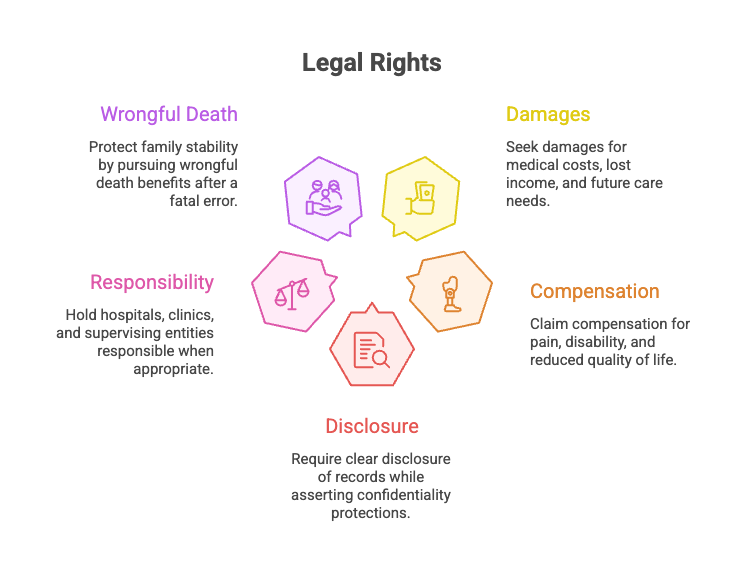
- You can seek damages for medical costs, lost income, and future care needs
- You can claim compensation for pain, disability, and reduced quality of life
- You can require a clear disclosure of records while asserting confidentiality protections
- You can hold hospitals, clinics, and supervising entities responsible when appropriate
- You can protect family stability by pursuing wrongful death benefits after a fatal error
Strict notice requirements and filing deadlines apply in Florida, so your legal position depends on timely, well-supported allegations and expert review.
Steps to Take After a Miami Misdiagnosis Injury
After a Miami misdiagnosis injury, you should seek immediate medical reevaluation to confirm the correct diagnosis and begin appropriate treatment without delay.
You’ll also want to preserve records and evidence, including medical charts, test results, prescriptions, and any written communications, since these materials can clarify what happened and when.
As soon as you can, consult a Miami attorney so you can protect your rights, meet time-sensitive deadlines, and plan your next steps with informed guidance.
Seek Immediate Medical Reevaluation
Although a misdiagnosis can leave you uncertain about what’s actually wrong, you shouldn’t wait to get a second medical opinion from a qualified provider who can reassess your symptoms and review your records. Prompt reevaluation can limit complications, correct harmful treatment plans, and confirm whether emergency care is necessary.
Bring a clear timeline of events, and explain how your condition has changed since the initial visit, so the new clinician can focus quickly. Practice symptom tracking by noting pain levels, new limitations, medication reactions, and patterns that affect sleep or work, since these details often reveal overlooked causes.
Ask direct questions about alternative diagnoses and next-step testing, and follow the updated care plan closely. By acting decisively, you protect your health and remain able to serve others effectively.
Preserve Records And Evidence
Prompt reevaluation protects your wellness, but you’ll also need to protect the paper trail that shows what happened and when.
Request and save complete copies of your medical chart, test results, imaging, discharge instructions, referral notes, and prescription records, including portal messages and after-visit summaries.
Keep a dated timeline of symptoms, calls, and appointments, and write down names and roles of every provider you meet.
Photograph visible injuries, medication labels, and relevant paperwork, ensuring clear photo timestamps for accuracy.
Preserve receipts for travel, caregiving, and out-of-pocket medical costs, because they reflect the burden you’re carrying while still serving your family and community.
Use cloud archiving with organized folders, and keep originals untouched.
Don’t edit files, and document any missing records promptly.
Consult A Miami Attorney
When should you consult a Miami attorney after a misdiagnosis injury?
You should do so as soon as you suspect the wrong diagnosis caused harm, because early legal guidance helps protect deadlines, secure expert review, and prevent costly missteps.
If you’re committed to serving others, you’ll also want clear counsel so your recovery doesn’t strain your family, patients, or community.
You can bring your preserved records, a timeline of symptoms, and names of providers, then ask direct questions about case strategy and expected proof.
Review Fee Structures carefully, including contingency terms and litigation costs, to plan responsibly.
Evaluate credibility through Client Testimonials, focusing on responsiveness, outcomes, and professionalism.
If the attorney listens, explains options, and acts promptly, you’re positioned to pursue accountability.

How a Miami Misdiagnosis Injury Lawyer Can Help You
Because a misdiagnosis claim often hinges on details buried in medical records and treatment timelines, a Miami misdiagnosis injury lawyer can step in early to protect your position and build a credible case.
You’ll gain focused Client advocacy, clear guidance, and disciplined case management, so your efforts can remain centered on recovery and serving your family and community.
Your lawyer gathers records, secures qualified medical reviews, and documents how delays or wrong treatment changed the course of care.
You’ll also avoid costly missteps with notices, deadlines, and communications with insurers and providers, because precision matters.
- Request and organize complete medical charts and imaging
- Identify deviations from accepted diagnostic practice
- Coordinate expert opinions and sworn statements
- Calculate damages and prepare a demand package
- Negotiate firmly, or file suit when needed

With Contingency fees, you don’t pay upfront, and your attorney aligns compensation with results while protecting your voice throughout the process.
Long-Term Effects of Miami Misdiagnosis Injuries
When you suffer a misdiagnosis in Miami, you can face chronic health complications that worsen over time and reduce your long-term quality of life.
You may also confront escalating treatment costs as delayed care leads to more intensive procedures, added specialty providers, and extended recovery.
You can’t ignore the emotional and cognitive impact, because ongoing uncertainty, stress, and impaired functioning often follow and can affect your work, relationships, and daily decisions.
Chronic Health Complications


Although a misdiagnosis may seem limited to a missed test result or a delayed prescription, it often triggers chronic health complications that can follow you for years. When the right condition goes untreated, you may develop preventable organ strain, persistent pain, or mobility limits that narrow how you serve your family and community.
You can also face autoimmune activation, as prolonged inflammation and repeated infections push your immune system into harmful overdrive. In other cases, incorrect medications disrupt digestion and absorption, leading to nutritional deficiencies that weaken recovery and increase fatigue.
You shouldn’t have to accept a new baseline of symptoms because someone failed to identify the cause. By documenting changes in function, treatment responses, and daily limitations, you strengthen your ability to pursue accountability and protect others from similar harm.
Escalating Treatment Costs


Even if you eventually receive the correct diagnosis, a misdiagnosis often leaves you paying for a longer and more complicated course of care. You may need repeat consultations, additional imaging, and additional consultant visits, and each step increases out-of-pocket costs while you continue to serve your family and community.
| Cost Driver | How It Grows | Example |
|---|---|---|
| Re-testing | Duplicates prior work | Labs, scans |
| Medication changes | Adds Prescription Costs | New regimens |
| Therapy | Extends recovery time | Rehab sessions |
| Support devices | Requires replacements | Braces, monitors |
When treatment starts late, you can face extended physical therapy and higher Rehabilitation Bills, plus home care needs and transportation expenses. If you document invoices and timelines, you’ll be better prepared to pursue fair compensation and keep resources available for those who rely on you.
Emotional And Cognitive Impact
Because a delayed or incorrect diagnosis often forces you to question your own judgment, the harm doesn’t stop at physical symptoms or added medical bills.
You may replay conversations with providers, second-guess choices, and feel responsible for an outcome you couldn’t control. That persistent stress can produce mood disturbances, including irritability, anxiety, or a flattened sense of purpose that makes service to others harder to sustain.
You might also notice cognitive strain, especially when pain, medications, or repeated appointments disrupt sleep and routine.
Memory impairment can affect how you track instructions, manage schedules, or perform reliably in your work and volunteer roles. When these changes persist, you should document the symptoms, seek appropriate mental health care, and link the impact to the underlying misdiagnosis to ensure full accountability.
Proving Liability in Miami Misdiagnosis Medical Malpractice Injury Cases
How do you prove liability when a misdiagnosis in Miami leads to avoidable harm?
You must show that a provider owed you a duty of care, breached the accepted medical standard, and caused injury that a timely, accurate diagnosis would likely have prevented.
You’ll rely on records, timelines, and qualified experts who can explain what a careful clinician would’ve done under similar circumstances, and why the missed or delayed diagnosis mattered.
You also need to anticipate juror perceptions shaped by media influence, then keep the focus on objective facts rather than assumptions about medicine or motives.
You can serve others by presenting the case with integrity, highlighting how clearer communication, appropriate testing, and proper follow-up protect patients across Miami.
Establish causation by connecting the breach to the specific progression of the condition, ruling out unrelated causes, and demonstrating that earlier treatment offered a meaningful chance of improvement.
Compensation for Miami Misdiagnosis Damages
While liability proves a provider fell below the medical standard, compensation determines what that failure has cost you in measurable terms.
Liability shows the medical mistake; compensation measures the real, measurable cost of that failure to your life.
You can pursue economic damages such as added medical care, rehabilitation, prescriptions, lost income, and reduced earning capacity when a delayed or missed diagnosis changes your health and work life.
You may also seek non-economic damages for pain, suffering, disability, disfigurement, and loss of enjoyment, especially when the error disrupts your ability to serve your family and community.
Your recovery should reflect future needs, so you’ll document ongoing treatment plans, home assistance, and projected wage losses with credible records and expert support.
Florida’s rules may impose damage caps in certain circumstances, and those limits can shape settlement strategy and trial presentation.
You’ll also evaluate tax consequences, because some awards may be nontaxable while others, such as interest or certain wage components, may be reported.

The Statute of Limitations for Miami Misdiagnosis Injury Cases
Even if a misdiagnosis takes months to uncover, Florida’s statute of limitations can still control whether you’re allowed to file a lawsuit in Miami.
In most medical negligence matters, you must act within a defined time window, and missing it can end your claim regardless of its validity.
You should track when the error occurred and when you first learned, or reasonably should’ve learned, that the misdiagnosis caused harm, because the discovery rule may affect the filing deadline.
You also need to evaluate whether any tolling provisions apply.
For example, certain circumstances may pause or extend the deadline, such as fraud, concealment, or other legally recognized barriers to timely action.
Because families often focus on treatment and caregiving, you should document symptoms, test results, and communications as they occur.
Prompt attention helps you maintain your ability to seek accountability and support those who depend on you.
Why You Need an Experienced Miami Misdiagnosis Injury Lawyer
Because misdiagnosis cases turn on medical proof and strict procedural rules, you can’t afford a lawyer who learns the process as your claim unfolds. You need counsel who can quickly secure records, coordinate qualified experts, and frame causation in a way that supports accountability and patient safety.
An experienced Miami misdiagnosis injury lawyer brings institutional knowledge of local hospitals, insurers, and court practices, helping you meet pre-suit requirements and avoid costly missteps.
You also benefit from multilingual staff who can communicate clearly with your family and connect meaningfully with diverse witnesses, so your service-minded goals remain central: preventing repeat harm and obtaining resources for care.
| Challenge | What experience provides | Why it serves others |
|---|---|---|
| Records gaps | Fast preservation | Protects truth |
| Expert disputes | Vetted experts | Improves standards |
| Causation | Clear narrative | Advances safety |
| Deadlines | Reliable compliance | Prevents dismissal |
How to Choose the Right Miami Misdiagnosis Injury Lawyer for Your Case
How do you separate a truly capable Miami misdiagnosis injury lawyer from one who simply markets well?
You start by evaluating experience with medical records, expert coordination, and hospital protocols, then ask for examples of similar results and clear next steps.
Evaluate their command of medical records, expert coordination, and hospital protocols, then demand comparable results and clear next steps.
You should also confirm the lawyer will personally guide your case, not hand it off without notice.
Next, review Fee Structures in writing, including contingency terms, case costs, and how liens or reductions may affect your recovery.
You’ll want transparency so you can plan responsibly and stay focused on recovering and supporting your family.
Then, measure Local Reputation through peer references, courtroom history in Miami-Dade, and disciplined, consistent client feedback.
Finally, choose counsel who listens, explains timelines, and treats your claim as a duty to protect patients, not a volume file.
If your questions are welcomed and answers are specific, you’re likely in the right hands.
About the Law Offices of Anidjar and Levine
The Law Offices of Anidjar and Levine represent injured patients in Miami who need focused, trial-ready advocacy after a misdiagnosis disrupts their health and finances. You’ll work with a team that prioritizes accountability, prepares every claim for litigation, and treats your story with discretion and respect.
Their approach supports your recovery goals while pursuing fair compensation for preventable harm.
You benefit from a firm history built on disciplined case development, responsive communication, and consistent courtroom readiness.
The attorneys and staff coordinate records, consult qualified medical experts, and present clear timelines that connect the error to your losses.
You’ll also see community involvement reflected in service-minded values, including support for local initiatives and practical help for clients facing daily challenges.
When you choose this firm, you align with advocates who seek justice for you and help raise standards that protect others.
Frequently Asked Questions
Can I Sue if My Condition Improved After the Correct Diagnosis?
Yes, you can sue even if your condition improved after the correct diagnosis, if the earlier error caused compensable harm.
You’ll need a damage assessment showing added pain, avoidable procedures, lost income, or delayed recovery that affected your service to others.
Legal precedent often allows recovery for temporary but significant injury, not just permanent disability.
Act promptly, preserve records, and consult counsel to evaluate causation and timelines under state law.
Will My Immigration Status Affect My Ability to File a Misdiagnosis Claim?
Your immigration status usually won’t bar you from filing a misdiagnosis claim, because civil courts focus on negligence and harm, not residency.
You should still plan for Status Disclosure issues, since insurers may probe personal details during discovery.
Ask your attorney to limit unnecessary disclosures and protect sensitive records.
Deportation Risk is generally low in a medical malpractice case, yet you should avoid false statements and follow counsel closely.
Do I Have to Keep Treating With the Same Doctor During the Claim?
You don’t have to keep treating with the same doctor during the claim, and you shouldn’t feel pressured to.
You can seek Second Opinions to protect your health and clarify what went wrong, especially if trust has broken down.
Keep medically necessary appointments, but choose providers who prioritize safe, ethical care.
Request and preserve complete Medical Records from every facility, since consistent documentation strengthens your case and supports fair accountability.
Can I Recover Damages for a Misdiagnosis at a Miami Urgent Care Clinic?
Yes, you can recover damages if a misdiagnosis at a Miami urgent care caused harm, and you can link it to substandard care.
You’ll need evidence preservation, including records, test results, discharge instructions, and follow-up notes, to prove causation and losses.
You can pursue clinic liability when the provider acted within employment, or the clinic’s policies contributed to the error.
You should document symptoms, expenses, and how the injury affected service commitments.
What if the Misdiagnosis Happened During a Telehealth Visit?
If the misdiagnosis happened during a telehealth visit, you can still pursue damages if you show the provider breached the standard of care and caused harm.
You’ll evaluate Technology limitations, including missing exams, poor video quality, or incomplete records, and whether the clinician escalated to in-person care when needed.
You should also review Informed consent, ensuring you received clear risk disclosures and follow-up instructions.
Document timelines, symptoms, and all communications.
—————————
If you’ve suffered harm after a Miami misdiagnosis, you can’t afford delays or uncertainty.
You should secure your records, document symptoms and expenses, and follow medical advice while your claim develops.
Because deadlines under Florida law can bar recovery, you’ll need counsel who can investigate, consult qualified experts, and prove how the error caused measurable damages.
When you choose Law Offices of Anidjar and Levine, you strengthen your position for fair compensation and accountability with help from a Miami Medical Malpractice Lawyer.


We Can Help.