




A Miami stroke injury lawyer at Law Offices of Anidjar and Levine helps you act quickly, protect filing deadlines, and preserve critical medical and witness evidence that supports your claim.
You’ll get guidance on documenting symptom timelines, safeguarding records, and avoiding statements that insurers can use against you.
Your attorney can investigate delayed diagnosis, improper treatment, or other negligence, identify all liable parties, and calculate damages for medical care, lost income, and future rehabilitation needs.
Learn more from a Miami Medical Malpractice Lawyer and see important next steps.



Main Takeaways
- A Miami stroke injury lawyer organizes your claim, protects filing deadlines, and handles paperwork so you can focus on recovery and family care.
- Consult as soon as the condition stabilizes to preserve evidence, review timelines, and identify negligence, misdiagnosis, delayed treatment, or drug errors.
- Your lawyer gathers medical records, imaging, witness accounts, and symptom journals to prove what happened and how delays or mistakes worsened outcomes.
- They calculate damages for medical care, rehabilitation, lost income, reduced earning capacity, pain and suffering, and future home modifications or assistive services.
- They manage insurer communications, negotiate settlements, challenge delays or underpayment, and prepare appeals or a trial if the claim is denied or undervalued.

How We Can Help With Your Miami Stroke Injury Claim
When a stroke leaves you facing uncertain recovery and mounting expenses, you need a legal team that can move quickly and build a claim that accounts for the full scope of your losses.
After a stroke, act fast with a legal team ready to build a claim reflecting the full scope of your losses.
You can rely on us to organize the process, protect deadlines, and keep your focus on healing and caring for those who depend on you.
You’ll receive clear guidance on what to document, how to preserve records, and when to avoid statements that can be used against you.
We provide paperwork assistance that reduces administrative burden and helps guarantee your claim materials are complete, consistent, and timely.
You can also count on firm insurance negotiations, backed by a disciplined review of medical bills, wage impact, and future care needs.
We communicate with providers, gather supporting documentation, and present your damages in a structured demand designed to withstand scrutiny.
Throughout, you’ll get straightforward updates and respectful service that reflects a commitment to others.
Understanding Miami Stroke Injury Cases
Because stroke injuries often involve sudden, life-altering complications, Miami stroke injury cases demand a careful review of what caused the event and whether it should have been prevented.
You’ll need to connect medical records, timelines, and care decisions to the harm you now face, while also documenting how the injury affects daily function, independence, and long-term therapy needs.
You should expect the process to focus on proof, not assumptions.
You’ll gather clinical notes, imaging reports, and witness accounts, then compare them to accepted standards of care.
You can also document practical losses, such as reduced earning capacity, home modifications, and ongoing rehabilitation expenses.
If you’re serving a loved one, you’ll want to track caregiving hours and signs of Caregiver Burnout, since these burdens often grow quietly.
You don’t have to carry the weight alone; structured Community Support, coordinated care planning, and clear documentation can strengthen both recovery and your claim.



Common Causes of Miami Stroke Injuries
You may suffer a stroke injury in Miami due to preventable errors, and the cause often shapes what evidence you’ll need and who may be liable.
Medical malpractice and misdiagnosis, dangerous prescription drug errors, workplace accidents with trauma, and vehicle collisions that lead to head injuries can each disrupt blood flow to the brain and trigger lasting harm.
If you can identify the event that set your stroke in motion, you’re better positioned to evaluate fault, document damages, and protect your legal options.
Medical Malpractice And Misdiagnosis
Although stroke care often depends on minutes, medical malpractice and misdiagnosis can quietly derail timely treatment and turn a manageable event into a life-altering injury.
When you arrive for help, a rushed triage, incomplete history, or misread imaging can delay urgent decisions, especially amid Communication Failures and Systemic Issues.
You may be told symptoms are “just stress” or “vertigo,” then you lose precious time that could preserve speech, mobility, and independence.
If you serve others, you know accountability protects the whole community, because safer protocols prevent the next family’s crisis.
| What you needed | What went wrong | What it cost |
|---|---|---|
| Fast recognition | Delayed triage | Lost treatment window |
| Clear handoff | Mixed messages | Hours of uncertainty |
| Accurate reading | Misinterpreted scans | Worsened disability |
Dangerous Prescription Drug Errors
Prescription drug errors can sneak in during routine care and set off a stroke or worsen one already underway.
You may receive the wrong medication, the wrong dose, or unsafe combinations, even when everyone intends to help.
Label confusion can lead to anticoagulants, blood pressure drugs, or diabetes medications being misread, then administered at dangerous levels.
Packaging similarity between brand and generic products can also cause mix-ups in pharmacies, hospitals, and long-term care settings.
You can reduce risk by keeping an up-to-date medication list, asking why each medication is necessary, and confirming the name and strength before taking it.
If an error harms you, document symptoms, preserve bottles and instructions, and request your records promptly for review.
Workplace Accidents And Trauma
When a workplace accident triggers a hard blow to the head or sudden strain on the body, the resulting trauma can set off a stroke or intensify one already developing.
You may see this after falls from ladders, struck-by incidents, collapsing materials, or heavy lifting that spikes blood pressure.
In service-oriented workplaces, you often push through pain to keep helping others, but prompt reporting protects coworkers and patients alike.
Effective Risk Assessment identifies hazards, assigns clear duties, and enforces safe pacing, especially during repetitive or high-heat tasks.
Protective Equipment, such as hard hats, eye protection, and proper footwear, reduces impact forces and the risk of secondary injuries.
If your employer ignores training, staffing, or maintenance, document conditions and seek medical evaluation immediately for any dizziness, weakness, or speech changes.
Vehicle Collisions And Head Injuries
Even if you walk away from a crash, the forces involved in vehicle collisions can still damage blood vessels in your head and neck, raising the risk of a stroke.
Rapid deceleration can cause arterial tears, clot formation, or bleeding that may not appear until hours or days later.
You should seek prompt evaluation after any blow to the head, whiplash, or loss of consciousness, even when symptoms seem mild.
You also serve others by modeling careful habits, including Helmet Awareness for motorcycles, bicycles, and scooters, and by supporting safe vehicle practices that improve Airbag Performance through proper seating, belt use, and child restraint placement.
If negligence caused the collision, you can pursue accountability while securing resources for rehabilitation and long-term care.
Legal Rights of Miami Stroke Injury Victims
Although a stroke can change your life in minutes, Florida law still gives you clear rights to pursue accountability and financial recovery if another party’s negligence contributed to your injury.
You may seek damages for medical care, rehabilitation, lost income, and diminished earning capacity, while also pursuing compensation for pain, suffering, and loss of enjoyment of life.
If a hospital, employer, driver, property owner, or product maker failed to act reasonably, you can demand answers and a fair result that supports your family and strengthens community safety.
Your legal protections also extend beyond money, including Privacy Rights in medical decision-making and appropriate Housing Accommodations when disability limits independent living.
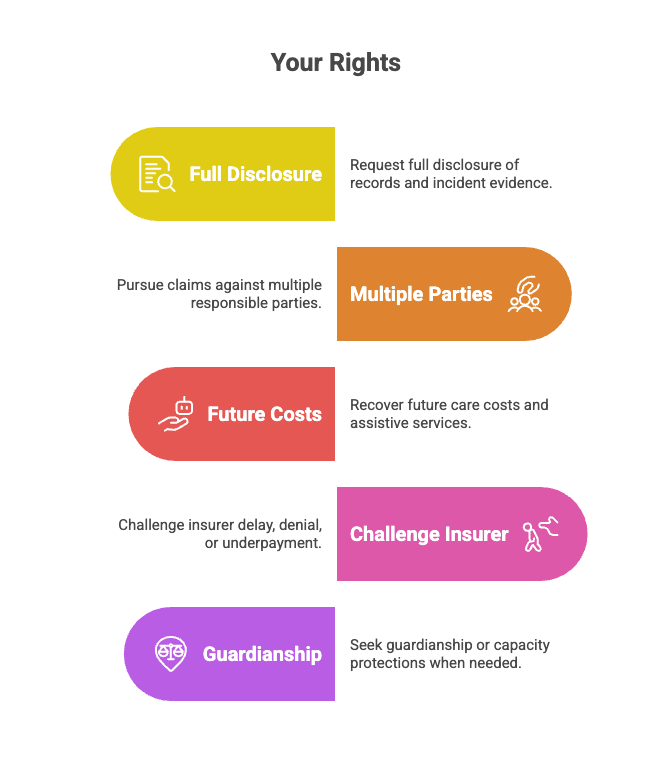
- You can request full disclosure of records and incident evidence
- You can pursue claims against multiple responsible parties
- You can recover future care costs and assistive services
- You can challenge insurer delay, denial, or underpayment
- You can seek guardianship or capacity protections when needed


Steps to Take After a Miami Stroke Injury
Seek emergency medical care immediately, because rapid treatment can limit damage and establish vital clinical evidence.
Document your symptoms and timeline in detail, noting when they began, how they progressed, and any witnesses or medical visits.
Then consult a Miami attorney as soon as you can, so you’ll protect your rights, preserve essential records, and position your claim for a strong outcome.
Seek Emergency Medical Care
When a stroke is suspected, you must treat it as a medical emergency and get evaluated right away. Call 911, request transport to the nearest appropriate hospital, and stay with the person so you can assist responders with safe handoff and continuity of care. If you’re in a clinic or community setting, use Telemedicine triage only to expedite activation of emergency services, not to replace in-person evaluation.
Request language access immediately if communication barriers exist, as accurate intake supports faster treatment decisions.
| Action | Why it matters | How can you serve |
|---|---|---|
| Call 911 | Speeds treatment | Stay calm |
| Don’t drive | Safer transport | Clear route |
| Note meds | Avoids conflicts | Bring list |
| Request interpreter | Improves accuracy | Advocate firmly |
Document Symptoms And Timeline
After you’ve secured an emergency evaluation, start documenting symptoms and a clear timeline while events are still fresh and details haven’t been lost to stress or confusion.
Record when you first noticed weakness, speech changes, vision loss, or dizziness, and note how long each episode lasted.
Keep a symptom journal with dates, times, medications taken, blood pressure readings if available, and any changes in mobility, memory, or mood.
Ask a trusted friend or family member to add observations, since you may miss details during recovery.
Create photographic records of visible bruising, swelling, assistive devices, and home modifications needed for safety.
Save discharge papers, appointment summaries, and receipts, and list everyone you spoke with at clinics or hospitals.
This careful record supports coordinated care and protects those who depend on you.
Consult A Miami Attorney
How do you protect your medical recovery and your financial future at the same time? You consult a Miami attorney as soon as your condition stabilizes, because early guidance preserves evidence, supports proper care, and prevents avoidable mistakes.
Schedule an Initial Consultation to review your medical records, symptom timeline, and any communications with insurers or providers.
You’ll clarify whether negligence, delayed diagnosis, or improper treatment may have contributed to your stroke, and you’ll identify the most responsible parties.
Ask direct questions about Fee Structures, including contingency terms, costs, and what happens if the case doesn’t resolve as planned.
When you act promptly, you strengthen your claim and protect resources you can later use to serve your family and community with stability and purpose.
How a Miami Stroke Injury Lawyer Can Help You
Although a stroke can leave you facing abrupt medical decisions, lost income, and long-term care needs, a Miami stroke injury lawyer can bring structure and leverage to your legal claim.
You’ll receive clear direction, timely action, and a disciplined strategy that respects your commitment to protect those who depend on you.
Your attorney gathers records, consults qualified experts, and positions your case for efficient resolution while preserving your dignity and priorities.
- Investigate negligence, timelines, and policy duties to identify liable parties
- Calculate damages with documentation, wage proof, and care-related evidence
- Manage insurer contact, settlement demands, and recorded-statement risks
- Provide Family Guidance so loved ones can coordinate decisions and support your recovery
- Deliver Appeals Assistance when benefits are delayed, denied, or undervalued

You’ll also gain a steady advocate who files notices on time, negotiates firmly, and prepares for trial if accountability requires it.
Long-Term Effects of Miami Stroke Injuries
After a stroke injury in Miami, you may face lasting cognitive and memory changes that affect how you process information, communicate, and make routine decisions.
You may also experience reduced mobility and daily function, which can limit self-care, work capacity, and overall independence.
In addition, you can develop emotional and behavioral impacts such as irritability, anxiety, or depression, and these shifts often strain relationships and complicate long-term recovery planning.
Cognitive And Memory Changes
When a stroke disrupts blood flow to the brain, it can alter the way you think, learn, and remember long after the immediate medical crisis ends.
You may notice slower processing, difficulty finding words, or short-term memory lapses that affect planning, decision-making, and attention.
These changes can challenge your ability to serve others with the consistency you expect from yourself.
You can support recovery by pairing structured Neuroplasticity Exercises, such as guided cognitive tasks and repetition-based practice, with realistic routines that track progress without self-judgment.
You should also adopt Nutrition Strategies that stabilize energy and support brain health, such as balanced protein intake, fiber-rich foods, and adequate hydration.
If negligence contributed to your stroke, a Miami stroke injury lawyer can help document cognitive losses and pursue compensation for future care.
Mobility And Daily Function
How do stroke-related mobility limits reshape your daily life months or even years later?
You may need extra time to stand, transfer, or walk safely, and everyday tasks such as bathing, cooking, and driving may require structured routines.
When your role centers on serving others, these limitations can affect how consistently you show up, volunteer, or care for family members, making planning crucial.
You can regain function through consistent therapy, targeted strengthening, and careful pacing that prevents falls and fatigue.
Adaptive equipment, such as canes, walkers, grab bars, and shower chairs, supports safe independence while you rebuild endurance.
Home modifications, including ramps, widened pathways, non-slip flooring, and improved lighting, reduce hazards and conserve energy.
Document your limitations and needed supports, because long-term mobility losses often drive future care costs.
Emotional And Behavioral Impacts
Mobility challenges don’t just change what you can do each day; they can also change how you think, react, and relate to the people around you.
After a stroke, you may notice mood swings, irritability, or sudden tears, even when you’re committed to staying composed for those who rely on you.
You might struggle with impulse control, frustration tolerance, or attention, and these changes can affect caregiving, ministry, and community roles you once handled with ease.
Social withdrawal can follow when conversations feel exhausting or when you fear burdening others, yet isolation often deepens anxiety and depression.
You can serve effectively by naming these shifts early, inviting trusted support, and documenting symptoms for your medical team.
Consistent therapy, structured routines, and family education help restore stability and protect relationships over time.
Proving Liability in Miami Stroke Medical Malpractice Injury Cases
Although stroke care often unfolds under intense time pressure, proving liability in a Miami stroke medical malpractice case still requires a clear showing that a provider breached the accepted standard of care and that this failure directly caused avoidable harm.
You start by identifying where care fell short, such as delayed imaging, missed warning signs, or failure to administer time-sensitive treatment when indicated.
You then link that breach to a worsened outcome through records, timelines, and objective clinical markers.
Expert witnesses play a central role because they translate medical practice into understandable standards, and they explain what a reasonably careful provider would’ve done in the same setting.
You also need Causation evidence, including neuroimaging, lab results, EMS logs, and hospital notes, to show the harm wasn’t inevitable and that earlier, appropriate action more likely than not would’ve reduced the injury.
With disciplined documentation, you can pursue accountability while honoring patient safety and community trust.
Compensation for Miami Stroke Damages
Once you’ve established liability and causation in a Miami stroke malpractice case, the next focus turns to measuring the full scope of harm in dollars and cents.
You’ll document past and future medical care, rehabilitation, assistive technology, and in-home support to preserve dignity while easing the caregiving burden on others.
You’ll also pursue lost income, reduced earning capacity, and non-economic losses such as pain, suffering, and loss of enjoyment, which often reflect the daily realities of serving family and community.
| Damage Category | Practical Example |
|---|---|
| Medical care | Hospital, neurology, medications |
| Rehab and therapy | PT, OT, speech therapy |
| Support needs | Home health aide, transportation |
| Income losses | Missed work, diminished career |
| Life impact | Pain, limitations, relationships |
You can consider Structured settlements to fund long-term needs with predictable payments, and you must evaluate Tax implications so the recovery supports care effectively.
The Statute of Limitations for Miami Stroke Injury Cases
How long do you really have to file a Miami stroke injury claim before the court bars it for good?
In Florida, most negligence-based injury cases must be filed within a strict deadline, and missing it can end your ability to seek accountability for the harm you now shoulder and the care others may depend on you to provide.
You should identify the triggering date early.
In many cases, the clock starts on the date of the stroke-related injury, yet the Discovery Rule may apply when you couldn’t reasonably know the cause of the injury right away, such as a delayed diagnosis or concealed error.
Limited exceptions can pause the deadline through Equitable Tolling, for example, when extraordinary circumstances beyond your control prevent timely filing despite diligent efforts.
Because these rules are fact-specific, you should document symptoms, treatment dates, and communications promptly, then act decisively to protect your right to pursue relief.
Why You Need an Experienced Miami Stroke Injury Lawyer
Even when you recognize that a stroke left you with life-altering limitations, proving that another party’s negligence caused or worsened your outcome demands disciplined investigation and precise legal strategy.
You need an experienced Miami stroke injury lawyer to secure records quickly, identify delays in diagnosis or treatment, consult qualified medical experts, and connect those failures to measurable harm.
Without that structure, crucial evidence can be lost, and your ability to serve your family and community may be further strained.
You also need counsel who understands damages beyond hospital bills, including rehabilitation, home support, lost earning capacity, and long-term care planning.
Through Contingency Agreements, you can pursue accountability without paying hourly fees while you focus on recovery and supporting others.
Cultural Competency matters as well, because clear communication, respectful advocacy, and accurate interpretation of your medical history and needs can shape negotiations and courtroom presentations.
Experience helps you move forward with purpose and stability.
How to Choose the Right Miami Stroke Injury Lawyer for Your Case
Selecting the right Miami stroke injury lawyer can determine whether your claim is supported by timely evidence, credible medical analysis, and a damages plan that reflects your long-term needs.
You should look for a lawyer who listens carefully, explains options plainly, and treats your family’s service role with respect and purpose.
| What you evaluate | What you should confirm |
|---|---|
| Case focus | Proven stroke and catastrophic injury results |
| Communication | Regular updates, clear timelines, fast responses |
Ask direct questions about fee transparency, including contingency percentages, costs, and how liens may affect your recovery.
You’ll also want strong medical collaboration, since causation and future care often drive value.
Evaluate culture fit during the first meeting: you should feel heard, not rushed, and your goals should guide strategy.
Review who will handle day-to-day work, how they preserve records, and how quickly they can engage experts.
Choose the lawyer who can advocate firmly while honoring your commitment to others.
About the Law Offices of Anidjar and Levine
The Law Offices of Anidjar and Levine’s team approaches stroke injury claims with a disciplined, client-focused strategy, so you’re supported from the first call through resolution.
You’ll receive clear guidance on medical records, timelines, and insurer communications, while the firm manages negotiations and, when needed, litigation with careful preparation and steady advocacy.
You benefit from a practice shaped by firm history in representing injured Floridians, with processes built to reduce delays and protect your claim’s value.
You’re treated as a partner in the work, because your goals, and your family’s needs, guide case decisions and settlement priorities.
The firm’s community involvement also reflects a service-minded approach, reinforcing a commitment to accountability and practical help beyond the courtroom.
If you’re focused on restoring stability after a stroke injury, you can rely on structured case management, consistent updates, and a respectful, mission-driven legal team.

Frequently Asked Questions
Can I Switch Lawyers if I’ve Already Hired Another Attorney?
Yes, you can switch lawyers even after you’ve hired another attorney, and your client’s rights protect that choice.
You should review your fee agreement, then notify current counsel in writing and request your file and any retainer transfer.
You’ll likely owe payment for reasonable work already performed, but new counsel can often coordinate the handoff.
Act promptly so deadlines, court notices, and settlement discussions stay protected for everyone you aim to serve.
Will My Case Require a Trial, or Can It Settle Out of Court?
Your case may settle out of court, but you should prepare as if a trial is possible.
You’ll typically pursue settlement negotiation first, supported by strong evidence and clear damages, because early resolution can serve everyone involved.
If talks stall, you can use mediation options to narrow disputes and test each side’s risk.
You’ll proceed to trial when liability, value, or credibility remains contested, or deadlines require decisive action.
How Much Will I Personally Pay if the Case Is Unsuccessful?
If your case is unsuccessful, you’ll typically pay only the case costs your agreement assigns to you, and you won’t owe attorney’s fees under a contingency arrangement.
You should confirm whether you must advance filing fees, expert charges, or medical record expenses, and whether cost recovery applies from any partial payments.
Ask how retainer refunds work, and get these terms in writing so you can serve responsibly.
Can I Pursue a Claim if Symptoms Appeared Days After the Stroke?
Yes, you can pursue a claim even if symptoms appeared days later, because delayed onset doesn’t automatically break liability.
You’ll need medical records, imaging, and qualified opinions to establish medical causation, showing the stroke or negligent delay plausibly produced the later symptoms.
You should document the timeline carefully and follow the treatment plans, as gaps can weaken the evidence.
What Documents Should I Bring to My First Consultation?
Bring Medical records, including ER notes, imaging results, discharge summaries, and follow-up visit reports, so you can clarify the timeline and care decisions.
Bring Insurance policies and any claim letters, bills, and explanation-of-benefits statements, since you’ll need accurate coverage and payment details.
Bring a medication list, witness names, and your symptom journal, because you’re serving your recovery and supporting those who depend on you.
Also, bring identification and contact details.
—————————
If you’ve suffered a stroke injury in Miami, you can’t afford delays or uncertainty.
You should document your symptoms, follow medical guidance, and preserve any evidence that explains how the injury occurred.
You also need a lawyer who can identify liable parties, calculate full damages, and negotiate from a position of strength, or proceed to trial when necessary.
With Law Offices of Anidjar and Levine and a trusted Miami Medical Malpractice Lawyer on your side, you protect your rights and pursue the compensation your recovery requires.


We Can Help.