




A Miami hypoxic ischemic encephalopathy (HIE) injury lawyer at Law Offices of Anidjar and Levine helps you act fast, secure fetal monitoring strips, NICU notes, and hospital policies, and protect strict Florida deadlines.
You’ll get a clear plan during a free consultation, then pursue the claim on contingency, so you don’t pay attorney fees unless there’s a recovery.
Your lawyer coordinates medical experts, preserves evidence, calculates lifelong care costs, and negotiates or tries the case. Learn more by speaking with a Miami Medical Malpractice Lawyer.
Main Takeaways
- Contact a Miami HIE lawyer early to preserve evidence, meet filing deadlines, and avoid procedural mistakes.
- Ask about free consultations and contingency fees, so you pay no attorney fees unless there’s a recovery.
- Choose counsel who can quickly obtain fetal monitoring strips, NICU notes, cord gas results, and hospital policies.
- Build proof with qualified obstetric, neonatal, and nursing experts to show standard-of-care breaches and causation of HIE.
- Keep certified medical records, communication logs, and expense receipts in secure backups to support damages and long-term care needs.

How We Can Help With Your Miami Hypoxic Ischemic Encephalopathy Injury Claim
When hypoxic ischemic encephalopathy results from medical negligence, you need a legal team that can move quickly and build a claim on solid evidence.
You can rely on us to organize timelines, preserve vital records, and coordinate with qualified medical reviewers so your case is presented clearly and with purpose.
Rely on us to organize timelines, preserve vital records, and work with qualified medical reviewers to present your case with clarity.
We handle communications with insurers and hospital counsel, so you can stay focused on caregiving and stability.
You’ll receive a free consultation where you can describe what happened, ask direct questions, and learn what immediate steps protect your rights.
If you choose to move forward, you can use contingency representation, so you don’t pay attorney’s fees unless we recover compensation.
You can count on disciplined case management, regular updates, and a strategy that reflects service to your child and accountability in your community.
We pursue fair recovery for care needs, lost income, and long-term support planning.
Understanding Miami Hypoxic Ischemic Encephalopathy Injury Cases
Building a strong claim also requires a clear understanding of how hypoxic ischemic encephalopathy (HIE) cases are evaluated in Miami, including what evidence shows a preventable loss of oxygen and blood flow and how that injury connects to specific medical decisions.
You’ll focus on records that document timing, monitoring, and response, then align them with accepted clinical standards to show where care fell short.
You also need proof of harm and causation, often through imaging, lab results, neurological assessments, and expert review that explains how the injury progressed.
Your legal team will measure losses in a way that supports long-term care and helps protect your family’s future.
Because you want to serve and safeguard vulnerable patients, you’ll value transparency and accountability, not conflict for its own sake.
Staying informed about research trends and policy initiatives can clarify evolving expectations for documentation, quality assurance, and patient safety in Miami facilities and strengthen your strategy.
Common Causes of Miami Hypoxic Ischemic Encephalopathy Injuries
In Miami, you may face hypoxic ischemic encephalopathy after birth-related oxygen deprivation, medical malpractice during surgery, a delayed stroke diagnosis, or a near-drowning incident.
You’ll see that each cause can interrupt oxygenated blood flow to the brain, and even brief delays can lead to lasting harm.
You should understand how these events occur and where preventable failures often arise, because that context shapes liability and the evidence you’ll need.
Birth-Related Oxygen Deprivation
Although labor and delivery often progress safely, birth-related oxygen deprivation remains one of the most common pathways to hypoxic ischemic encephalopathy in Miami newborns.
You can serve families well by recognizing warning signs early, supporting timely escalation, and promoting public awareness to protect vulnerable infants. When oxygen drops due to placental problems, cord compression, prolonged labor, or severe maternal blood pressure changes, the brain may suffer rapid injury, so you should encourage vigilant fetal monitoring and clear communication.
You’ll also weigh the ethical implications of balancing urgent intervention with informed consent, especially when minutes matter.
| Cause | How it Limits Oxygen | Early Clues |
|---|---|---|
| Placental abruption | Reduced exchange | Pain, bleeding |
| Cord compression | Interrupted flow | Variable decels |
| Prolonged labor | Sustained stress | Slow progress |
| Maternal hypotension | Lower perfusion | Dizziness, low BP |
Medical Malpractice During Surgery
When surgical teams miss preventable warning signs, a patient’s oxygen supply can fall fast enough to trigger hypoxic ischemic encephalopathy.
You can serve your community by recognizing how preventable operating room errors create that risk, then insisting on safer standards for every patient you support.
Anesthesia Negligence may involve improper dosing, missed airway complications, or delayed response to falling oxygen saturation, all of which can deprive the brain of essential oxygen within minutes.
You may also see Instrument Retention after a procedure, which can cause internal bleeding, infection, or shock that reduces oxygen delivery and destabilizes physiologic signs.
When staff skips counts, ignore alarms, or fail to communicate clearly, the margin for recovery narrows quickly.
You can help by demanding accountability, complete records, and clear postoperative monitoring.
Delayed Stroke Diagnosis


How does a missed stroke in an emergency or inpatient setting turn a treatable event into hypoxic ischemic encephalopathy? When you don’t recognize a stroke quickly, oxygen delivery to brain tissue drops, and each passing minute increases the risk of irreversible injury.
Symptom Variability often misleads clinicians, especially when you present with dizziness, confusion, subtle weakness, or atypical speech changes rather than classic facial droop.
Imaging Delays compound that risk, because postponed CT or MRI, slow radiology reads, or delayed transfer to a stroke-capable unit can prevent timely clot-busting therapy or thrombectomy.
If you serve others in healthcare or advocacy, you can promote rapid screening, clear escalation pathways, and documentation that prioritizes neurologic change, so preventable harm doesn’t become catastrophic brain damage.
Near-Drowning Incidents
Because the brain can’t store oxygen, a near-drowning incident can shift from a survivable emergency to hypoxic ischemic encephalopathy within minutes if rescue, ventilation, and circulation don’t return quickly.
If you supervise swimmers, you must treat any submersion, even brief, as a medical emergency and activate 911 without delay.
You can serve your community by strengthening Pool Safety, including barriers, alarms, clear rules, and consistent, undistracted supervision.
You should also promote Rescue Training so bystanders can provide effective CPR, use an AED, and maintain airway support until paramedics arrive.
After rescue, you must insist on medical evaluation, because secondary drowning complications and low oxygen levels may worsen later.
Prompt action protects life and preserves brain function, especially in children.

Legal Rights of Miami Hypoxic Ischemic Encephalopathy Injury Victims
Although hypoxic ischemic encephalopathy can leave you facing lifelong medical needs and sudden financial strain, Florida law gives you clear legal rights to pursue compensation from the individuals or institutions whose negligence contributed to the injury.
Florida law gives you clear rights to seek compensation when negligence contributes to hypoxic ischemic encephalopathy and lifelong financial strain.
You may seek damages for past and future medical care, lost income, reduced earning capacity, and pain and suffering, while also demanding accountability that helps protect other patients in Miami.
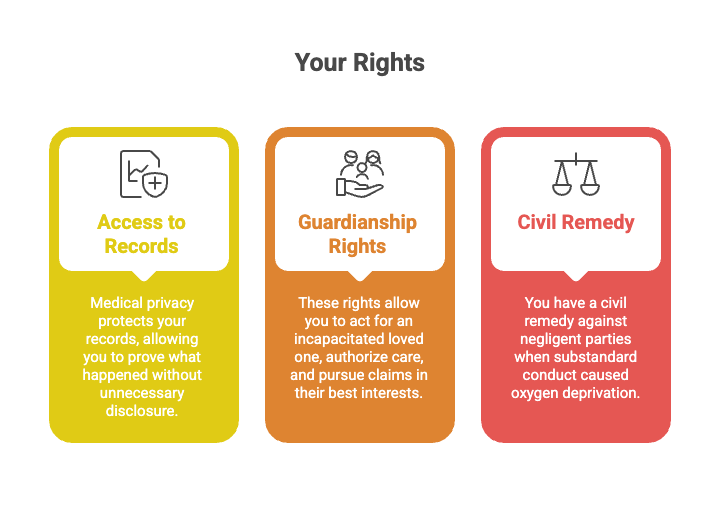
Your rights often include:
- Access to records is protected by medical privacy, so you can prove what happened without unnecessary disclosure.
- Guardianship Rights that let you act for an incapacitated loved one, authorize care, and pursue claims in their best interests.
- A civil remedy against negligent parties, including facilities, providers, or other responsible actors, when substandard conduct caused oxygen deprivation.
You can also request preservation of evidence.
You can also challenge improper denials of coverage, ensuring the legal process supports both recovery and community safety.
Steps to Take After a Miami Hypoxic Ischemic Encephalopathy Injury
After a Miami hypoxic ischemic encephalopathy injury, you should seek immediate medical care, because prompt evaluation and treatment can protect your health and establish vital clinical documentation.
You should also preserve records and evidence, including hospital charts, discharge instructions, medication lists, and any communications related to the event.
As soon as you can, you should contact a Miami lawyer so you can protect your rights, meet important deadlines, and position your claim for a thorough investigation.
Seek Immediate Medical Care
When hypoxic ischemic encephalopathy (HIE) is even a possibility, you must treat it as a medical emergency and seek care immediately. Call 911 or go to the nearest emergency department, and clearly report any emergency symptoms such as seizures, abnormal breathing, low responsiveness, poor feeding, or unusual muscle tone.


Ask clinicians to document onset times and perform a rapid assessment so treatment decisions aren’t delayed. If a newborn is involved, request evaluation by a neonatal team and monitoring for oxygenation, glucose, and infection, because early stabilization can limit secondary injury.
Follow medical instructions precisely, attend all recommended follow-ups, and arrange safe transportation so you don’t risk setbacks. By acting decisively, you protect your loved one and support the care team’s ability to serve effectively.
Preserve Records And Evidence
Preserving evidence early can protect your ability to prove how an HIE injury occurred and who’d responsibility for preventing it.
Request complete medical records, including fetal monitoring strips, Apgar scores, imaging, lab results, medication logs, and NICU notes. Ask for certified copies, and keep a written log of every request, response, and date.
Create digital backups of all documents, photos, and messages, then store them in two secure locations. Use evidence cataloging to label each item with a clear source, timestamp, and brief description, so nothing gets misplaced or questioned later. Save receipts for travel, equipment, and caregiving costs, because they reflect real needs you’re addressing.
Preserve communications with staff and insurers, and avoid altering originals. Careful documentation supports accountability and helps you serve your child faithfully.
Contact A Miami Lawyer
Reach out to a Miami hypoxic ischemic encephalopathy lawyer as soon as you can, because early legal guidance helps you protect vital evidence and avoid missteps that can weaken a claim.
When you contact counsel, you help your family focus on care while someone works to uphold patient safety and accountability. Ask what information they need immediately, including hospital timelines, provider names, and your preserved records.
Use Remote consultations if travel or caregiving demands limit your availability, and confirm secure document sharing for medical files and communications.
During Appointment scheduling, request a clear plan for next steps, deadlines, and expected costs. You should also discuss who may speak to insurers or the hospital, so you don’t unintentionally compromise the case.
Prompt, organized communication strengthens the case for justice.

How a Miami Hypoxic Ischemic Encephalopathy Injury Lawyer Can Help You


Although hypoxic ischemic encephalopathy (HIE) cases often involve intricate medical records and tight legal deadlines, a Miami HIE injury lawyer can bring order to the process and protect your claim from the start. You’ll gain a disciplined advocate who treats your family’s needs with respect and who keeps the focus on accountability and service.
A lawyer can strengthen your case by combining investigative resources with expert coordination, then translating intricate facts into clear legal arguments.
You can expect support that’s practical, organized, and mission-driven, so you can focus on caring for your child and honoring your responsibilities to others.
- Secure records quickly, preserve evidence, and manage notices, filings, and deadlines.
- Retain qualified clinicians and life-care providers, and prepare them for testimony and reports.
- Calculate damages, negotiate firmly with insurers, and, if needed, present your story persuasively in court.
Long-Term Effects of Miami Hypoxic Ischemic Encephalopathy Injuries
When you live with a hypoxic ischemic encephalopathy injury in Miami, you may face lasting limitations that affect daily function and independence.
You can experience cognitive and memory impairment that disrupts learning and decision-making, along with motor and mobility challenges that make work and routine tasks more difficult.
You may also notice behavioral and emotional changes, which can strain relationships and require ongoing support and structured care.
Cognitive And Memory Impairment
Clarity can fade quickly after a hypoxic ischemic encephalopathy (HIE) injury, and the changes often surface in thinking and memory long after the initial crisis.
You may struggle to track conversations, recall appointments, or manage tasks that once felt routine, and you might notice slower processing when stress rises. A focused neuropsychological assessment can document deficits in attention, executive function, and short-term recall, giving your care team a roadmap for targeted therapy and practical accommodations.
You can serve others more consistently when you structure your day around reliable supports, including written checklists, scheduled cues, and assistive technology such as reminder apps or speech-to-text tools. With steady practice, you can rebuild routines, reduce errors, and protect your independence at home and work.
Motor And Mobility Challenges
Regaining control of your body can become a daily challenge after a hypoxic ischemic encephalopathy (HIE) injury, as disrupted brain signaling often alters strength, coordination, balance, and muscle tone.
You may notice spasticity, tremors, weakness, or slowed movement, which can affect walking, transferring, and fine motor tasks such as buttoning clothing or preparing meals.
You can better serve your family and community by planning supports that reduce fall risk and conserve energy.
Physical and occupational therapy can help you rebuild gait patterns, improve range of motion, and practice task-specific skills for home and volunteer settings.
Assistive technology, including braces, walkers, or adaptive utensils, can increase independence.
When travel becomes difficult, Accessible transportation can keep you connected to work, appointments, and service commitments.
Behavioral And Emotional Changes
Although the physical effects of hypoxic ischemic encephalopathy (HIE) often draw early attention, long-term behavioral and emotional changes can shape your daily life just as strongly. You may notice mood swings that feel sudden, intense, and out of proportion to the situation, which can strain family ties and workplace relationships.
You might also experience social withdrawal, avoiding conversations, community commitments, or the service roles you once valued because stimulation feels overwhelming. These shifts often reflect injury-related changes in impulse control, attention, and stress tolerance, not a lack of character.
You can support others and protect your own stability by tracking triggers, building predictable routines, and seeking neuropsychological care. When you document these impacts, you also strengthen the evidence needed to pursue appropriate long-term support services.
Proving Liability in Miami Hypoxic Ischemic Encephalopathy Medical Malpractice Injury Cases
When hypoxic ischemic encephalopathy results from medical error, you must prove liability with evidence that connects a specific breach of care to a preventable loss of oxygen and the resulting brain injury.
Proving HIE from medical error requires evidence tying a specific breach of care to preventable oxygen loss and brain injury.
You do this by identifying the governing standard of care, then showing how the provider’s actions fell short during pregnancy, labor, delivery, or newborn stabilization.
You’ll rely on medical records, fetal monitoring strips, cord gas results, imaging, and NICU notes to establish timing and progression.
Expert Testimony from qualified obstetric, neonatal, or nursing experts can explain what competent clinicians would’ve done, such as responding to distress, escalating to surgery, or managing resuscitation appropriately.
You also need Causation Evidence that links the delay or omission to hypoxia, and distinguishes it from unavoidable complications or preexisting conditions.
Finally, you’ll show foreseeability and preventability, demonstrating that timely intervention more likely than not would’ve averted or reduced the injury in your community.

Compensation for Miami Hypoxic Ischemic Encephalopathy Damages
Once you’ve established liability and causation, the next step is to measure the full scope of harm hypoxic ischemic encephalopathy has imposed on your child and your family. You’ll document past and future medical bills, therapy, assistive technology, in-home nursing, and life-care planning, ensuring projections reflect realistic lifelong needs.
You can also pursue compensation for lost earning capacity, your own lost income from caregiving, and reasonable home or vehicle modifications required for safe daily living.
You should account for non-economic damages as well, including pain, suffering, and diminished quality of life, because they reflect what your child endures and what your family sacrifices while serving their best interests.
Your lawyer can evaluate settlement offers against verdict ranges, then discuss tax implications so you don’t accept terms that reduce real value. When appropriate, structured settlements can provide stable, court-approved payments that support ongoing care and responsible stewardship over time.
The Statute of Limitations for Miami Hypoxic Ischemic Encephalopathy Injury Cases
How long do you have to file a Miami hypoxic ischemic encephalopathy (HIE) injury lawsuit before the court bars it as untimely? In Florida, your time limit depends on the claim type and critical dates, so you should confirm the applicable Filing Deadlines early and document every notice, record request, and communication.
If a birth injury involves medical negligence, pre-suit steps and specific timing rules may apply, and missing them can end a case regardless of substance. Tolling Rules may pause or extend time in limited circumstances, such as when a defendant can’t be found or when legal capacity issues arise, but you shouldn’t assume tolling will save a late filing.
| Issue | What you track | Why it matters |
|---|---|---|
| Injury date | Delivery timeline | Starts analysis |
| Discovery | When you learned | May shift clock |
| Notice steps | Pre-suit actions | Preserves rights |
| Exceptions | Tolling triggers | Extends time rarely |
Why You Need an Experienced Miami Hypoxic Ischemic Encephalopathy Injury Lawyer
Filing deadlines and pre-suit requirements can end an HIE case before a judge ever considers the medical facts, so you need counsel who can protect the claim from day one. You’re often balancing a child’s care with records requests, notices, and strict procedural steps that leave little margin for error.
An experienced Miami hypoxic ischemic encephalopathy injury lawyer moves quickly, secures crucial fetal monitoring strips and NICU logs, and preserves testimony before memories fade. You also need clear guidance on damages that support lifelong service, including therapies, adaptive equipment, and in-home assistance.
With Trial Readiness, your attorney builds the case as if it will be tried, which strengthens negotiations and discourages low offers. A strong Resource Network matters as well, because you may need credible experts to interpret intricate timelines and causation. You can then focus on caring for others while your claim remains protected.
How to Choose the Right Miami Hypoxic Ischemic Encephalopathy Injury Lawyer for Your Case
Because an HIE claim can hinge on minutes in the labor and delivery record, you should choose a Miami hypoxic ischemic encephalopathy injury lawyer who can prove they’ve handled these cases with discipline and speed.
Ask how they secure fetal monitoring strips, NICU notes, and hospital policies, and whether they use qualified medical experts early to preserve evidence and define avoidable errors.
You should also evaluate office accessibility, since consistent updates help you make informed decisions while you keep caring for your child.
Request a clear timeline, point-of-contact, and written expectations for documents, costs, and next steps.
Listen for calm, precise answers that respect your service-minded priorities and the dignity of the people involved.
Finally, consider courtroom demeanor: you want counsel who can speak with measured authority, question clinicians effectively, and maintain professionalism under pressure.
Choose the lawyer who prepares relentlessly, communicates reliably, and keeps your family’s long-term needs at the center.
About the Law Offices of Anidjar and Levine
Selecting counsel is only the first step; you also need a firm that can act quickly, document every decision in the labor and delivery timeline, and maintain steady communication as your case develops.
At the Law Offices of Anidjar and Levine, you receive a disciplined process designed to protect children and support families seeking accountability and safer care for their children.
You’ll work with a team that reviews fetal monitoring strips, prenatal records, and NICU notes, then coordinates with qualified medical experts to assess whether preventable oxygen deprivation occurred.
The firm’s history reflects sustained advocacy for injured clients, with structured case management that keeps you informed and helps you plan for therapy, equipment, and long-term services.
You also benefit from awards recognition that signals professional respect, while the focus remains on practical results, ethical representation, and respectful treatment.
When you’re ready to act, you can rely on prompt action and consistent guidance.

Frequently Asked Questions
Do You Handle HIE Cases Involving Births Outside Miami-Dade County?
Yes, you can receive help with HIE cases involving births outside Miami-Dade County, and you’ll get a clear review of where the claim should be filed.
You’ll need to account for Jurisdiction Limits, including venue rules and applicable state deadlines.
If the birth occurred outside Florida, you may still pursue Interstate Claims through local counsel partnerships. You’ll get coordinated investigation, record review, and expert support focused on accountability.
Can Grandparents or Guardians File an HIE Claim on a Child’s Behalf?
Yes, you can file an HIE claim on a child’s behalf if you hold legal authority to act for the child.
If you’re a grandparent, Grandparent Rights alone usually aren’t enough, so you’ll need a court appointment or standing under state law.
If you’re a guardian, Custodial Guardianship typically allows you to pursue claims, approve settlements, and protect the child’s interests, subject to court oversight.
Will Pursuing a Claim Affect Our Relationship With the Treating Hospital?
Pursuing a claim usually won’t prevent your child from receiving care, and you can often maintain a workable relationship with the hospital.
You should address continuity concerns early, request clear communication from the provider, and keep all interactions respectful and documented. You can ask for a different clinician, transfer records, or switch facilities if tensions arise.
Your focus remains on serving your child’s best interests while holding systems accountable fairly.
How Are Attorney’s Fees and Case Costs Handled in HIE Lawsuits?
You’ll usually pay attorney’s fees through contingency agreements, meaning you don’t owe fees unless you recover compensation.
Your lawyer takes a pre-agreed percentage from the settlement or verdict, and the contract should state whether it’s calculated before or after costs.
Case costs, including experts and records, count as litigation expenses and may be advanced by counsel, then reimbursed from any recovery.
You should request a clear, itemized explanation upfront.
Can I Speak With a Lawyer if I Don’t Have the Complete Medical Records?
Yes, you can speak with a lawyer even if you don’t have complete medical records.
You’ll start with an Initial Assessment, where you share what you know, timelines, and any documents you already possess.
You’ll support Evidence Preservation by identifying providers, requesting records, and securing fetal monitoring strips, imaging, and care notes before they’re lost.
You can act responsibly now to protect your child’s interests and your community’s trust.
—————————
If you’re facing a hypoxic ischemic encephalopathy injury in Miami, you can’t afford delays or uncertainty.
You should document symptoms, secure medical records, and preserve any evidence that shows how oxygen deprivation occurred.
You’re entitled to pursue compensation when negligence causes harm, but strict deadlines can limit your options.
With an experienced lawyer at Law Offices of Anidjar and Levine, you can evaluate liability, calculate long-term damages, and negotiate from a position of strength.
Learn more by visiting our Miami Medical Malpractice Lawyer page and protect your rights by acting now.


We Can Help.