




If you suspect a hypoxic brain injury in Miami, seek immediate medical care and start preserving records, because symptoms can worsen or appear later.
You can protect your legal rights by contacting Law Offices of Anidjar and Levine and reviewing your options with a Miami Medical Malpractice Lawyer who can secure time-sensitive evidence, obtain full hospital and EMS charts, and build a clear timeline linking oxygen loss to your cognitive, emotional, and functional losses.
Keep bills, medication logs, and a daily symptom journal. Continue for critical steps and deadlines.



Main Takeaways
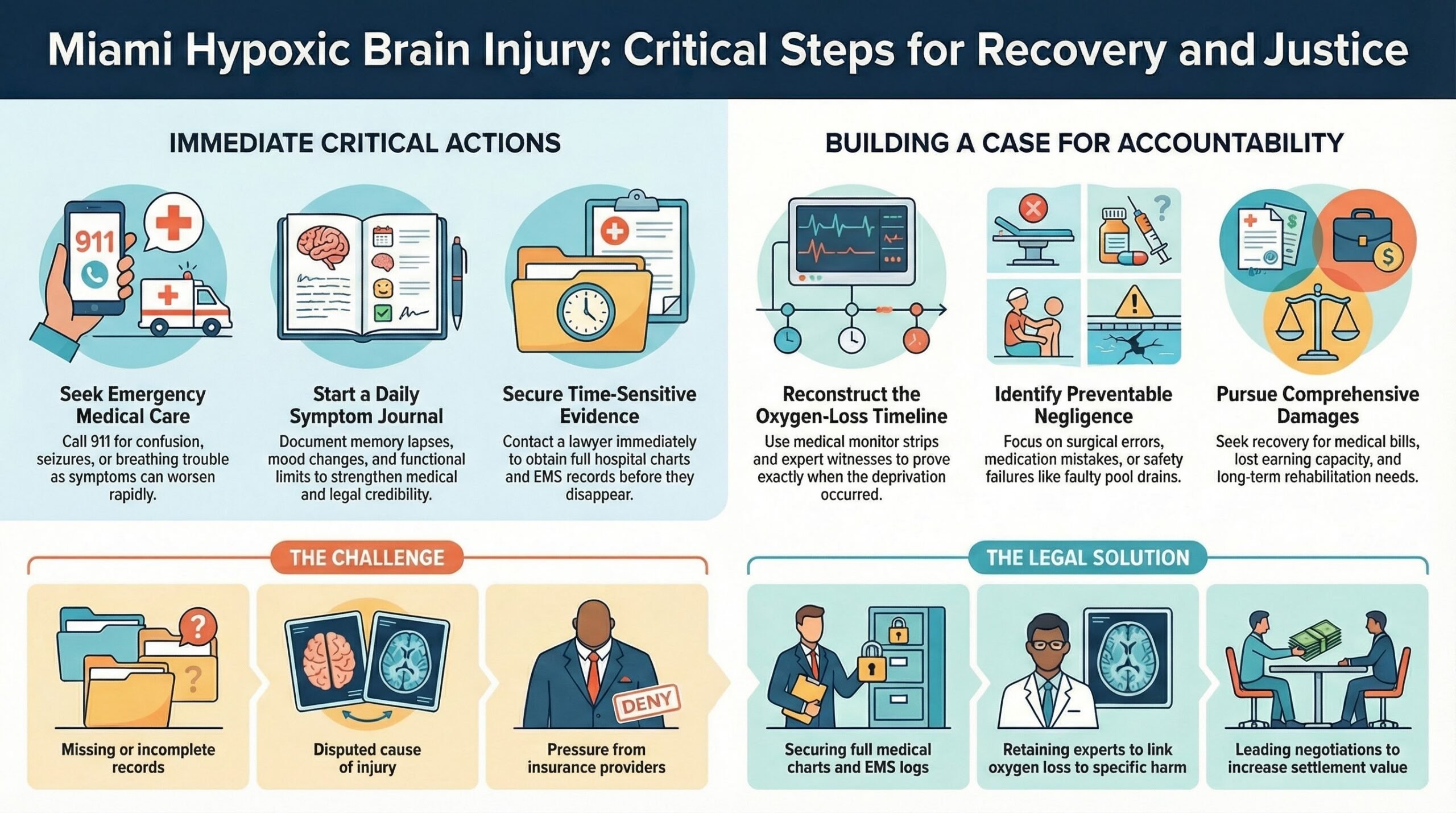
- Seek immediate medical care for confusion, severe headache, breathing trouble, seizures, fainting, or sudden behavior changes; hypoxic brain injury symptoms can worsen quickly.
- Contact a Miami hypoxic brain injury lawyer promptly to protect evidence, preserve deadlines, and guide communications with insurers and providers.
- Preserve records: hospital paperwork, test results, therapy notes, itemized bills, medication logs, photos of injuries, incident reports, and witness contact information.
- Keep a daily symptom timeline documenting memory lapses, mood changes, sleep disruption, fatigue, triggers, and functional limits; third-party observations can strengthen credibility.
- A lawyer can identify liable parties, reconstruct the oxygen-loss timeline using records and monitor strips, and retain experts to prove causation and long-term care needs.
How We Can Help With Your Miami Hypoxic Brain Injury Claim
Because a hypoxic brain injury can change every part of your life in an instant, you need a legal team that can move quickly and build a claim with precision.
You can rely on us to listen closely, identify responsible parties, and preserve crucial evidence before it disappears.
You’ll receive clear guidance on what to document, how to manage communications, and how to avoid missteps that can weaken your position.
You shouldn’t have to carry the administrative burden while you focus on care and stability.
You can count on us to coordinate records, organize timelines, and present damages in a disciplined, credible format.
When daily needs become obstacles, we’ll help connect you with supportive resources, including Technology Assistance and Transportation Services, so you can maintain access to appointments and vital routines.
You’ll also get prompt updates, decisive action, and respectful advocacy that reflects a commitment to serve your family well.
Understanding Miami Hypoxic Brain Injury Cases
Once your immediate needs are stabilized and evidence is being preserved, it’s important to understand what makes hypoxic brain injury claims in Miami different from other injury cases.
After stabilization and evidence preservation, learn what sets Miami hypoxic brain injury claims apart from typical injury cases.
You must connect medical findings to a defined period of oxygen loss, then show how that event changed cognitive, physical, and behavioral function over time.
These cases often involve Diagnostic Challenges because early symptoms can resemble fatigue, medication effects, or unrelated neurological issues, and imaging may not capture the full extent of harm.
You’ll also face demanding proof standards, since insurers and defendants frequently argue that limitations stem from preexisting conditions or normal aging.
You can strengthen your position by organizing records, tracking daily impacts, and securing consistent evaluations from treating providers.
Family Education matters as well, because informed relatives can document observable changes, support compliance with care plans, and communicate needs clearly during appointments, while still prioritizing dignity and service to your loved one.



Common Causes of Miami Hypoxic Brain Injuries
In Miami, you may face hypoxic brain injuries after medical malpractice incidents, near-drowning accidents, choking or other airway blockages, and carbon monoxide exposure.
You’ll often find that these events share a common feature: oxygen delivery is interrupted long enough to harm brain tissue.
You should recognize how each cause arises and what evidence typically proves responsibility, because early clarity can shape your legal options.
Medical Malpractice Incidents
Although many hypoxic brain injuries stem from sudden medical emergencies, a significant number in Miami arise from preventable medical malpractice incidents where basic safety protocols weren’t followed.
When you dedicate yourself to serving patients and families, you also expect hospitals to uphold clear standards, monitor oxygen levels, and respond immediately to respiratory distress.
You may see harm occur after Medication Errors, such as incorrect dosing of sedatives, overlooked drug interactions, or delayed reversal agents that depress breathing.
Surgical Mistakes can also trigger oxygen deprivation, including improper airway management, unrecognized bleeding, or failures to monitor during anesthesia and recovery.
If staff ignore alarms, delay intubation, or miscommunicate during handoffs, minutes matter.
Near-Drowning Accidents
Because Miami’s beaches, pools, and waterways are used year-round, near-drowning accidents remain a leading cause of hypoxic brain injuries, and they often happen faster than bystanders expect.
When you step in to help, seconds matter, and even a brief loss of oxygen can change a life.
You can reduce risk by keeping an eye on children within arm’s reach, assigning a dedicated water watcher, and insisting on life jackets in open water.
You should also evaluate Pool Design, since poor lighting, missing depth markers, inadequate barriers, and faulty drains can contribute to silent submersion.
Alcohol Impairment raises danger for swimmers, boaters, and supervisors alike, so you should encourage sober supervision and plan safe transportation.
If negligence played a role, you can pursue accountability to protect others.
Choking And Airway Blockage
Near-drowning isn’t the only scenario where oxygen deprivation turns catastrophic in minutes; choking and other airway blockages can do the same in homes, restaurants, workplaces, and care facilities across Miami.
When you serve others, you often respond first, so you should recognize common triggers such as food lodged in the throat, choking on pills, vomiting that blocks the airway, or swelling after an allergic reaction.
If you see sudden coughing that stops, silent attempts to breathe, or blue lips, you must act decisively and call 911.
You can begin back blows and the Heimlich technique when appropriate, but you must avoid blind finger sweeps.
For infants, you should know Infant CPR and proper positioning, because delays can cause lasting hypoxic brain injury and harm.
Carbon Monoxide Exposure
When carbon monoxide accumulates in an enclosed space, it can deprive your brain of oxygen before you realize you’re in danger.
You may encounter it in homes, garages, boats, or workplaces when fuel-burning equipment malfunctions or idles too long, and Miami’s heat can tempt people to seal doors and windows while running generators.
To protect others, you can promote routine appliance maintenance, safe generator placement, and clear policies for indoor vehicle operation.
You should also recommend reliable detection technology, including properly installed alarms and regular testing, as early warning helps prevent prolonged exposure.
Pair that with ventilation strategies, such as adequate exhaust systems, fresh air exchange, and prompt evacuation when symptoms appear.
If exposure occurs, seek immediate medical care and document conditions for accountability and prevention.
Legal Rights of Miami Hypoxic Brain Injury Victims
Although a hypoxic brain injury can change your life in an instant, Florida law gives Miami victims clear legal rights to pursue accountability and financial recovery.
You can demand that responsible parties answer for negligent medical care, unsafe premises, or other preventable failures, and you may seek damages that reflect both immediate costs and long-term support needs.
Your Privacy rights also matter, because your medical information should be handled lawfully and shared only as necessary.
When cognitive limits affect decision-making, Guardianship rights help protect your safety, dignity, and assets, while preserving as much independence as possible.
- You can pursue compensation for medical treatment, rehabilitation, lost income, and future care.
- You can assert legal protections against improper disclosure, misuse, or exploitation of sensitive records.
- You can require a fair evaluation of capacity and appropriate court oversight when guardianship is considered.



Steps to Take After a Miami Hypoxic Brain Injury
After a Miami hypoxic brain injury, you should seek immediate medical care because timely evaluation and treatment can protect your health and create vital records.
You’ll also want to document symptoms and preserve evidence, including hospital paperwork, incident reports, photographs, and witness contact information.
As soon as you can, contact a Miami lawyer so you don’t miss deadlines and protect your rights while the facts are still fresh.
Seek Immediate Medical Care
Because hypoxic brain injuries can worsen quickly and present symptoms that aren’t immediately obvious, you should seek immediate medical care as your first priority.
Call 911 if you notice confusion, severe headache, breathing trouble, bluish skin, seizures, fainting, or sudden behavior changes; prompt symptom recognition supports timely intervention and can protect those who depend on you.
Don’t try to “wait it out” or drive yourself if you feel impaired, since delays can increase harm.
Ask dispatch about transport options, including ambulance care or the nearest appropriate emergency department, and follow their directions without deviation.
If you’re with someone injured, keep them safe, monitor breathing, and provide calm support until professionals arrive. Your swift action serves everyone involved.
Document Symptoms And Evidence
Documenting symptoms and evidence can strengthen both your medical treatment plan and any future hypoxic brain injury claim.
Start by keeping a daily Symptom Timeline that notes headaches, confusion, memory lapses, mood changes, sleep disruption, and fatigue, including when each issue starts, how long it lasts, and what worsens or relieves it.
Record functional limits you notice while serving others, such as difficulty driving, managing tasks, or communicating clearly.
Maintain Medication Logs that list dosages, timing, side effects, and missed doses, and bring them to every appointment so your care team can adjust safely.
Save discharge papers, test results, therapy notes, and itemized bills, and photograph visible injuries.
Ask a trusted person to write observations, since symptoms can fluctuate and you may overlook changes.
Contact A Miami Lawyer
Strong records of symptoms, treatment, and expenses set the foundation, but you should also move quickly to protect your legal options in Miami.
When you contact a Miami lawyer, you gain a focused advocate who can preserve evidence, identify liable parties, and manage deadlines that may bar recovery if missed.
You’ll also receive guidance on communicating with insurers and providers, so your statements don’t unintentionally weaken your claim.
During the booking process, bring your medical timeline, witness names, incident reports, and any photographs or device data that may show oxygen deprivation risks.
If travel or caregiving limits your schedule, ask about virtual consultations, which let you act promptly while continuing to support your loved one’s care.
Early counsel strengthens accountability and service-driven outcomes.
How a Miami Hypoxic Brain Injury Lawyer Can Help You
When oxygen deprivation causes lasting neurological harm, you need more than medical answers—you need a legal strategy that protects your interests from the start.
A Miami hypoxic brain injury lawyer helps you act promptly, preserve critical records, and communicate with insurers and providers so you can focus on caring for your loved one and community.
Your lawyer evaluates liability, documents damages, and builds a persuasive case through expert coordination with neurologists, life-care planners, and rehabilitation professionals.
You’ll also receive steady guidance during claim negotiation, so opposing parties don’t minimize the impact of the injury or unfairly shift blame.
Throughout the process, you remain informed, supported, and positioned to make decisions that reflect your values of service and responsibility.
- Gather medical, facility, and EMS records before they’re altered or lost
- Identify responsible parties and applicable insurance coverage early
- Prepare demand packages and, if needed, file suit within required deadlines

Long-Term Effects of Miami Hypoxic Brain Injuries
After a Miami hypoxic brain injury, you may face long-term challenges that affect how you think, remember, and process information in daily life.
You can also experience motor and sensory impairments, including weakness, coordination problems, or altered vision and touch, which may limit independence and safety.
Over time, you might notice emotional and behavioral changes, such as irritability, anxiety, or reduced impulse control, that strain work, relationships, and recovery.
Cognitive And Memory Decline
Although oxygen deprivation may last only minutes, it can trigger lasting cognitive and memory decline that disrupts how you think, learn, and manage daily responsibilities.
You may notice slower processing, reduced attention, and difficulty organizing tasks, which can undermine the reliability of service to clients, patients, or your community.
Short-term memory gaps may cause missed appointments, incomplete documentation, and repeated questions, even when your intentions remain strong.
You can support recovery through Memory Rehabilitation, including structured practice, external reminders, and therapist-guided strategies that build consistency.
You should also consider Lifestyle Modifications, such as protected sleep, routine scheduling, balanced nutrition, and stress management, because cognitive endurance often declines under fatigue.
If symptoms persist, you’ll need a thorough evaluation and documentation, as these deficits can affect long-term independence and legal damages calculations.
Motor And Sensory Impairments
Even if oxygen deprivation lasted only a short time, a Miami hypoxic brain injury can leave you with persistent motor and sensory impairments that interfere with safe movement and reliable daily function.
You may notice weakness, poor coordination, tremors, or spasticity that make walking, lifting, and fine hand tasks unpredictable.
Sensory disruption can include numbness, altered pain or temperature awareness, dizziness, or vision changes, all of which increase fall risk and complicate the caregiving duties you value.
You can support recovery through structured rehabilitation strategies, including physical therapy for gait and balance, occupational therapy for daily skills, and speech therapy when swallowing or motor planning is affected.
You may also rely on assistive devices such as canes, walkers, braces, or adaptive utensils to serve others while protecting your safety.
Emotional And Behavioral Changes
Motor and sensory limitations often draw the most immediate attention, yet many people with a Miami hypoxic brain injury also face lasting emotional and behavioral changes that disrupt relationships, work, and independent decision-making.
You may notice mood swings, irritability, anxiety, depression, or sudden anger that feels out of character.
These shifts can reduce patience, weaken judgment, and strain your ability to communicate with respect and consistency.
If you serve others, you’ll need structure and support to continue leading with steadiness.
You can implement coping strategies such as scheduled rest, simplified routines, and clear boundaries, while caregivers track triggers and reinforce calm responses.
You should also seek counseling or neurobehavioral therapy and coordinate with medical providers because documented symptoms often influence long-term care planning and legal recovery.
Proving Liability in Miami Hypoxic Brain Medical Malpractice Injury Cases
How do you prove a Miami hospital or provider caused a hypoxic brain injury rather than an unavoidable medical complication?
You begin by showing a clear breach of the accepted standard of care, then connecting that lapse to the loss of oxygen and resulting harm.
You’ll focus on what should’ve been done, what was done instead, and when each pivotal decision occurred.
A strong case depends on Timeline Reconstruction, built from medical records, monitor strips, medication logs, and staff notes.
You compare documented oxygen levels, physiologic signs, and response times against what competent providers would’ve done under similar conditions.
You also rely on Expert Witnesses, such as neurologists, obstetricians, anesthesiologists, or intensive care physicians, to explain causation in plain terms and address alternative explanations.
You may highlight missed warning signs, delayed escalation, improper airway management, or inadequate fetal monitoring.
Compensation for Miami Hypoxic Brain Damages
Accountability drives a hypoxic brain injury damages claim by translating life-altering harm into specific, provable losses a Miami jury can evaluate.
Accountability turns hypoxic brain injury harm into clear, provable losses a Miami jury can measure and compensate.
You’ll pursue economic damages, including past and future medical care, rehabilitation, therapy, assistive technology, in-home support, and lost earning capacity.
You can also seek non-economic damages for pain, disability, loss of independence, and the strain your injury places on family relationships and daily service to others.
To strengthen your claim, you’ll document baseline functioning, compare it to post-injury limitations, and connect each expense to clinical recommendations.
When long-term care is needed, structured settlements can provide stable, predictable payments that protect resources and reduce financial risk.
In cases involving reckless disregard for patient safety, punitive damages may be available to deter similar conduct and promote higher standards of care.
Your goal is full, fair compensation that supports recovery and restores dignity.
The Statute of Limitations for Miami Hypoxic Brain Injury Cases
Because Florida’s filing deadlines can expire faster than you expect, you should identify the statute of limitations early in any Miami hypoxic brain injury case and act before critical evidence and legal rights slip away.
In most negligence actions, you generally have a limited window to file, and missing it can bar recovery regardless of fault.
If your injury involves medical negligence, additional pre-suit steps and shorter deadlines may apply, so you should confirm the correct timeframe promptly.
You can’t assume the clock starts on the day of the hypoxic event.
In some matters, Discovery Tolling may pause or extend deadlines when you couldn’t reasonably know the injury or its cause.
If a hospital, insurer, or other party conceals information or makes promises that delay filing, Equitable Estoppel may prevent them from using the deadline as a defense.
Act with diligence, preserve records, and prioritize timely service to protect those you serve.
Why You Need an Experienced Miami Hypoxic Brain Injury Lawyer
Even when liability seems clear, a hypoxic brain injury claim in Miami can turn on medical timelines, causation proof, and aggressive defense tactics that you can’t afford to underestimate.
You need counsel who can align ICU records, imaging, and neurology opinions to show when oxygen loss occurred and how it caused lasting deficits.
An experienced lawyer organizes proof, protects you from low-value narratives, and keeps your focus on caring for your loved one and community.
| What you’re facing | What your lawyer does | Why it matters |
|---|---|---|
| Missing records | Secures full chart | Prevents gaps |
| Disputed causation | Builds expert support | Links injury |
| Insurer pressure | Leads Settlement Negotiation | Increases value |
You also benefit from disciplined Client Advocacy, including damages planning for rehab, home support, and future care.
When defenses shift blame or argue preexisting conditions, you’ll have a steady, service-minded advocate presenting your story with accuracy and respect throughout the case.
How to Choose the Right Miami Hypoxic Brain Injury Lawyer for Your Case
How do you choose the right Miami hypoxic brain injury lawyer when the medical facts are complicated, and the defense will scrutinize every minute of oxygen loss?
You start by confirming that the attorney routinely handles oxygen-deprivation injuries and can translate records, fetal monitoring strips, and ICU timelines into a clear liability theory, supported by credible experts.
Confirm your lawyer routinely handles oxygen-deprivation injuries and can turn complex records into a clear, expert-backed liability theory.
You also look for disciplined case management, because your goal is to secure resources that protect your loved one’s dignity and long-term care.
Bring focused Interview Questions, ask who’ll work on the file day to day, what deadlines they prioritize, and how they’ve responded to insurer delay tactics.
Request examples of similar outcomes, while respecting confidentiality.
Review Fee Structures in writing, confirm whether you’ll owe costs if recovery fails, and insist on transparent communication.
Choose the lawyer who listens, explains options, and treats service as a professional obligation.
About the Law Offices of Anidjar and Levine
Selecting counsel is only the first step, so you’ll also want to understand who will actually handle your hypoxic brain injury claim and what standards guide their work.
At the Law Offices of Anidjar and Levine, you can expect a structured team approach, clear communication, and consistent accountability at every stage.
| What you can expect | How does it serve your case |
|---|---|
| Firm history | You benefit from tested processes and an informed strategy. |
| Client-first access | You get timely updates, returned calls, and practical guidance. |
| Thorough investigation | You secure medical, facility, and witness evidence efficiently. |
| Community involvement | You align with a practice that values service beyond the courtroom. |
You’ll work with professionals who keep the focus on your loved one’s needs, while advancing your claim with disciplined preparation.
If you value serving others, you’ll appreciate a firm that treats advocacy as a responsibility, not simply a transaction.

Frequently Asked Questions
How Much Does It Cost to Hire a Miami Hypoxic Brain Injury Lawyer?
You’ll often pay nothing upfront, because many hypoxic brain injury lawyers work on a contingency fee, typically 25%–40% of any recovery, plus case costs.
You can confirm pricing during the Initial Consultation, where you’ll review likely expenses, timelines, and responsibilities.
If a lawyer requires upfront payment, you’ll sign a Retainer Agreements that set hourly rates and deposits.
Choose terms that protect your ability to support your loved one.
Will My Case Likely Settle, or Will It Go to Trial?
Your case will likely settle if liability is clear and damages are well documented, but you can’t count on it.
You improve settlement likelihood when you gather records early, present credible expert support, and show readiness to serve justice for those harmed.
Watch trial indicators such as disputed causation, low insurance limits, aggressive defense tactics, or a refusal to negotiate in good faith.
You’ll decide based on risk, timeline, and fair value.
How Often Will I Receive Updates About My Case Status?
You’ll receive updates at a consistent communication frequency, typically every two to four weeks, and sooner when major events occur, such as offers, filings, or scheduling changes.
You’ll choose your preferred methods, including phone, email, or secure client portal, so you can stay informed while focusing on supporting your loved ones.
If you need more frequent check-ins, you can request them, and you’ll get timely, accountable responses.
Can I Switch Lawyers if I’M Unhappy With My Current Representation?
Yes, you can switch lawyers if you’re unhappy with your current representation.
You’ll follow your retainer agreement and your state’s Termination Procedures, usually by sending written notice and requesting your file.
You should confirm how fees and liens get handled so your resources serve the people you’re trying to help.
Your new attorney will run Conflict Checks, then coordinate a smooth transfer to protect deadlines and case momentum.
What Should I Avoid Posting on Social Media During My Case?
You should avoid posting anything that could undermine your credibility or harm others you aim to serve.
Don’t share case details, timelines, or private messages, and avoid Graphic Photos of injuries, accidents, or medical settings.
Don’t post opinions about fault, negotiations, or witnesses, since Admission Statements can be misread and used against you.
Don’t delete past posts without legal advice, and set accounts to private while staying cautious.
—————————
If you’ve suffered a hypoxic brain injury in Miami, you can’t afford delays or uncertainty.
You should document the incident, follow medical guidance, and preserve records that support your claim.
You also need to understand how fault, damages, and filing deadlines can affect your recovery, since these cases often involve complicated evidence and aggressive insurers.
With the Law Offices of Anidjar and Levine and guidance from a Miami Medical Malpractice Lawyer, you can pursue compensation, protect your rights, and move forward.


We Can Help.