




If you’ve suffered a bowel perforation in Miami tied to a medical mistake, delayed diagnosis, or unsafe procedure, Law Offices of Anidjar and Levine can act fast to preserve evidence and protect your claim.
You can strengthen your case by securing operative notes, imaging, lab trends, discharge instructions, and a clear symptom timeline.
You may pursue damages for medical costs, lost income, and pain and suffering under Florida law.
Learn more by speaking with a Miami Medical Malpractice Lawyer, and continue below to see essential steps and deadlines.



Main Takeaways
- Seek immediate emergency care for suspected bowel perforation; your health and sepsis prevention come before documentation or legal steps.
- A Miami injury lawyer can assess causes like surgical error, delayed diagnosis, retained instruments, or abdominal trauma leading to perforation.
- Strong malpractice cases require proving duty, breach of standard care, and causation using timelines, imaging, operative notes, and lab trends.
- Preserve evidence: request complete hospital records, radiology images, discharge instructions, and photograph wounds and bandages with dates and times.
- Florida compensation may include medical expenses, lost income, reduced earning capacity, pain and suffering, and future care needs resulting from infection complications.

How We Can Help With Your Miami Bowel Perforation Injury Claim
Although a bowel perforation can escalate quickly into a life-threatening condition, you still have the right to pursue compensation when medical negligence, a surgical error, or delayed diagnosis contributed to your injury.
You can rely on our team to shoulder the legal burden so you can focus on recovery and caring for those who depend on you.
We review records, identify preventable lapses in treatment, and preserve critical evidence before it disappears.
You’ll receive clear guidance on what to document, which communications to avoid, and how to protect your claim from common insurer tactics.
We calculate damages with disciplined support, including medical costs, lost income, and future care needs, then demand full accountability through negotiation or litigation when required.
You’ll see fee transparency in writing, and you can evaluate our approach through client testimonials that reflect consistent service, respect, and diligent advocacy throughout your case.
Understanding Miami Bowel Perforation Injury Cases
When a bowel perforation occurs in a Miami medical setting, the legal issues often turn on whether a provider missed clear warning signs, made a preventable surgical mistake, or failed to act with appropriate urgency.
You must show how that lapse fell below accepted standards and how it directly caused harm, not merely an unfortunate outcome despite proper care.
Documentation, timelines, and expert review often determine whether your case meets Florida’s requirements.
You’ll typically evaluate the full course of care, including triage decisions, imaging orders, operative notes, consults, and discharge instructions.
You also consider who’s responsible at each moment and whether handoffs create dangerous gaps.
In pediatric cases, you may face additional complications because symptoms can present differently, yet providers must still respond to credible indicators.
You should also remain alert to gender disparities in pain assessment and escalation, since biased assumptions can delay urgent action.
Your goal is accountability that supports safer care for others.



Common Causes of Miami Bowel Perforation Injuries
If you’ve suffered a bowel perforation in Miami, you should understand the most common ways these injuries occur and what factors tend to matter.
You may be facing surgical and procedural errors, blunt force abdominal trauma, medication or infection complications, or a delayed diagnosis and treatment that allowed a tear to worsen.
Surgical And Procedural Errors
Because bowel perforations can occur in seconds, surgical and procedural errors remain one of the most common causes of serious Miami bowel perforation injuries.
You may encounter harm when a surgeon misidentifies anatomy, applies excessive force, or fails to recognize a nick or tear before closing, allowing infection and sepsis to develop.
You also face risk during endoscopy, colonoscopy, or catheter placement when improper technique, poor visualization, or rushed decision-making compromises safety.
Instrument retention can puncture tissue or obstruct the bowel, and it often reflects breakdowns in counting protocols and team communication.
Consent violations matter as well, because you can’t truly serve your recovery when providers proceed beyond what you authorized.
When these errors occur, you can pursue accountability measures that protect patients and improve care.
Blunt Force Abdominal Trauma
Although people often associate bowel perforations with medical settings, blunt force abdominal trauma also causes sudden, life-threatening tears in the intestinal wall.
If you serve others after a crash or fall, you should watch for worsening pain, a rigid abdomen, fever, or shock, because delays can be fatal.
Your case often turns on biomechanical mechanisms, including rapid compression against the spine and sudden deceleration that shears bowel tissue.
Careful documentation supports timely care and later forensic analysis to identify how the impact occurred and who bears responsibility.
| Scenario | How injury occurs |
|---|---|
| Auto collisions | Seat belt compression, deceleration shear |
| Falls | Direct impact, crush forces |
| Assaults | Kicks or punches, focal rupture |
Medication And Infection Complications
Trauma isn’t the only pathway to a bowel perforation, since medications and infections can weaken the intestinal wall and trigger a tear with little warning.
If you serve patients in Miami, you’ll want to watch how certain drugs increase ulceration risk or mask inflammation, including NSAIDs, steroids, chemotherapy, and anticoagulants.
Pharmacokinetic variability can also increase toxicity or reduce protection, especially when kidney or liver function changes, so dosing discipline is critical.
Infections can erode tissue through severe enteritis, C. difficile colitis, or intra-abdominal abscesses that inflame and thin the bowel.
You can support safer care by ensuring antimicrobial stewardship, using targeted antibiotics, limiting unnecessary exposure, and coordinating follow-up when symptoms worsen.
This approach reduces preventable injury while honoring your duty to protect others.
Delayed Diagnosis And Treatment
When clinicians miss early warning signs or delay definitive imaging, a contained intestinal leak can progress into a full bowel perforation with rapid contamination and sepsis.
You can see how vague abdominal pain, mild fever, or rising white counts may be dismissed, especially when Cognitive Errors lead teams to anchor on a benign diagnosis.
If you serve patients, you’ll insist on reassessment, clear escalation triggers, and timely CT imaging when symptoms persist or worsen.
You should also recognize Workflow Bottlenecks that slow care, such as delayed lab turnaround, overcrowded emergency departments, or handoff gaps between services.
When antibiotics or fluids start without definitive source control, deterioration can accelerate.
You help prevent harm by documenting changes, communicating urgency, and ensuring surgical consultation occurs without avoidable delay.
Legal Rights of Miami Bowel Perforation Injury Victims
Because a bowel perforation can escalate quickly and leave lasting complications, you have clear legal rights under Florida law if a provider’s mistake, a delayed diagnosis, or negligent post‑operative care caused your injury in Miami.
Because bowel perforations escalate fast and cause lasting harm, Florida law protects Miami patients when negligence or delayed diagnosis leads to injury.
You can pursue accountability while protecting the dignity of the patient and the community you serve, and you’re entitled to a fair evaluation of what went wrong.
- You can seek compensation for medical costs, lost income, reduced earning capacity, and pain and suffering, including future care needs tied to infection or sepsis risks.
- You have Privacy Rights, meaning your medical information must be handled lawfully during investigation, negotiation, and any court proceedings.
- You can challenge adverse decisions through an Appeals Process, including disputed liability findings, denied insurance benefits, or unfavorable rulings, so your claim receives full and careful review.
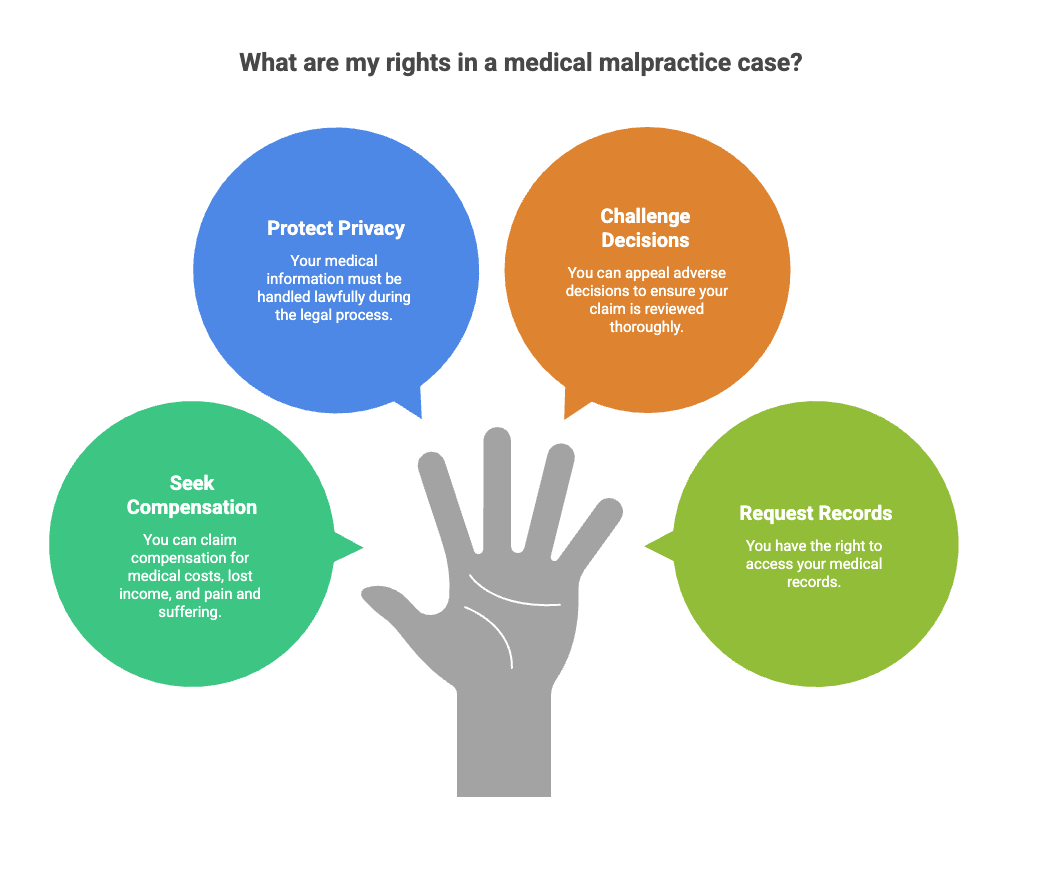
You also have the right to request records, secure expert review, and demand that providers and insurers act in good faith throughout.


Steps to Take After a Miami Bowel Perforation Injury
After a Miami bowel perforation injury, you must seek immediate medical care, since delays can worsen complications and undermine later claims.
You should document your symptoms and treatment carefully, including dates, providers, discharge instructions, and any changes in your condition.
As soon as you’re medically stable, consult a Miami attorney so you can protect your rights, preserve critical evidence, and avoid missteps with insurers or opposing counsel.
Seek Immediate Medical Care
Although a bowel perforation may not seem immediately obvious, you should treat any suspected injury as a medical emergency and seek care without delay.
Go to the nearest emergency department or call 911, because rapid evaluation can prevent infection and other life-threatening complications.
If you serve others, delegate responsibilities immediately to avoid delaying treatment or placing others at risk.
Notify your Emergency contacts and let them know where you’re going so they can assist with dependents, schedules, and critical decisions.
If you can’t safely drive, use Transportation alternatives such as an ambulance, rideshare, taxi, or a trusted friend who can transport you directly.
Avoid eating, drinking, or taking non-prescribed medications unless a clinician directs you.
Follow triage instructions carefully and remain available for immediate testing and, if needed, surgery.
Document Symptoms And Treatment
Once you’ve reached medical care and your condition is being stabilized, start documenting what you’re feeling and what providers are doing in real time.
Write down pain levels, fever, nausea, bloating, and changes in bowel habits, and note when each symptom begins or worsens.
Record tests ordered, imaging results discussed, medications given, and any surgical recommendations, including the names and roles of the staff involved.
Ask for copies of discharge instructions, lab reports, and operative notes, and confirm dates and times on every document.
Maintain disciplined file organization by using a single folder system to track visits, bills, and prescriptions.
Create a secure cloud backup of photos of incisions, drains, and bandages, and update it daily.
Accurate records help you serve others by supporting clear communication and continuity of care.
Consult A Miami Attorney
In the days that follow a bowel perforation, consulting a Miami attorney can protect your legal options while the facts remain fresh and records are still accessible.
You’ll want counsel who can promptly request hospital charts, imaging, operative notes, and incident reports, then preserve evidence before it’s altered or lost.
You can also rely on your attorney to coordinate communications so you stay focused on recovery and caring for others who depend on you.
Ask for Fee Transparency in writing, including how costs, liens, and contingency percentages are handled.
If language access matters to your family or community, request Bilingual Services to ensure every decision is fully understood.
You should also discuss deadlines, potential defendants, and how your actions today may affect future claims.
How a Miami Bowel Perforation Injury Lawyer Can Help You
A Miami bowel perforation injury lawyer can step in quickly to protect your rights, preserve essential evidence, and take over communications with insurers and healthcare providers.
A Miami bowel perforation injury lawyer can move fast to protect your rights, preserve evidence, and manage insurer and provider communications.
You’ll receive focused guidance that helps you prioritize recovery while honoring your responsibilities to family, coworkers, and the community you serve.
Your attorney will explain fee structures in plain terms, confirm what costs you may advance, and set clear expectations for client communication so you’re never left guessing about next steps.
- You’ll receive an immediate case assessment, including record review, timeline reconstruction, and identification of liable parties.
- You’ll get evidence support, such as preserving medical records, securing witness statements, and obtaining expert review when appropriate.
- You’ll have strategic negotiation and litigation readiness, with demand preparation, settlement talks, and court filings handled on schedule.
With consistent updates and disciplined advocacy, you can make informed decisions and pursue fair accountability.
Long-Term Effects of Miami Bowel Perforation Injuries
After a Miami bowel perforation injury, you may face chronic digestive complications that disrupt nutrition, bowel function, and daily comfort over time.
You’re also at ongoing risk for infection and sepsis, especially if scarring or prior surgical repairs create persistent vulnerabilities.
When these outcomes limit work capacity and routine activities, you can experience long-term disability impacts that affect your independence and financial stability.
Chronic Digestive Complications
Living with a bowel perforation injury often means the crisis doesn’t end when the incision mends, because long-term digestive complications can disrupt how your body absorbs nutrients, processes food, and manages inflammation.
You may face persistent pain, unpredictable bowel habits, and food intolerances that limit your energy for work and service.
Scar tissue can alter motility, while shortened bowel segments may reduce absorption and lead to dehydration or unintended weight loss.
You’ll often need careful Dietary Management, trigger tracking, and meal spacing to stabilize symptoms.
You can also benefit from Gut Rehabilitation, including guided reintroduction of foods, hydration planning, and clinician-supervised supplements.
Infection And Sepsis Risks
| What you notice | What it may mean | How can you serve others |
|---|---|---|
| Chills, fever | Smoldering infection | Encourage prompt evaluation |
| Confusion | Rising sepsis risk | Share clear observations |
| Rapid breathing | System stress | Help arrange urgent care |
Long-Term Disability Impacts
Although a bowel perforation may appear resolved once the immediate infection is controlled, you can still face long-term disability that disrupts work, mobility, and daily routines.
Ongoing abdominal pain, fatigue, and reduced stamina can limit lifting, standing, and reliable attendance, especially in service-focused roles where others depend on you.
Adhesions, hernias, or short bowel complications may require additional procedures and strict dietary management, which can slow recovery and affect independence.
You may also need Psychological Adjustment, because trauma, sleep disruption, and fear of recurrence can impair concentration and decision-making.
If you can’t return to prior duties, Vocational Retraining can help you shift into safer tasks while preserving your ability to contribute.
Document limitations carefully and seek coordinated follow-up care early.
Proving Liability in Miami Bowel Perforation Medical Malpractice Injury Cases
When a bowel perforation follows medical care in Miami, proving liability requires more than showing you suffered a serious complication.
You must establish that a provider owed you a duty of care, breached that duty, and caused your injury through a clear Causation Analysis grounded in medical facts.
You’ll compare the clinician’s decisions to accepted standards, including timely diagnosis, appropriate imaging, careful surgical technique, and prompt response to infection signs.
You strengthen your case by preserving Forensic Documentation from the start.
Request complete records, operative reports, nursing notes, lab trends, radiology images, and medication logs, and make certain nothing is altered or missing.
You’ll also benefit from a qualified expert review that explains how specific acts or omissions, not an unavoidable risk, produced the perforation and the resulting complications.
Compensation for Miami Bowel Perforation Damages
Accountability guides any serious discussion of compensation after a Miami bowel perforation injury.
You can pursue damages that reflect both the medical reality of the harm and the practical needs of your family, especially when you’re trying to keep serving others while recovering.
Economic damages may cover emergency surgery, hospitalization, follow-up care, medications, rehabilitation, and lost income, including reduced earning capacity if complications limit your work.
Non-economic damages may address pain, scarring, emotional distress, and loss of enjoyment of life, recognizing the personal cost of prolonged treatment and uncertainty.
You should also evaluate future expenses, such as additional procedures or home assistance, and document them carefully.
When you negotiate or litigate, you’ll consider insurance benefits, liens, and the tax implications of different categories of recovery.
A focused damages plan helps you seek full, fair compensation without overstating what the evidence supports.
The Statute of Limitations for Miami Bowel Perforation Injury Cases
Because deadlines can determine whether you can recover anything at all, you need to identify the statute of limitations that applies to a Miami bowel perforation injury case as early as possible.
In Florida, the filing window depends on whether your claim involves medical negligence, a product defect, or another form of wrongdoing, and missing the deadline can bar recovery entirely.
You should document when the injury occurred, when you first learned its cause, and when you received confirming medical information.
The discovery rule may extend the start date when you couldn’t reasonably know that a perforation resulted from negligence or a defective device, but it doesn’t grant unlimited time.
You also need to evaluate tolling exceptions, such as those involving a minor, incapacity, or concealment of material facts.
Acting promptly protects your ability to secure resources for care, and it also helps you support others who rely on your stability.
Why You Need an Experienced Miami Bowel Perforation Injury Lawyer
Meeting the statute of limitations is only the starting point, since a bowel perforation claim in Miami can rise or fall on how quickly and effectively you build the proof behind it.
You need an experienced lawyer because early steps protect essential records, preserve imaging, obtain operative notes, and secure witness statements.
Those actions must happen before memories fade or documents disappear.
You also face intricate medical causation issues, and you can’t serve your family or community well if your recovery is undermined by incomplete evidence.
An experienced attorney uses an Expert network to evaluate the standard of care, identify diagnostic delays, and explain how sepsis, additional surgery, and long-term limitations relate to the injury.
You benefit from precise damage documentation, including future care, lost earning capacity, and the real impact on your ability to help others.
With Trial readiness, your lawyer prepares every case as if it will be tried, strengthening leverage in negotiations and discouraging low offers.
How to Choose the Right Miami Bowel Perforation Injury Lawyer for Your Case
How do you separate a capable Miami bowel perforation injury lawyer from one who simply advertises the right relevant words?
You start by confirming relevant medical-injury experience, then you test how clearly the lawyer explains liability, damages, and timelines without evasion.
You should ask who’ll handle your file day-to-day, how quickly you’ll receive updates, and what their communication style is during emergencies and routine milestones.
Next, review case outcomes that match your facts, including surgical errors, delayed diagnosis, or post-operative infections, and ask for a practical plan for proving causation and future care costs.
You can also study client testimonials for consistency, focusing on responsiveness, respect, and follow-through rather than hype.
Finally, choose a lawyer who treats your case as service, not volume, and who empowers you to make informed decisions at every stage of the process.
About the Law Offices of Anidjar and Levine
Choosing the right bowel perforation injury lawyer often comes down to whether a firm can match confident explanations with disciplined case preparation and consistent client communication.
At the Law Offices of Anidjar and Levine, you’ll find a team that treats your claim as a service commitment, not a transaction, and you’re kept informed as the case advances through each phase.
At the Law Offices of Anidjar and Levine, your claim receives committed service, with clear updates provided at every stage.
You can draw reassurance from the firm history of representing injured Floridians in high-stakes matters where medical harm and financial loss intersect.
You’re supported by attorneys who organize records, coordinate with medical providers, and pursue accountable parties with purposeful, evidence-driven advocacy.
Your work with the firm also connects to broader Community involvement, reflecting a view that legal practice should strengthen neighbors and promote safer standards.
If you value steady guidance, careful planning, and respectful attention, you’ll see how this approach aligns with your goal of helping others while protecting your own future.

Frequently Asked Questions
What Does It Cost to Hire a Miami Bowel Perforation Injury Lawyer?
You’ll usually pay nothing upfront because many lawyers work on contingency, taking 30%–40% of any recovery.
You should request a clear Fee Breakdown, including how the percentage changes if the case settles or goes to trial.
You’ll also need to plan for Litigation Expenses, such as filing fees, medical records, experts, and depositions, which you may reimburse from the settlement.
Ask for these terms in writing.
Do You Offer Free Consultations and Work on Contingency Fees?
Yes, you can receive a free consultation, and you can often proceed under a contingency fee arrangement, so you don’t pay attorney’s fees unless you recover compensation.
During the consultation, you’ll complete an initial risk assessment, review essential records, and clarify timelines and goals.
If you move forward, client onboarding proceeds promptly, with signed agreements, evidence-preservation steps, and coordinated communication so you can focus on serving others.
Will My Case Likely Settle, or Will It Go to Trial?
Your case may settle, but you can’t assume it won’t go to trial.
You’ll usually see a settlement when Evidence Strength clearly supports liability and damages, and when Jury Perception appears favorable and predictable.
You should expect a trial if the other side disputes fault, minimizes harm, or doubts how a jury will respond.
You’ll serve others best by preparing thoroughly, negotiating firmly, and staying ready to testify.
How Long Does a Bowel Perforation Injury Lawsuit Usually Take?
A bowel perforation injury lawsuit usually takes 12 to 24 months, though it can resolve sooner if liability is clear.
You’ll spend significant time in the discovery duration, where records, experts, and depositions shape the case.
Court backlog can extend hearings, mediation dates, and trial settings, even when you’re ready to proceed.
If you stay organized and responsive, you help your counsel serve your interests and advance a fair resolution.
Can I Still File if I Signed Hospital Consent Forms or Waivers?
Yes, you can often still file even if you signed hospital forms.
Informed Consent documents usually confirm you understood known risks, but they don’t excuse negligent treatment or undisclosed dangers.
Waiver Limits also apply, since many waivers can’t legally bar claims for malpractice, gross negligence, or violations of patient rights.
You should collect the paperwork, request complete medical records, and document your symptoms promptly to protect others through accountable care.
—————————
If you’ve suffered a bowel perforation injury in Miami, you can’t afford delays or assumptions about fault.
You should document your symptoms, follow medical guidance, and preserve records that support your claim.
You’re entitled to pursue compensation for medical costs, lost income, and the lasting impact on your health.
With an experienced Miami Medical Malpractice Lawyer at Law Offices of Anidjar and Levine, you can evaluate liability, meet strict deadlines, and negotiate from a position of strength.
Act promptly to protect your case.


We Can Help.