




A Miami anoxic brain injury lawyer helps you secure time-sensitive medical records, preserve evidence, and build a clear timeline showing how oxygen loss caused lasting neurological harm.
With the Law Offices of Anidjar and Levine, you can pursue expert-backed proof, including neurology and life-care planning, to translate medical findings into damages for future care, lost income, and reduced independence.
Your lawyer can handle insurer communications, prepare your claim for trial, and measure offers against long-term needs.
Learn more by visiting our Miami Medical Malpractice Lawyer page for essential steps, deadlines, and selection tips.
Main Takeaways
- Choose a Miami anoxic brain injury lawyer who can prove oxygen deprivation caused lasting deficits using timelines, records, and neurologic expert testimony.
- Look for a trial-ready representation that gathers protocols, staffing logs, and facility records early to counter insurers and shifting blame.
- A strong firm coordinates with medical, rehabilitation, and life-care planners to document future care costs, lost income, and support needs.
- Expect the lawyer to handle all insurer communications, preserve evidence, and measure settlement offers against long-term treatment and caregiving realities.
- Evaluate experience, verifiable results, local reputation, clear fee terms, and who handles your case daily with prompt, organized communication.
How We Can Help With Your Miami Anoxic Brain Injury Claim
Managing an anoxic brain injury claim in Miami can feel overwhelming, especially when you’re trying to protect your health and your family’s financial future at the same time.
You’re entitled to counsel that serves you with discipline, clarity, and respect for the responsibilities you carry each day.
You can rely on us to gather records, identify responsible parties, and coordinate with medical and rehabilitation professionals so your needs are documented with precision.
You’ll receive a clear case strategy that aligns with your recovery plan, your caregiving realities, and the long-term support your household may require.
We’ll handle insurer communications, calculate damages in a disciplined manner, and prepare your claim as if it will be tried, which strengthens your position from the start.
When the time comes, you’ll have steady guidance through settlement negotiation, with each offer measured against future care costs, lost income, and the services your family provides.
Understanding Miami Anoxic Brain Injury Cases
How do Miami anoxic brain injury cases differ from other injury claims? You must prove not only that a harmful event occurred, but that oxygen deprivation caused specific, lasting brain damage with measurable functional losses.
That link often requires careful timelines, treatment records, and clear medical reasoning rather than visible wounds.
You’ll rely on expert analysis that translates intricate findings into understandable evidence for insurers, judges, and juries. Neuroimaging techniques can show patterns consistent with anoxic injury and help explain why memory, executive function, or mobility changed after the incident.

You may also encounter biomarker research, which can support clinicians’ assessment of injury severity, prognosis, and recovery potential. Because outcomes vary widely, you need a case strategy that reflects your day-to-day challenges, your rehabilitation needs, and your commitment to protecting your family while seeking fair accountability for those responsible.

Common Causes of Miami Anoxic Brain Injuries
In Miami, you’ll often see anoxic brain injuries arise from drowning or near-drowning incidents, especially in pools, beaches, and boating settings.
You may also face these injuries after cardiac arrest events, or when choking and other airway obstructions cut off oxygen before help arrives.
You should also recognize carbon monoxide exposure as a serious risk, because it can deprive the brain of oxygen quickly and with little warning.
Drowning And Near-Drowning
Although drowning incidents can unfold in seconds, the loss of oxygen they cause can trigger an anoxic brain injury with lifelong consequences.
If you serve families in Miami, you should recognize that near-drowning often occurs quietly, in backyard pools, beaches, canals, and even bathtubs, especially when supervision lapses or barriers fail.
You can reduce harm through disciplined Pool Safety, including secure gates, clear water visibility, and strict rules against distraction.
When an emergency occurs, you must act with calm purpose and use effective Rescue Techniques, such as reaching with a device before entering the water, calling for help immediately, and beginning basic lifesaving steps once the person is removed.
If negligence contributed, you can help survivors pursue accountability and access to long-term care resources.
Cardiac Arrest Events
When the heart suddenly stops circulating oxygen-rich blood, the brain can begin to suffer irreversible harm within minutes, making cardiac arrest one of the most common pathways to anoxic brain injury in Miami.


If you serve others in healthcare, education, or community settings, you may be the first to recognize collapse, absent breathing, or a weak pulse. You can help by activating emergency response immediately, starting high-quality CPR, and directing someone to retrieve Public AEDs when available.


Early defibrillation and coordinated care can improve Survival Rates, yet delays often lead to extended oxygen deprivation and lasting neurologic disability. After the crisis, you can document timelines, witness observations, and facility response steps, since these details may later clarify whether preventable lapses contributed to the injury.
Choking And Airway Obstruction
Because the brain can’t store oxygen, a blocked airway can trigger anoxic brain injury within minutes, and choking remains a common, preventable cause in Miami.
If you serve others in healthcare, childcare, or hospitality, you can reduce risk by recognizing early signs of distress, enforcing safe feeding practices, and responding promptly with appropriate first aid.
You should watch for high-risk foods, poor supervision, and unsafe product design, especially with young children and older adults.
In dining settings, you can advocate for clear restaurant protocols, staff training, and rapid access to emergency response tools.
In homes and schools, you can support strict toy regulations, age-appropriate labeling, and routine hazard checks.
When obstruction occurs, timely action matters, and careful documentation preserves accountability later.
Carbon Monoxide Exposure
An idling car in a closed garage can fill a space with carbon monoxide so quietly that you won’t recognize the danger until symptoms escalate.
You may feel a headache, dizziness, nausea, or confusion, yet you might misread these signs as fatigue, especially when you’re focused on helping others.
In homes and workplaces, faulty heaters, blocked vents, and poorly maintained generators can also create lethal exposure in minutes.
You can reduce risk by installing reliable detection technology on every level, testing alarms regularly, and ensuring appliances receive routine inspection.
You should also apply prevention strategies, such as never running engines indoors, ventilating work areas, and checking on vulnerable neighbors during cold snaps.
When exposure occurs, act immediately, move to fresh air, and call emergency services.

Legal Rights of Miami Anoxic Brain Injury Victims
Even if the medical facts seem clear, you still have specific legal rights under Florida law after an anoxic brain injury, and those rights can shape how you pursue care, accountability, and financial recovery in Miami.
You may demand access to complete medical records, challenge negligent conduct, and seek damages for long-term impairment, lost income, and necessary support services, including in-home assistance and rehabilitative care.
Your rights often intersect with community responsibility, because protecting your stability helps you continue serving family, coworkers, and those who depend on you.
Depending on the cause, you may have claims against a driver, property owner, medical provider, or employer, and you can also explore Disability Benefits and Employment Protection when your symptoms limit work.
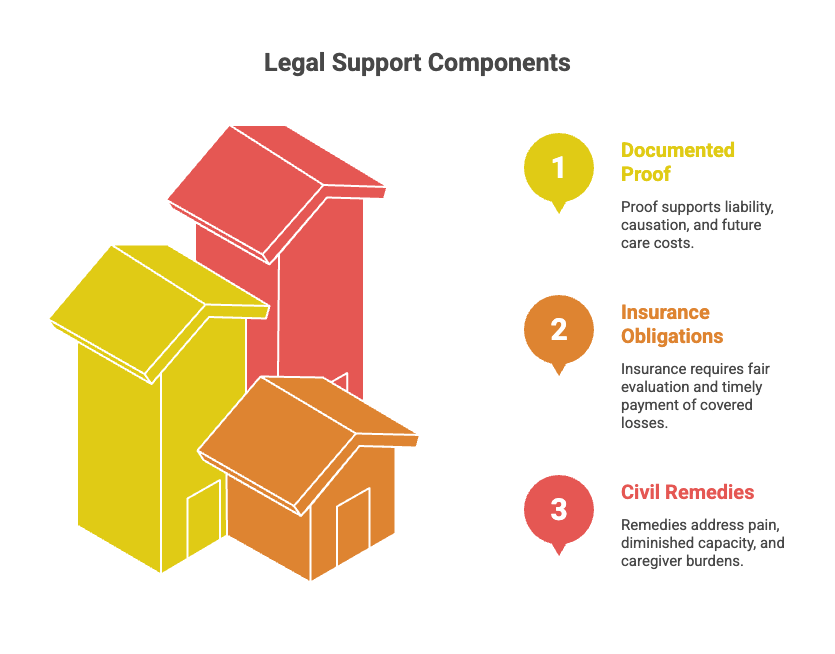
- Documented proof can support liability, causation, and future care costs.
- Insurance obligations may require fair evaluation and timely payment of covered losses.
- Civil remedies can address pain, diminished capacity, and caregiver burdens.
Steps to Take After a Miami Anoxic Brain Injury
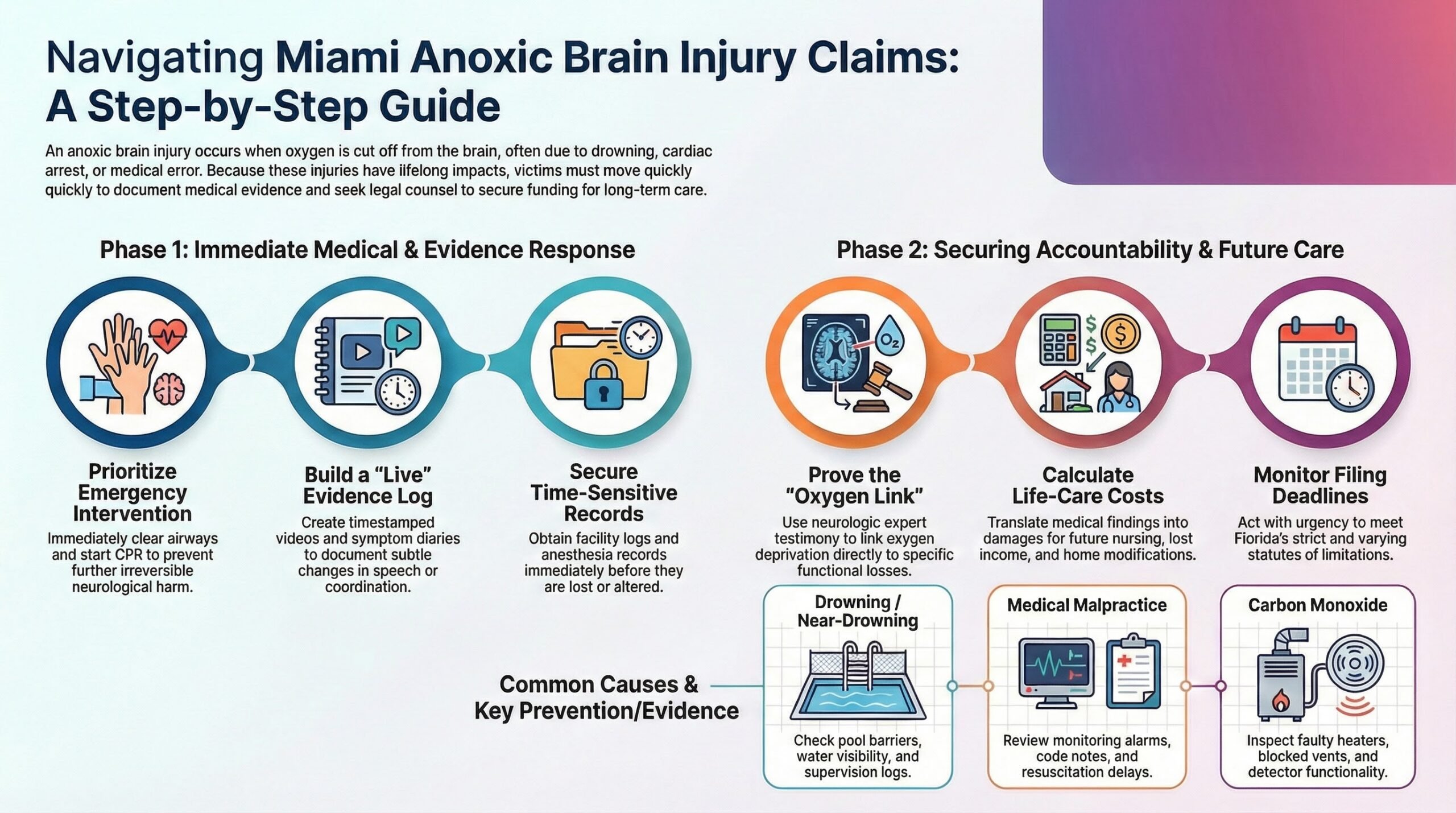
After a Miami anoxic brain injury, you should seek emergency medical care immediately, because prompt treatment can protect brain function and create reliable medical records.
You should also document the incident and your symptoms, including dates, witnesses, photos, and all provider instructions, so the timeline remains clear and consistent.
As soon as you can, you should consult a Miami injury lawyer, because you’ll need guidance to preserve evidence, manage insurance communications, and protect your legal position.
Seek Emergency Medical Care
| Priority | What you do | Why it matters |
|---|---|---|
| Airway | Position, clear obstructions | Prevents further oxygen loss |
| Breathing | Start CPR if needed | Supports circulation, oxygenation |
| Transport | Wait for EMS | Enables rapid treatment |
Document Incident And Symptoms
Start by writing down what happened and what you noticed, because clear documentation can shape both your medical care and any future legal claim.
Record the date, time, location, and who was present, then note any delays in oxygen, resuscitation efforts, or equipment issues you observed.
Take photos of visible injuries and preserve related items, but don’t alter or clean anything that may matter later.
Create timestamped videos that show speech, balance, coordination, and memory challenges, since day-to-day changes can be subtle.
Keep a Symptom diary with headaches, confusion, fatigue, mood shifts, and sleep patterns, and include medications, doses, and side effects.
Ask caregivers to add objective notes, and bring these records to every appointment to support consistent, compassionate care.
Consult Miami Injury Lawyer
When should you consult a Miami injury lawyer following an anoxic brain injury? You should reach out as soon as your loved one is medically stable, or immediately if you suspect negligence at a hospital, workplace, pool, or care facility.
Early counsel helps you protect evidence, identify responsible parties, and avoid statements that may harm the claim.
You can also serve your community by pursuing accountability that improves safety for others.
Bring your incident notes, symptom timeline, records, and witness contacts, and ask the lawyer to preserve video and electronic data.
During appointment scheduling, request accommodations for cognitive fatigue, translation, or remote meetings.
Confirm office parking options, and plan transportation if driving is unsafe.
Ask about fees, timelines, and next steps.
How a Miami Anoxic Brain Injury Lawyer Can Help You
How do you protect your rights and financial future after an anoxic brain injury upends your life?
You work with a Miami anoxic brain injury lawyer who moves quickly to secure evidence, identify liable parties, and prevent insurers from shifting blame onto you.
You should expect Fee transparency from the start, so you can plan responsibly and continue supporting the people who rely on you.
Strong Client communication also matters because clear updates help you make informed decisions without added stress.
A focused lawyer helps you by taking decisive steps, such as:
- Gathering medical records, witness statements, and facility logs before they disappear
- Calculating current losses and documenting needed services and accommodations
- Handling insurer calls, demand letters, and filing deadlines, so you stay protected
You remain in control of critical choices, while your lawyer builds a persuasive claim, negotiates firmly, and prepares for trial if a fair settlement isn’t offered.
Long-Term Effects of Miami Anoxic Brain Injuries
After a Miami anoxic brain injury, you may face long-term challenges that affect how you think, remember, and process information in daily life.
You can also experience motor and sensory impairments that limit movement, coordination, balance, or your ability to feel and respond to stimuli.
In many cases, you’ll notice emotional and behavioral changes that alter mood, judgment, and relationships, requiring consistent treatment and structured support.
Cognitive And Memory Decline
Living with an anoxic brain injury often means facing cognitive and memory decline that doesn’t resolve with time.
You may struggle to retain new information, follow multi-step tasks, or stay organized, even when you’re motivated to serve your family, workplace, or community.
Attention lapses and slowed processing can make conversations, reading, and decision-making more demanding than before.
You can support recovery by committing to structured neuroplasticity exercises that target recall, problem-solving, and sustained focus, then tracking progress with a clinician to adjust goals.
Consistent routines, written reminders, and simplified task lists help you protect independence without sacrificing dignity.
Dietary interventions, guided by medical advice, may also support brain health by addressing energy balance and inflammation.
When these changes limit your work capacity, document impacts carefully for future planning and legal review.
Motor And Sensory Impairments
Although oxygen deprivation primarily injures brain tissue, it often leaves you with long-term motor and sensory impairments that change how you move, balance, and interpret the world around you.
You may notice weakness, slowed coordination, tremors, or gait instability that makes daily tasks and community service harder to sustain safely.
Muscle tightness can progress into contractures, so you’ll need structured therapy and consistent spasticity management to preserve range of motion and reduce fall risk.
Sensory changes may include numbness, tingling, pain, or difficulty judging temperature and pressure, which can endanger you when cooking, driving, or assisting others. Clinicians often recommend sensory retraining to rebuild awareness through guided touch, balance work, and adaptive strategies, helping you serve with steadier, safer movement over time.
Emotional And Behavioral Changes
Motor and sensory limitations often draw immediate attention, yet an anoxic brain injury can also disrupt the emotional regulation and impulse control that guide your daily decisions.
You may notice irritability, sudden anger, or tearfulness that feels out of character, even when you’re committed to patience and service.
These changes can strain family routines, ministry roles, and professional responsibilities, because you might misread tone, act too quickly, or struggle to filter remarks.
You may experience anxiety, depression, or social withdrawal, then feel guilt for stepping back from people who rely on you.
Over time, identity shifts can emerge as you grieve the loss of abilities and question your purpose.
With structured counseling, consistent sleep, and supportive coaching, you can rebuild steadier habits and restore trust in relationships.
Early documentation also strengthens future care planning.
Proving Liability in Miami Anoxic Brain Medical Malpractice Injury Cases
When an anoxic brain injury follows medical treatment in Miami, you must prove more than a tragic outcome to establish malpractice liability.
You’ll need to show the provider owed a duty of care, breached that duty, and caused harm through a preventable lapse, such as delayed airway management, missed monitoring alarms, or failures in timely resuscitation.
You can’t rely on suspicion; you build a disciplined record.
Obtain complete charts, anesthesia logs, fetal monitoring strips, medication records, code notes, and imaging timelines, then compare them to accepted standards.
Expert Testimony is central because qualified medical experts explain what competent clinicians would’ve done under similar conditions.
You also need Causation Proof, connecting the breach to the oxygen-deprivation event and ruling out alternative causes like preexisting disease or unavoidable complications.

Compensation for Miami Anoxic Brain Damages
How do you put a dollar value on an anoxic brain injury in Miami without overlooking the full scope of loss?
You start by documenting every way the injury changes your ability to serve your family and community, then you translate those changes into provable damages.
Economic losses often include past and future medical care, rehabilitation, assistive technology, home modifications, and lost income or earning capacity.
Non-economic damages may reflect pain, suffering, mental anguish, and the loss of independence that limits daily contributions.
You strengthen your claim with life-care plans, expert projections, and clear records that connect the injury to specific needs.
During insurance negotiations, you push for terms that align with long-term realities, not short-term offers.
When appropriate, structured settlements can protect vulnerable clients by providing reliable payments for therapy, caregivers, and vital milestones.
Your focus stays on dignity, stability, and measurable support.
The Statute of Limitations for Miami Anoxic Brain Injury Cases
Accurately valuing an anoxic brain injury only matters if you can still pursue the claim, and Florida’s filing deadlines can cut off recovery even in strong cases.
You should identify the correct statute of limitations early, because the time period can vary based on whether your case involves negligence, medical malpractice, or a wrongful death.
You can’t assume the clock always starts on the day of the injury.
Under the Discovery Rule, the deadline may run from when you knew, or reasonably should’ve known, that negligence caused the harm, which matters when symptoms emerge gradually.
Still, delays are risky, and you should gather records, witness information, and care timelines promptly to protect the person you serve.
In limited circumstances, Equitable Tolling may toll the deadline when extraordinary circumstances prevent timely filing, but courts apply it narrowly. Act with urgency to keep your claim viable.
Why You Need an Experienced Miami Anoxic Brain Injury Lawyer
Because anoxic brain injury cases often hinge on technical medical proof and aggressive defense tactics, you need a Miami lawyer who’s handled these claims from intake through trial.
You’re not only proving what happened, but you’re also showing how oxygen loss changed a life, and that requires command of neurology, life-care planning, and causation evidence.
An experienced lawyer anticipates the insurer’s playbook, secures time-sensitive records, and works with qualified experts who can explain nuanced findings clearly to a jury. You also need disciplined case leadership, since medical providers and facilities may resist disclosure or shift blame.
Your lawyer should protect your family’s dignity while pursuing accountability, including careful media management when attention threatens to distort the facts. By shaping public perception through accurate, respectful communication, you reduce distractions and keep focus on safety, responsibility, and long-term care needs.
With seasoned guidance, you can serve your loved one’s best interests and pursue a result that supports meaningful recovery and stability.
How to Choose the Right Miami Anoxic Brain Injury Lawyer for Your Case
Where do you start when you’re trying to select a Miami anoxic brain injury lawyer while medical questions, facility records, and insurance pressure all move at once?
Start by choosing a Miami anoxic brain injury lawyer who can manage medical uncertainty, facility records, and insurer pressure at once.
Begin by confirming focused experience with oxygen-deprivation injuries, including cases involving hospitals, nursing homes, and delayed diagnosis.
Ask how the lawyer builds proof, such as obtaining protocols, staffing logs, and expert reviews, and how they’ll connect breaches of care to lasting harm.
Next, evaluate Local Reputation through verifiable outcomes, peer references, and standing in the Miami legal community.
You should also assess Communication Style, because you’ll need clear updates, prompt return calls, and explanations that respect your role as an advocate for your loved one.
Request a written plan outlining deadlines, investigation steps, anticipated obstacles, and who’ll handle your case day to day.
Finally, review fee terms in writing, and choose counsel who balances compassion with firm, disciplined strategy.
About the Law Offices of Anidjar and Levine
Case-building discipline matters when you’re confronting an anoxic brain injury, and the Law Offices of Anidjar and Levine positions its practice around thorough investigation, assertive negotiation, and trial readiness.
You’ll work with a team that treats each record, timeline, and witness statement as a duty to your recovery and to the people who depend on you.
The firm’s approach emphasizes clear communication, practical guidance, and steady advocacy from intake through resolution.
Your case benefits from the firm’s Firm History of representing injured Floridians with focused preparation and a results-driven mindset.
You can expect prompt responses, organized case management, and support that respects medical realities and long-term care needs.
Through Community Involvement, you’re backed by attorneys who value service, accountability, and local impact, not just outcomes.
If negotiations stall, you’re not left waiting; they prepare to litigate decisively while keeping you informed and in control throughout.
Frequently Asked Questions
Will My Settlement Affect Medicare, Medicaid, or SSDI Eligibility?
Yes, your settlement can affect Medicare, Medicaid, and SSDI eligibility, and you should plan before you accept funds.
You may owe Medicare Repayments for related medical bills, and Medicaid may require a Medicaid Spenddown that reduces countable assets.
SSDI usually isn’t means-tested, but certain needs-based programs can change.
You’ll best protect benefits by carefully structuring payments, documenting expenses, and promptly coordinating with the reporting team to meet deadlines.
Can I Recover Damages if I Signed a Hospital Arbitration Agreement?
Yes, you can still recover damages, but you’ll likely pursue them through arbitration rather than court.
You should evaluate Arbitration Enforceability by reviewing how the agreement was presented, whether the terms were clear, and if you had a meaningful choice.
Hospitals often raise Consent Defenses, claiming you knowingly agreed, yet you can challenge consent if you lacked capacity, faced pressure, or received incomplete disclosures.
You can still advocate effectively for patient safety.
How Are Structured Settlements Used for Catastrophic Brain Injury Cases?
You use structured settlements in catastrophic brain injury cases to provide reliable, long-term payments that match ongoing care needs.
You coordinate Annuity selection to align payment timing with therapy, housing, and attendant care costs, while limiting the risk of rapid depletion.
You also integrate Trust management, so funds support benefits planning, protect eligibility where applicable, and guarantee oversight.
You document projected expenses carefully, then negotiate terms that prioritize lifelong stability.
What Happens if the Injured Person Is Undocumented or Not a U.S. Citizen?
If you’re undocumented or not a U.S. citizen, you can still pursue injury compensation, but you must plan carefully.
You’ll address identity, work history, and medical documentation without triggering avoidable Immigration Consequences.
You should coordinate your injury claim with qualified immigration counsel, because statements, settlements, or court appearances can affect status and increase Deportation Risk.
You’ll also confirm how structured payments, liens, and benefits interact with eligibility and long-term care needs.
Can I Pursue a Claim if the Injury Occurred on a Cruise Ship?
Yes, you can pursue a claim if the injury occurred on a cruise ship, but you must act quickly.
Maritime Jurisdiction often controls where you file and which laws apply, and the ticket contract may set strict notice deadlines.
You should document the incident, obtain medical records, and preserve witness details.
By asserting Passenger Rights promptly, you help protect others from similar harm and strengthen your case.
Seek counsel experienced in maritime matters.
—————————
An anoxic brain injury can alter your life in seconds, and you can’t afford delays when pursuing compensation.
If you act promptly, you’ll protect vital evidence, meet filing deadlines, and strengthen your position in negotiations or court.
You should document medical care, follow treatment plans, and avoid statements that could be distorted by insurers.
When you work with the Law Offices of Anidjar and Levine and consult a Miami Medical Malpractice Lawyer, you’ll gain focused guidance, a clear strategy, and determined advocacy throughout your claim.

We Can Help.