




After an amputation in Miami, you can’t afford delays, and Law Offices of Anidjar and Levine can act fast to protect your claim.
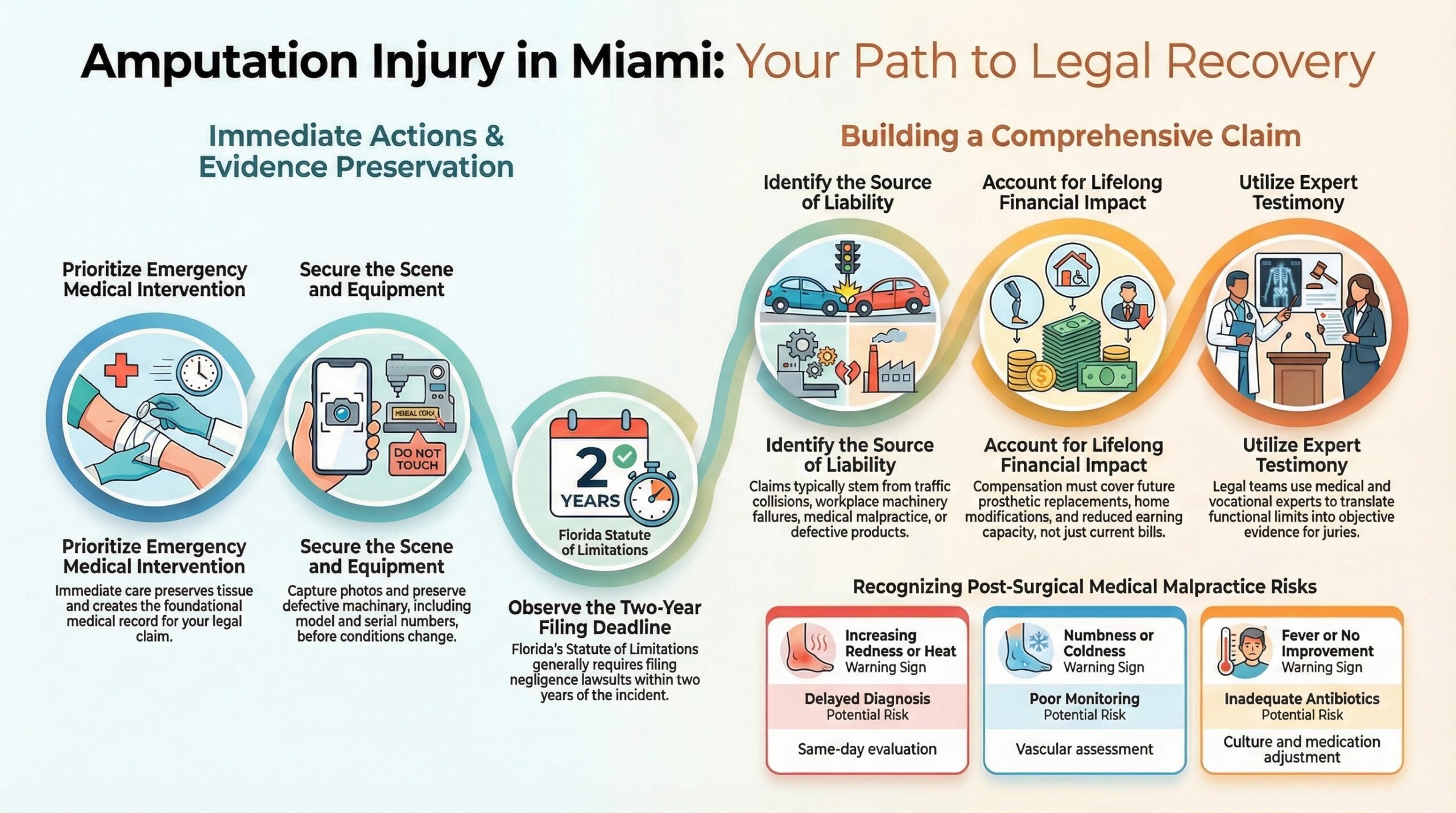
You should get emergency care, document the scene, preserve defective equipment, and keep complete medical records.
Your attorney can investigate causation, secure witnesses, work with medical and vocational experts, and pursue damages for surgeries, rehabilitation, prosthetics, lost income, and pain and suffering.
If medical negligence may be involved, consult a Miami Medical Malpractice Lawyer.
Continue for critical deadlines and next steps.



Main Takeaways
- Get emergency care immediately, then consult a Miami amputation injury lawyer to protect evidence and meet strict filing deadlines.
- Preserve evidence: photos, witness contact information, incident reports, medical records, and any defective equipment with model and serial numbers.
- Common case types include traffic crashes, workplace machinery accidents, defective products, and medical malpractice or infection from delayed diagnosis.
- A lawyer investigates causation, coordinates experts, and documents how errors or safety failures worsened injuries and long-term limitations.
- Potential damages include medical bills, rehabilitation, prosthetics, lost income, reduced earning capacity, pain and suffering, and coordination of disability benefits.
How We Can Help With Your Miami Amputation Injury Claim
In the aftermath of an amputation, you need more than sympathy—you need a clear legal strategy that protects your rights and preserves essential evidence.
After an amputation, you need more than sympathy—a clear legal strategy that protects your rights and preserves vital evidence.
You can count on us to act quickly, secure incident reports, request relevant records, and coordinate inspections before conditions change.
You’ll receive structured guidance on what to document, who to speak with, and how to avoid common mistakes that can weaken your claim.
You’ll also benefit from multilingual support, so you can communicate clearly and make informed decisions without added strain.
You won’t shoulder the process alone; you’ll have a team that prepares demands, organizes proof of losses, and negotiates firmly for fair compensation.
When resolution requires litigation, you’ll have disciplined advocacy that keeps deadlines, filings, and appearances under control.
Through community outreach, you’ll gain connections to local resources that help you stay focused on recovery while your claim moves forward.
Understanding Miami Amputation Injury Cases
Although every amputation claim is personal, Miami amputation injury cases often turn on the same core questions of fault, medical proof, and long-term financial impact.
You must show who breached a duty of care, and you must connect that breach to the amputation through clear, consistent medical documentation.
You’ll also need records that explain complications, prosthetic needs, and functional limits, because future costs and lost earning capacity often drive case value.
You should expect insurers to challenge causation, minimize disability, or argue that a preexisting condition explains your outcome.
Your case can also be shaped by Demographic Disparities, including unequal access to follow-up care or adaptive services, which may affect treatment timelines and the quality of documentation.
Finally, Jury Perceptions matter, so you’ll want a narrative grounded in objective evidence, respectful language, and service-centered goals that emphasize safety, accountability, and community well-being.


Common Causes of Miami Amputation Injuries
In Miami, you can lose a limb in a moment, and the cause often stems from preventable failures.
You may face amputation after traffic and truck collisions, workplace machinery accidents, medical malpractice or infection, or defective products and equipment that malfunction under normal use.
If you identify how your injury occurred, you’re better positioned to document fault and protect your right to pursue full compensation.
Traffic And Truck Collisions
Why do serious traffic and truck collisions so often lead to life-changing amputations in Miami?
When high-speed impacts crush limbs, the body can’t always be saved from catastrophic tissue loss, and emergency surgery may require amputation to preserve your life.
You may face added risk where Intersection Design forces abrupt merges, tight turns, or confusing signal timing, increasing the chance of side-impact and underride crashes.
With large commercial vehicles, Blind Spots can hide you even when you drive carefully, and a single lane change can pin your vehicle or strike a pedestrian or cyclist.
If you serve others, you know prevention matters, yet accountability matters too. You can document the scene, seek prompt trauma care, and pursue evidence to protect your recovery and future.
Workplace Machinery Accidents
Operating heavy machinery on a busy jobsite can turn routine work into a permanent loss within seconds.
If you serve clients on construction, warehouse, or industrial teams, you’ll often see amputations tied to unguarded blades, crushing points, and sudden entanglement in conveyors or rollers.
You can reduce risk by having supervisors enforce lockout procedures before maintenance, clearing jams, or changing parts, and by having teams verify power isolation rather than relying on switches.
You also help by insisting on consistent operator training, so workers understand safe speeds, load limits, and emergency shutoffs.
When employers rush production, remove guards, or ignore prior near-misses, you may face preventable tragedies.
Document hazards, report violations promptly, and prioritize every coworker’s safe return home daily.
Medical Malpractice And Infection
How can a routine procedure end with a limb-threatening crisis? If a provider delays diagnosis, misses sterile technique, or fails to monitor circulation after surgery, you can face a rapidly advancing infection that destroys tissue and blood supply.
When care teams overlook early warning signs, timely debridement and targeted antibiotics may not occur, and Antibiotic Resistance can limit effective treatment.
You can protect patients and your community by insisting on clear discharge instructions, prompt wound checks, and escalation when fever, swelling, or worsening pain appear; these steps support Sepsis Prevention.
| Risk factor | What you may notice | Urgent action |
|---|---|---|
| Delayed diagnosis | Increasing redness, heat | Same-day evaluation |
| Poor monitoring | Numbness, coldness | Vascular assessment |
| Inadequate antibiotics | No improvement, fever | Culture, adjust meds |
Defective Products And Equipment
Even when you follow every safety rule, a defective product or piece of equipment can fail without warning, turning an ordinary Miami workday, drive, or medical visit into a limb-threatening emergency.
You may face hazards from faulty power tools, industrial presses, vehicle components, or medical devices that malfunction, jam, or expose you to crushing forces.
When a company overlooks design flaws, skips testing, or ignores Manufacturer warnings, the risk shifts to you and the people you serve.
You should take Product recalls seriously, document the model and serial numbers, preserve the item, and report the failure through proper channels.
If the defect caused an amputation, you can pursue accountability by linking the failure to the product’s design, manufacture, or inadequate instructions.
Legal Rights of Miami Amputation Injury Victims
Although an amputation can change every aspect of your daily life, Florida law gives Miami victims clear rights to pursue compensation when another party’s negligence or misconduct caused the harm.
You can seek damages for medical treatment, rehabilitation, prosthetics, lost income, and reduced earning capacity, and you may also recover for pain, suffering, and loss of enjoyment of life.
If your injury limits your ability to serve your family, patients, or community, the law still expects the at-fault party to restore what was taken.
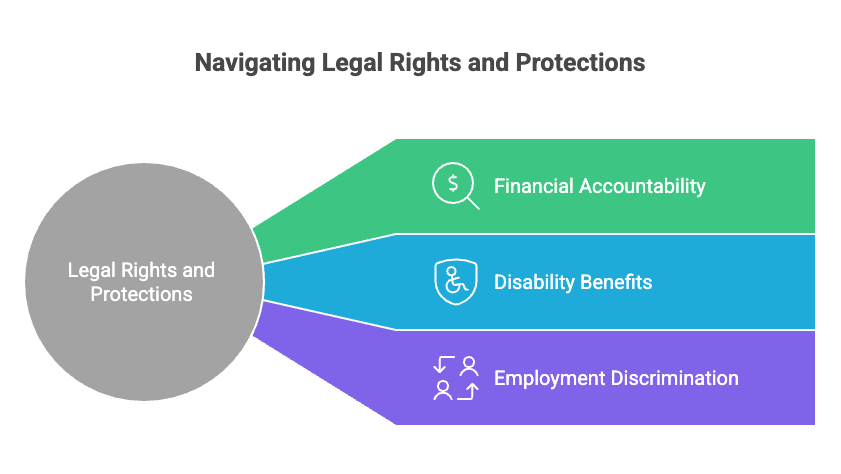
Your rights commonly include:
- Holding drivers, property owners, employers, or manufacturers financially accountable through insurance claims or civil lawsuits
- Protecting access to Disability Benefits when work capacity changes, while coordinating those benefits with other recoveries
- Challenging Employment Discrimination if an employer retaliates, refuses reasonable accommodations, or unlawfully limits your opportunities
You are entitled to a process that respects your dignity, documents your losses, and pursues full, fair compensation under Florida rules.


Steps to Take After a Miami Amputation Injury
After a Miami amputation injury, you must seek emergency medical care immediately, because timely treatment protects your health and establishes crucial medical records.
You should document the incident and your injuries, including photos, witness information, and all related reports, so you can preserve accurate evidence.
You’ll also want to consult a Miami attorney as soon as possible, since early legal guidance can protect your rights and strengthen your claim.
Seek Emergency Medical Care
Get emergency medical care immediately, because fast treatment can preserve more tissue, control bleeding, and reduce the risk of infection and shock.
Call 911, stay calm, and follow the dispatcher’s instructions while applying direct pressure and keeping the injured person still.
If a limb is partially attached, support it in place rather than forcing movement, and avoid eating or drinking in case surgery is needed.
When responders arrive, give clear, concise information so they can set triage priorities and make sound transport decisions.
Ask whether a trauma center or facility with microsurgical capability is appropriate, and cooperate promptly with IV access, pain control, and wound protection.
If you locate the severed part, keep it cool and clean without freezing or soaking, and hand it to the medical team for rapid evaluation.
Document Incident And Injuries
Once you’re medically stable, you should document the incident and your injuries as thoroughly as possible, because early, accurate records often become the most reliable evidence later.
Write down what happened in clear, chronological order, noting the location, time, lighting, warnings, equipment involved, and everyone present to support timeline reconstruction.
Take dated photographs of the scene, hazards, and your injuries at regular intervals, including bandages, swelling, and surgical sites.
Save discharge papers, operative notes, prescriptions, and follow-up instructions, and keep a daily log of pain levels, mobility limits, and assistance you need while caring for others.
Collect contact information for witnesses, and request incident reports from employers or property managers.
Keep damaged clothing or devices, and avoid alterations, because evidence preservation depends on originality.
Consult A Miami Attorney
Thorough documentation gives you a solid factual record, but you’ll still need legal guidance to turn that record into a claim that protects your long-term interests.
Consult a Miami attorney promptly to avoid missing time-sensitive deadlines and to ensure evidence and witness accounts remain accessible.
You’ll clarify fault, evaluate insurance coverage, and identify all responsible parties, including contractors, property owners, or product manufacturers.
Bring your medical records, employment information, and all communications with insurers, then ask how the firm structures fees and retainer agreements.
You should also confirm whether the office offers bilingual services, so your family can participate fully, and decisions remain accurate.
By working with counsel early, you’ll protect your ability to secure resources that support recovery and continued service to others.
How a Miami Amputation Injury Lawyer Can Help You
Although an amputation can change every aspect of your life, a Miami amputation injury lawyer can step in quickly to protect your rights and position your claim for full compensation.
You don’t have to manage insurers, employers, or hospitals alone; your lawyer coordinates the process so you can focus on caring for your family and community.
Through teleconsultations, you can share records, ask questions, and make timely decisions without added travel.
Your attorney investigates the incident, preserves essential evidence, and identifies every responsible party.
They calculate damages carefully, then demand fair payment and negotiate from a position of strength.
If settlement efforts fail, they prepare your case for trial with a disciplined strategy.
- Gather documentation, witness accounts, and expert support
- Communicate with adjusters, providers, and opposing counsel
- Advance policy advocacy when unsafe practices threaten others

You’ll receive clear guidance, ethical representation, and prompt updates at each stage.
Long-Term Effects of Miami Amputation Injuries
After an amputation in Miami, you may face lifelong physical limitations that affect mobility, work capacity, and daily independence.
You’re also likely to experience psychological and emotional impacts, including anxiety, depression, or trauma-related symptoms that can disrupt relationships and routine.
Over time, you’ll contend with ongoing medical and financial needs, such as prosthetic care, rehabilitation, medication, and long-term support services.
Lifelong Physical Limitations
When an amputation changes how your body bears weight, balances, and moves, it can create physical limitations that don’t fade with time.
You may need ongoing gait training, strengthening, and periodic prosthetic adjustments to reduce strain on your back, hips, and remaining joints.
Even with excellent care, you may experience reduced endurance, slower walking speed, and limitations on lifting, kneeling, or climbing, which affect how you serve at home, work, and in your community.
You’ll also manage skin integrity, swelling, and fit issues that require daily monitoring and consistent routines.
Planning becomes part of mobility, including Adaptive Travel strategies for transportation, lodging, and accessibility.
Practical solutions like Assistive Fashion can improve comfort, stability, and safe transfers, while supporting independence in demanding environments.
Psychological And Emotional Impact
How do you rebuild a sense of safety and identity once an amputation reshapes your daily life in Miami?
You may move through shock, anger, and sadness, and still feel responsible to show up for family, coworkers, and neighbors who rely on you.
Acknowledge that grief isn’t weakness, it’s a human response to profound loss and change.
With grief counseling, you can name what happened, process triggers, and develop steady routines that support emotional regulation.
You’ll also face identity shifts, as roles and self-image adjust, sometimes faster than your confidence can follow.
Choose supportive communities, practice direct communication about boundaries, and set realistic goals that honor your values.
Over time, you can lead with empathy, serve others, and protect your own resilience.
Ongoing Medical And Financial Needs
Managing life after an amputation in Miami means planning for long-term medical care and the steady financial strain that often follows.
You’ll likely need ongoing wound management, specialty visits, prosthetic fittings, and physical therapy, and each stage can generate recurring bills.
You may also face replacement costs as sockets wear, devices evolve, or your body changes over time.
To keep serving your family and community, you must budget for Home Modifications, transportation, and paid assistance during recovery.
You can also benefit from Assistive Technology that supports mobility, work tasks, and daily routines, yet insurance may limit coverage or impose delays.
If someone else caused your injury, you shouldn’t absorb these burdens alone, and you can document your needs carefully to pursue fair compensation.
Proving Liability in Miami Amputation Medical Malpractice Injury Cases
Because medical malpractice cases involving amputations often turn on fine clinical judgments, proving liability in Miami requires more than showing a tragic outcome.
You must connect what the provider did, or failed to do, to an accepted standard of care, then show how that lapse led to the amputation.
You strengthen your claim by securing Expert Testimony from qualified physicians who can explain proper diagnosis, monitoring, infection control, and vascular management in plain, credible terms.
You also gather Causation Evidence, including records, imaging, lab trends, medication logs, and timelines that show when warning signs appeared and how delays or errors changed the clinical course.
When multiple clinicians are involved, you clarify roles, document handoffs, and identify who has decision-making authority.
You proceed with discipline and respect, so accountability serves patient safety and helps prevent similar harm to others.
Compensation for Miami Amputation Damages
Once you’ve established liability, the next step is to document the full scope of what the amputation has cost you, both financially and personally.
You should compile medical records, surgical bills, rehabilitation plans, prosthetic needs, and future care projections, then connect each item to the event that harmed you.
You’ll also want evidence of lost wages, diminished earning capacity, and practical expenses such as home modifications and transportation support.
Non-economic damages matter as well, because pain, disfigurement, loss of mobility, and reduced independence affect how you serve your family and community.
If the conduct was especially reckless or intentional, you may pursue punitive awards to promote accountability and protect others.
You should also address tax implications early, since some components of a recovery may be treated differently than others, which can affect planning and long-term stability.
The Statute of Limitations for Miami Amputation Injury Cases
Even if your amputation claim is strong on the facts, Florida’s statute of limitations can still bar recovery if you don’t file suit within the required deadline.
You should treat Filing Deadlines as a priority, because delay can erase your ability to seek justice for the harm you’ve endured and for the needs of those who depend on you.
In many negligence matters, Florida law generally allows 2 years to file, although the applicable period may vary depending on the incident, the defendants involved, and whether a wrongful death occurred.
You must also account for notice requirements that may apply to government entities, which can shorten your practical timeline.
In limited situations, the Discovery Rule may extend the start date when you couldn’t reasonably know the injury or its cause, yet courts apply it narrowly.
You serve others best by gathering records early and tracking every date carefully.
Why You Need an Experienced Miami Amputation Injury Lawyer
Meeting Florida’s filing deadlines protects your right to sue, but it doesn’t prove liability or secure full compensation on its own.
When you’re living with an amputation, you often feel called to protect your family and continue serving your community, so you need counsel that matches that responsibility with disciplined advocacy.
An experienced Miami amputation injury lawyer builds liability through prompt investigation, preservation of evidence, and coordination with medical and vocational professionals who can explain long-term limitations.
You’ll also need a damages plan that accounts for prosthetics, revisions, therapy, lost earning capacity, and lifelong care, not just today’s bills.
Your lawyer handles insurers’ tactics, limits harmful statements, and protects your case through careful Reputation management across claims communications and public records.
You also benefit from clear Fee structures that align incentives and reduce financial strain while the case develops.
With seasoned guidance, you can focus on recovery and purposeful service.
How to Choose the Right Miami Amputation Injury Lawyer for Your Case
How do you identify the right Miami amputation injury lawyer when the financial and medical consequences will follow you for years?
You start by confirming the lawyer has specific experience with catastrophic injury claims, including cases involving lifelong care, prosthetics, and loss of earning capacity.
You should also look for a track record of results and a readiness to take cases to trial when insurers refuse fair offers.
Next, evaluate Fee transparency. You’re entitled to clear, written terms on contingency percentages, litigation costs, and reimbursement terms, so you can plan responsibly and protect your family.
Then assess the communication style. Choose counsel who explains timelines, risks, and strategy in plain language, returns calls promptly, and treats you as a partner in decisions.
Finally, ask who’ll manage your case day to day, and confirm they’ll coordinate with medical and vocational experts to document harm accurately and fully.
About the Law Offices of Anidjar and Levine
Client-focused representation defines the Law Offices of Anidjar and Levine, a Florida personal injury firm that handles serious harm claims with the resources and discipline these cases demand.
When you face an amputation injury, you need counsel that treats your case as a mission of service, not a file number.
You’ll find a team that listens closely, explains options clearly, and moves your claim forward with purposeful urgency.
Their firm history reflects steady growth built on preparation, courtroom readiness, and consistent attention to the human impact of catastrophic loss.
You can expect structured case management, prompt communication, and coordination with medical and vocational professionals so that damages are documented with care.
Client testimonials often describe responsiveness, respectful guidance, and follow-through from intake through resolution.
If you’re seeking representation that supports your recovery while pursuing accountable parties, you’ll work with attorneys who measure success by the stability and dignity they help you restore.
Frequently Asked Questions
How Are Attorney’s Fees and Case Costs Handled in Amputation Injury Cases?
You’ll typically handle attorney’s fees through contingency agreements, so you don’t pay fees upfront, and your lawyer collects a percentage only if you recover compensation.
You’ll usually advance case costs, such as filing fees, records, experts, and depositions, then reimburse them from the settlement or verdict.
Your lawyer should also address medical liens, negotiate reductions when possible, and clearly itemize all deductions so you can serve your recovery responsibly.
Can I Switch Lawyers if My Current Attorney Isn’T Meeting Expectations?
Yes, you can switch lawyers if your current attorney isn’t meeting expectations.
You should review your fee agreement, then follow a clear termination process by sending a written notice and requesting your file.
You’ll also arrange a retainer transfer or an accounting, so funds held in trust are transferred appropriately.
If you’re committed to serving others, choose counsel who communicates promptly, respects your goals, and safeguards your case timeline.
Will My Case Require a Court Appearance, or Can It Settle Privately?
Your case may not require a court appearance, as many claims resolve through private settlement negotiations.
You’ll still prepare as if a trial is possible, since credible readiness often improves leverage.
If direct talks stall, you can pursue mediation, which provides a structured, confidential setting to reach an agreement.
You may appear in court only if liability or damages remain disputed, or if the other side refuses fair terms.
How Long Do Amputation Injury Cases Typically Take to Resolve in Miami?
Amputation injury cases in Miami typically resolve in 12 to 24 months, though some settle sooner, and complicated claims can take longer.
Your timeline depends on Medical recovery, since you shouldn’t finalize value before your condition stabilizes and future care becomes clear.
Investigation duration also matters, as you’ll need records, expert opinions, and liability proof.
If you stay organized and responsive, you’ll help your team move efficiently and serve others.
What Documents Should I Bring to My First Consultation With Your Firm?
Bring your Medical Records, including hospital notes, surgery reports, and therapy summaries, plus current prescriptions and bills.
Bring Accident Photos, any incident report, and contact details for witnesses, employers, and insurers.
Bring identification, health and auto insurance cards, and any correspondence you’ve received.
If you’ve kept a journal of symptoms or caregiving needs, bring it.
You’ll help us serve others by presenting accurate, complete information upfront.
—————————
After an amputation injury, you need clear guidance and decisive advocacy because the medical, financial, and legal stakes are high.
You can protect your claim by acting quickly, documenting treatment and losses, and avoiding statements that insurers may use against you.
Law Offices of Anidjar and Levine can investigate the cause, prove liability, and pursue full compensation for future care, lost income, and reduced earning capacity.
If your injury involves negligent treatment, consult a Miami Medical Malpractice Lawyer for additional guidance.
You don’t have to face this alone.


We Can Help.