




Suppose Rh isoimmunization harmed you or your child. In that case, the Law Offices of Anidjar and Levine can investigate missed screenings, delayed Rho(D) immune globulin, and negligent transfusions, then build a case with the assistance of maternal-fetal and transfusion experts.
You’ll get guidance on preserving records, proving causation, and pursuing compensation for medical care, future needs, and lost earnings. Early action protects deadlines and strengthens your claim.
Learn what evidence matters most—and how to position your case before crucial opportunities pass.
Speak with a Birth Injury Lawyer today.
Key Takeaways
- We investigate missed Rh immune globulin (RhIG) prophylaxis, delayed testing, and monitoring failures that led to maternal sensitization and fetal/newborn harm.
- Our team gathers and analyzes prenatal records, antibody titers, ultrasounds, and transfusion/lab data to map causation and liability.
- We coordinate expert reviews to compare care with guidelines, linking deviations to fetal anemia, hydrops, NICU stays, or long‑term disabilities.
- We preserve and organize evidence, quantify damages (medical costs, future care, lost income, pain), and negotiate with insurers while preparing for trial.
- Immediate support includes securing urgent MFM referrals, obtaining complete records, and escalating care if evaluation or RhIG timing is delayed.
How We Can Help With Your Rh Isoimmunization Injury Claim
Guide your claim with a legal team that understands the medicine, the timelines, and the standards of care governing Rh isoimmunization. We evaluate records, identify breaches in monitoring or prophylaxis, and map each decision to recognized guidelines. You’ll know what happened, why it mattered, and how we’ll prove liability and damages with clarity and discipline.
We coordinate expert reviews, develop precise chronologies, and secure testimony that translates intricate clinical data into clear findings. Our approach emphasizes patient counseling and risk communication, ensuring your story reflects how information should have been conveyed to protect mother and child. We document every missed warning, delayed test, and unaddressed risk, then quantify losses with methodical rigor.
We manage insurers and hospitals with firm advocacy, pursue settlement strategically, and prepare for trial from day one. Throughout, we uphold confidentiality, provide timely updates, and align our work with your mission to safeguard families and improve standards of care.
Understanding Rh Isoimmunization Injury Cases
Although every matter turns on its facts, understanding a Rh isoimmunization injury case starts with the clinical pathway that should have prevented sensitization and the points where care may have fallen short.
You begin by mapping prenatal care: timely blood typing, antibody screening, and appropriate Rh immune globulin at recommended intervals. You then review labor and delivery records for events that could trigger maternal sensitization, including invasive procedures and placental dysfunction that might enable fetal cells to enter maternal circulation.
You evaluate serial titers, ultrasound findings, and provider responses to rising risk, noting whether surveillance and interventions were escalated appropriately. You also assess documentation quality, informed consent, and communication between obstetrics, nursing, and maternal-fetal medicine.
Expert testimony links deviations from the standard of care to specific harms, such as fetal anemia or neonatal complications. Your goal is to translate intricate clinical data into clear causation, establishing accountability and supporting fair compensation.
Common Causes of Rh Isoimmunization Injuries
You should recognize that Rh isoimmunization injuries often stem from preventable breakdowns in care, including missed Rh screening early in pregnancy.
When clinicians delay Rhogam administration after sensitizing events or fail to provide adequate prenatal monitoring, your risk of antibody formation and fetal harm increases.
Transfusion incompatibility events, such as receiving mismatched blood products, can also trigger sensitization and lead to serious complications.
Missed Rh Screening
When prenatal care overlooks or delays Rh screening, preventable harm can follow, because this simple blood test is the gateway to timely Rh immunoglobulin (RhIg) prophylaxis.
You rely on clinicians to identify Rh incompatibility early, document it accurately, and act decisively. A missed screening represents a pivotal prenatal oversight, undermining risk assessment and allowing sensitization to develop unnoticed.
You’re entitled to orderly protocols, clear checklists, and confirmation of results in the first trimester, with re-evaluation after any event that increases fetal-maternal blood mixing.
Providers should verify maternal blood type, perform an antibody screen, and promptly communicate findings. When systems fail, your trust erodes, and the fetus faces escalating risks.
Rigorous screening safeguards families, supports informed decisions, and aligns care with established professional standards.
Delayed Rhogam Administration
Even brief delays in administering Rh immunoglobulin can convert a preventable risk into a lifelong injury, because sensitization can occur after a small, unrecognized fetomaternal bleed.
When you rely on clinicians to act promptly, timing matters. RhIG should be given within the recommended window after potential exposure events, including procedures, trauma, bleeding, or delivery. Delayed testing can compound the problem, allowing antibodies to form before protection is provided.
Postpartum prophylaxis must also be timely, accurately dosed, and documented, especially when neonatal blood type is confirmed.
When providers miss these deadlines, they breach standards designed to protect future pregnancies. You may face avoidable hemolytic disease risks in a subsequent child. Careful chronology, medical record review, and expert analysis can establish whether delay caused sensitization, guiding accountability and remedy.
Inadequate Prenatal Monitoring
Although Rh isoimmunization is often preventable, inadequate prenatal monitoring remains a common pathway to injury by allowing sensitization or fetal harm to develop unnoticed. When providers fail to schedule timely antibody screens, repeat titers, and ultrasound assessments, you lose critical opportunities to intervene.
Gaps in fetal monitoring can permit anemia, hydrops, or growth restriction to progress, while missed patient follow up allows rising titers or warning signs to go unaddressed. You’re entitled to coordinated care that tracks Rh status throughout pregnancy, documents changes, and triggers referral to a consultant when thresholds are met.
Proper monitoring includes clear counseling, accurate lab timing, and vigilant review after any sensitizing event. When systems break down, preventable harm occurs, and accountability becomes essential to protect future patients.
Transfusion Incompatibility Events
Frequently overlooked in Rh cases, transfusion incompatibility events create a direct path to sensitization and preventable injury. When a patient receives mismatched blood, fetal and maternal safety can be compromised, and the risk of Rh isoimmunization rises sharply.
You serve best by insisting on meticulous blood typing, rigorous antibody screening, and verified donor matching before any transfusion.
Hospitals must follow strict protocols, yet lapses occur when staff bypass crossmatch steps, ignore prior antibody records, or mislabel specimens. Those errors trigger transfusion reactions that can prime the immune system, leading to hemolysis in subsequent pregnancies.
You can identify negligence by examining documentation, witnessing chain-of-custody practices, and confirming corrective actions. When systems fail, swift investigation preserves evidence, protects future patients, and advances accountability.
Legal Rights of Rh Isoimmunization Injury Victims
Because Rh isoimmunization injuries often arise from preventable lapses in prenatal care, you have clear legal rights to pursue accountability and compensation when providers fail to meet the standard of care. Your rights are grounded in patient advocacy and medical ethics, which require accurate blood typing, timely antibody screening, and proper administration of Rh immunoprophylaxis.
When clinicians ignore protocols or documentation, the law allows you to seek restitution for maternal harm, neonatal injuries, and related economic losses.
You’re entitled to pursue claims for negligence, informed consent violations, and wrongful birth or life where statutes allow. Damages may include medical expenses, future care, lost earnings, and pain and suffering. Courts also consider how systemic failures burden families who serve their communities.
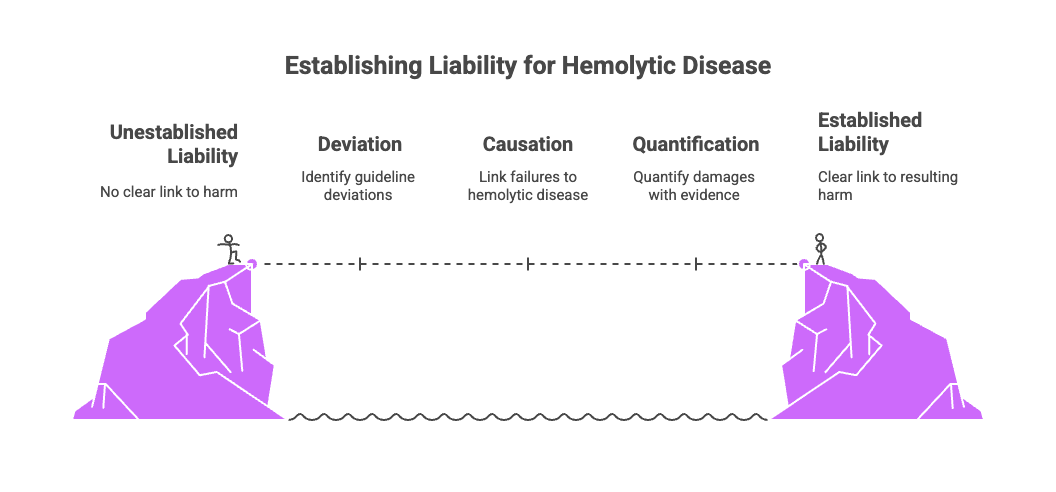
- Establish liability through deviations from clinical guidelines and expert testimony.
- Document causation linking failures to hemolytic disease and resulting harm.
- Quantify damages with life‑care planning, economic analysis, and credible medical evidence.
Steps to Take After a Rh Isoimmunization Injury
After any Rh isoimmunization injury, you should seek immediate medical care to protect your health and establish a clear clinical record.
You must document all symptoms, appointments, test results, and communications, keeping copies of medical records and bills in an organized file.
Then, consult an experienced attorney promptly, so you can evaluate liability, preserve evidence, and safeguard your legal rights.
Seek Immediate Medical Care
Prioritize prompt medical evaluation to protect your health and your baby’s well-being. If you suspect Rh isoimmunization, contact your obstetric provider or go to the nearest hospital immediately. Ask for an emergency referral to a facility equipped for maternal-fetal medicine, and request immediate stabilization if you experience concerning symptoms such as fetal movement changes, jaundice, or unusual fatigue.
Insist on a thorough assessment, including blood typing, antibody screening, and fetal monitoring. If indicated, discuss Rh immune globulin, ultrasound surveillance, and additional interventions to reduce fetal risk. Make sure a qualified consultant coordinates care, explains options, and outlines next steps, including potential inpatient monitoring.
If you happen to have delays, please escalate to the charge nurse or on-call consultant. Your swift, informed action supports safer outcomes and protects both mother and child.
Document Symptoms and Records
Immediate care sets the foundation, but you also need to create a clear record of what happened and how it affects you and your baby. Begin by requesting copies of every medical document, including lab results, ultrasound reports, discharge summaries, and medication lists.
Maintain organized folders, date-stamped, with brief notes on conversations and instructions.
Use home logbooks to track daily observations, including fetal movements, fatigue, swelling, bleeding, or changes in blood pressure. Build symptom timelines that link events to dates, treatments, and responses, ensuring patterns are visible and verifiable.
Save bills, travel receipts, and time-off records to document financial impact. Photograph visible symptoms and devices, and back up all files securely. Consistent documentation preserves accuracy, supports continuity of care, and strengthens your account.
Consult an Experienced Attorney
Start by lining up counsel with deep experience in Rh isoimmunization and perinatal negligence, because these cases hinge on nuanced timelines, test results, and standard-of-care decisions.
You need an attorney who understands prenatal screening, Rh immunoprophylaxis, and hospital protocols, and who can promptly preserve evidence.
Seek a firm that routinely litigates birth trauma and consent issues, since liability often turns on what was disclosed, when, and how.
Schedule a consultation quickly, bring organized records, and ask about strategy, expert networks, and statute limitations.
Confirm the lawyer’s trial experience and past results in maternal-fetal medicine disputes.
Make certain the fee structure is transparent, contingency-based, and ethical.
Choose counsel who communicates clearly, respects your caregiving priorities, and prioritizes accountability, corrective action, and long-term support planning.
How a Rh Isoimmunization Injury Lawyer Can Help You
Whether you’re confronting a diagnosis or piecing together what went wrong, an Rh isoimmunization injury lawyer can quickly assess the medical record, identify breaches in the standard of care, and protect your rights.
You receive clear guidance through intricate timelines, including lab interpretations, Rho(D) administration, and monitoring duties. Your counsel coordinates with experts to evaluate causation and damages, while advancing compassionate patient advocacy that honors your mission to serve family and community.
They’ll gather and preserve evidence, manage insurer communications, and position your claim for resolution without delay. With measured persistence, they negotiate fair compensation, and when necessary, litigate with precision.
- Analyze prenatal counseling, screening protocols, and deviations from guidelines to establish liability.
- Collaborate with maternal-fetal medicine and hematology experts to quantify harm and future needs.
- Structure claims for medical costs, lost income, caregiving burdens, and non-economic losses.

In each step, your lawyer safeguards your voice, reduces procedural risk, and pursues accountable outcomes.
Long Term Effects of Rh Isoimmunization Injuries
You need to understand how Rh isoimmunization can lead to lasting neurodevelopmental impairments, affecting cognition, motor skills, and learning over time.
You may also face complications from chronic anemia, including fatigue, growth issues, and increased susceptibility to illness that can persist into childhood or beyond.
Additionally, you should consider the risk of long-term hearing loss, which can impact communication, education, and overall quality of life.
Neurodevelopmental Impairments
Although immediate complications often draw the most attention, Rh isoimmunization can leave lasting neurodevelopmental impairments that shape a child’s future.
You may notice delays in language, attention regulation, executive functioning, and motor planning, often accompanied by sensory processing challenges.
Swift, coordinated early intervention helps protect milestones and reduces secondary harms.
You can pursue thorough evaluations, then align therapies that target speech, cognition, and fine and gross motor skills.
Your role matters.
Consistent parent training equips you to reinforce strategies at home, manage behaviors effectively, and advocate for the necessary services.
At school, request formal assessments and individualized school accommodations, including structured routines, assistive technology, and targeted therapies.
Document progress, preserve educational records, and track service gaps.
When negligence contributes to an injury, legal guidance helps secure resources that support long-term development and dignity.
Chronic Anemia Complications
Even after the crisis phase ends, chronic anemia linked to Rh isoimmunization can persist and quietly undermine growth, cognition, and overall stamina. You may see pallor, fatigue, poor feeding, and slowed weight gain, all of which strain caregiving routines and educational progress.
If the child experienced fetal hydrops, lingering organ stress can compound oxygen delivery problems, demanding vigilant follow-up.
You should expect periodic hemoglobin checks, reticulocyte counts, and targeted nutrition plans. Iron supplementation may be beneficial when iron stores are depleted; however, it must be balanced against the risk of hemolysis and guided by laboratory data.
Transfusion history, spleen size, and jaundice patterns inform strategy, as does developmental monitoring. By coordinating pediatric care, hematology, and school support, you safeguard function, reduce hospitalizations, and preserve opportunities for steady, independent growth.
Long-Term Hearing Loss
Persistent anemia and organ stress from Rh isoimmunization can also intersect with auditory health, leaving children at risk for long-term hearing loss.
You may notice delayed responses to sound, difficulties with word recognition, or persistent ear infections that compound early injury.
Early diagnostic testing, including newborn screening and follow-up audiology, helps you track subtle deficits and plan targeted support.
Intervention should be timely and coordinated.
Hearing aids can bridge gaps in perception, preserve language development, and reduce classroom barriers.
Pair amplification with Speech therapy, which strengthens articulation, receptive language, and social communication.
Monitor educational progress, request school-based accommodations, and maintain consistent audiology evaluations.
If negligent prenatal care contributed to this outcome, document medical records carefully, consult specialists, and seek legal guidance to secure long-term resources.
Proving Liability in Rh Isoimmunization Medical Malpractice Injury Cases
When you set out to prove liability in an Rh isoimmunization malpractice case, you must connect clear medical duties to specific breaches and resulting harm. You begin by defining the applicable standard of care for screening, prophylaxis, and follow-up.
Then you show how the provider’s conduct deviated from that standard, using precise records and protocols.
You’ll rely on expert testimony to explain what a competent clinician would’ve done and why the omission mattered. Proper causation analysis links the breach to sensitization, fetal compromise, or neonatal injury, without speculation.
Where records are incomplete, doctrines such as burden shifting may apply, compelling the provider to explain the gaps that impede proof.
You can also present objective metrics, such as timing of Rho(D) immune globulin and antibody titers, and quantify how far actions fell beyond acceptable variance, akin to a standard deviation from norms. Preserve all fetal monitoring, lab results, and referral notes to anchor liability.
Compensation for Rh Isoimmunization Damages
Quantify the full scope of losses so a settlement or verdict reflects both immediate and lifelong impacts of Rh isoimmunization. You should document medical expenses for NICU care, transfusions, phototherapy, and future interventions, as well as the costs of specialists, medications, and adaptive services.
Include non-economic damages, such as pain and suffering, disruption to maternal bonding, and the emotional toll of repeated monitoring and procedures. Capture lost wages and diminished earning capacity for caregiving demands, as well as household services you must replace.
Project future needs with expert opinions. Life-care planners can itemize therapies, neurodevelopmental evaluations, and assistive technologies. Genetic counseling costs, subsequent pregnancy monitoring, and preventive measures deserve inclusion—account for transportation, lodging near treatment centers, and care coordination time.
Strengthen your claim with meticulous records: bills, therapy notes, mileage logs, and employer statements. Present a cohesive narrative that ties each loss to the injury. By doing so, you position your case to obtain all-encompassing compensation that sustains long-term family stability.
The Statute of Limitations for Rh Isoimmunization Injury Cases
Securing full compensation means little if you file too late, so you must understand the statute of limitations that governs Rh isoimmunization injury claims. Each state sets strict filing deadlines for medical negligence and birth injury actions, often ranging from one to three years. You must identify the correct clock for the mother’s claim, the child’s claim, or both, since different periods may apply.
Because Rh injuries can remain hidden, discovery tolling may extend the deadline until you knew, or reasonably should’ve known, that negligence caused harm. Still, tolling is narrow, and courts strictly interpret it. You must also account for statute nuances such as pre-suit notice requirements, expert affidavits, and government-entity rules with shorter timelines.
Minority tolling can pause a child’s claim, yet some states cap it or impose outer “statutes of repose,” which bar suits after a fixed number of years regardless of discovery. Act promptly, document dates, and verify your jurisdiction’s exact requirements.
Why You Need an Experienced Rh Isoimmunization Injury Lawyer
Although every birth injury case deserves careful attention, Rh isoimmunization claims demand a lawyer with specific experience in obstetric negligence, immunohematology, and perinatal standards of care. You need counsel who understands how failures in screening, RhIG administration, and prenatal counseling can cascade into preventable hemolytic disease.
An experienced attorney will parse fetal monitoring records, lab data, and neonatal charts, then align them with professional guidelines to prove breaches and causation.
Seasoned representation also guarantees timely action, precise damage modeling, and coordination with hematology and maternal-fetal medicine experts. Your lawyer should translate intricate science into clear narratives, enabling judges and juries to grasp antibody titers, pivotal thresholds, and intervention timing.
Effective patient advocacy requires meticulous documentation of maternal harms, neonatal complications, and long-term care needs.
With a focused practitioner, you’ll secure access to specialists, preserve vital evidence, and advance a case strategy that honors families, promotes accountability, and supports safer obstetric practice.
How to Choose the Right Rh Isoimmunization Injury Lawyer for Your Case
Because Rh isoimmunization cases hinge on precise medical and legal judgments, choose counsel with a proven track record in obstetric negligence and immunohematology.
Request case outcomes involving hemolytic disease of the fetus and newborn, and verify experience in courtroom and negotiation settings. Evaluate the attorney’s command of medical records, expert testimony, and causation analysis, since your goal is accountability and improved care for families.
Prioritize rigorous client interviews, where the lawyer listens carefully, outlines investigation steps, and sets realistic expectations. Confirm access to qualified experts in maternal-fetal medicine, transfusion services, and life-care planning. Assess responsiveness, clarity in communication, and a respectful approach to your time and service mission.
Compare fee structures transparently. Understand contingency percentages, litigation costs, and what happens if recovery isn’t obtained.
Request a written engagement agreement with itemized expenses. Seek strong professional references, verified credentials, and disciplinary histories. Finally, select counsel who demonstrates meticulous preparation, ethical advocacy, and unwavering respect for the families you aim to serve.
About the Law Offices of Anidjar and Levine
Founded on client-centered advocacy and meticulous case preparation, the Law Offices of Anidjar and Levine offers all-inclusive representation in complex medical negligence matters, including Rh isoimmunization claims.
You receive a disciplined legal strategy, prompt communication, and a clear roadmap from intake through resolution.
The firm’s practice philosophy prioritizes your goals, safeguards your dignity, and advances accountability for preventable harm.
You’ll work with a team that coordinates with medical experts, reconstructs timelines, and documents damages with precision.
Their attorneys negotiate assertively, litigate decisively when needed, and maintain rigorous ethical standards throughout. You can expect responsive updates, transparent expectations, and guidance that empowers informed choices.
Committed to service beyond the courtroom, the firm invests in community outreach that educates families about patient rights and maternal-fetal health.
This engagement reflects a belief that legal advocacy should not only remedy past injuries but also reduce future harm. When your case demands focus and integrity, the firm stands ready to protect your interests and advance meaningful justice.

Frequently Asked Questions
Will My Case Require Expert Witnesses, and Who Pays Them?
Yes, your case will likely require the services of expert witnesses. You’ll need authorities to provide medical testimony, explain standards of care, and perform a rigorous causation analysis linking conduct to injury.
Typically, your attorney advances expert fees, including retainers, reports, and testimony costs, then recovers them from a settlement or judgment. If you lose, fee responsibility depends on your agreement.
Request a written budget, expected timelines, and confirmation on whether multiple authorities are required to serve your goals effectively.
How Are Medical Records Protected During Litigation?
Courts protect medical records through protective orders, HIPAA-compliant releases, and strict limits on document access. You’ll authorize disclosures, but only relevant records are produced, often with redactions for sensitive data.
Attorneys store files securely, use encrypted transmission, and restrict staff access. During discovery, parties mark records “confidential,” preventing public dissemination.
If a dispute arises, judges conduct in-camera reviews. You can request audit trails, ensuring accountability while preserving patient privacy throughout litigation.
Can I Pursue a Claim if the Baby Survived Without Obvious Injury?
Yes, you can pursue a claim even if the baby survived without apparent injury. You’ll assess whether negligence occurred and whether it caused compensable harm, including the costs of long term monitoring, specialized care, and the psychological impact on you and your family.
You should document follow-up testing, developmental evaluations, and counseling needs. Act promptly to preserve evidence, consult qualified experts, and evaluate statutes of limitations and damages specific to your jurisdiction.
What Happens if Multiple Providers Share Responsibility?
Multiple providers can share responsibility through shared liability, and you can pursue claims against each. You’ll identify all negligent actors, then prove causation and damages.
Courts or insurers resolve apportionment disputes by allocating fault percentages, which determine each provider’s payment. You’ll gather coordinated evidence, use expert testimony, and track timelines to avoid procedural pitfalls.
If one provider can’t pay, joint-and-several rules in some jurisdictions may guarantee full recovery, protecting your mission to serve vulnerable families.
————————-
You don’t have to navigate a Rh isoimmunization injury alone. Our team will review prenatal care, secure critical records, consult with leading experts, and develop a precise, evidence-based claim.
We’ll pursue compensation for medical treatment, long-term care needs, lost income, and pain and suffering, while protecting your deadlines and rights.
Contact the Law Offices of Anidjar & Levine for a free consultation.
We’ll assess your case, explain your options, and act swiftly to pursue the accountability and resources your family deserves.
Learn more with our Birth Injury Lawyer resource.