




You need a Fort Lauderdale vehicle fire injury lawyer who moves quickly to secure the vehicle, preserve evidence, and identify all responsible parties.
The Law Offices of Anidjar and Levine coordinates origin-and-cause experts, retrieves onboard data, manages insurers, and prepares your claim as if for trial to strengthen negotiations.
We document injuries, wage loss, and future care, meet strict deadlines, and pursue drivers, repair shops, and manufacturers. Don’t authorize repairs or disposal.
Act promptly to protect your rights, and you’ll see how we position your claim for success.
Learn more by contacting our Fort Lauderdale Car Accident Lawyer team.
Key Takeaways
- Rapidly preserves the vehicle and scene evidence, coordinates origin-and-cause experts, and maintains chain of custody to prove how the fire started.
- Manages all insurer and manufacturer communications, negotiates from a trial-ready posture, and structures demands to maximize compensation.
- Builds a verified damages portfolio, documenting medical expenses, lost wages, pain and suffering, and future care needs.
- Files timely claims under Florida deadlines, identifies all responsible parties, and handles notices to manufacturers, suppliers, and service providers.
- Advises clients to avoid repairs or disposal, secures reports, EDR/telematics, and photographs, and arranges towing to a secure facility.

How We Can Help With Your Fort Lauderdale Vehicle Fire Claim
From the moment you contact our firm, we move quickly to protect your rights and position your vehicle fire claim for success. You’ll receive clear guidance from the outset, with purposeful steps to secure evidence, document injuries, and establish damages.
We coordinate with investigators and experts to ensure your claim reflects the full scope of losses, including future care and economic harm.
You can expect disciplined client communication at every stage. We explain options, set expectations, and answer questions promptly, so you remain informed and empowered to make decisions that align with your values. Our settlement strategies are data-driven and responsive, calibrated to the insurer’s posture and the strength of the record.
We prepare every case as if it will proceed to trial, which strengthens your negotiating position and protects your leverage. Throughout, we manage deadlines, handle adjuster interactions, and structure demands to maximize recoverable compensation while minimizing delays and unnecessary disputes.
Understanding Fort Lauderdale Vehicle Fire Cases
Although every vehicle fire is unique, Fort Lauderdale cases share recurring causes, legal standards, and proof challenges you need to anticipate early. You must identify responsible parties promptly, preserve physical evidence, and document injuries with precision.
Florida negligence law requires showing duty, breach, causation, and damages, while product liability may apply if a defect fueled ignition or spread. You should also account for comparative fault and potential spoliation issues.
Early investigation is decisive. Secure photos, video, and witness statements, and request incident and fire reports. When vehicle arson is suspected, coordinate with authorities but retain origin-and-cause experts independently.
Chain-of-custody records, fuel system components, and onboard data help establish ignition sequence and heat propagation.
Your safety actions matter too. Evidence of timely passenger evacuation, use of fire extinguishers, and adherence to emergency protocols can demonstrate reasonable care. Finally, calculate damages exhaustively, including burns, inhalation injuries, lost income, rehabilitation, and future medical needs.
Common Causes of Fort Lauderdale Vehicle Fires
You should understand the leading triggers of vehicle fires in Fort Lauderdale, including fuel system leaks that allow gasoline or diesel to ignite, and electrical short circuits that produce sparks and heat.
You also face risks from overheated engines, where failed cooling components or low coolant can cause flammable fluids and materials to combust.
Finally, defective aftermarket parts can introduce improper wiring, poor fittings, or substandard materials, creating hidden fire hazards that demand careful investigation.
Fuel System Leaks
Amid Florida’s heat and heavy traffic, fuel system leaks are a leading ignition source in Fort Lauderdale vehicle fires. You face a heightened risk when gasoline escapes under pressure, vaporizes, and comes into contact with hot engine components. Small drips can pool beneath the vehicle, while a flawed fuel pump may spray atomized fuel, accelerating ignition.
Aging lines, degraded seals, and tank corrosion often create hidden pathways for leaks that worsen with vibration and road debris.
You can serve others by recognizing early warning signs and encouraging prompt maintenance. Look for fuel odors after parking, visible wetness near lines, or sudden drops in fuel economy. Document repairs, preserve damaged parts, and photograph the scene.
These steps help establish evidence of the defect and protect injured motorists’ rights.
Electrical Short Circuits
Fuel leaks aren’t the only sparks waiting under the hood; electrical short circuits also ignite many Fort Lauderdale vehicle fires. You face hidden risks when damaged conductors, loose connections, or failed relays let current travel unintended paths, generating intense heat in seconds.
Battery corrosion accelerates these failures by increasing resistance, which can overheat terminals and melt nearby components. Frayed or pinched wiring insulation exposes bare metal, allowing arcing to ignite plastics, carpeting, or fuel vapors.
You can protect yourself and others by recognizing early warning signs. Watch for flickering lights, burning odors, blown fuses, or hot-to-the-touch fuse boxes. Address aftermarket wiring that lacks proper fusing or strain relief.
Preserve evidence after a fire, document recalls and service records, and seek legal guidance to identify liable parties and pursue compensation.
Overheated Engines
Overheating turns an ordinary drive into a fire hazard, as engine temperatures spike and ignite surrounding materials.
You may see early warning signs, including a rising temperature gauge, steam from the hood, or a sweet odor signaling coolant degradation.
When coolant loses effectiveness, heat transfer fails, metal components expand, and flammable fluids can come into contact with hot surfaces.
If ignored, thermal runaway can occur, accelerating heat buildup and causing a flash fire.
Act decisively to protect yourself and others. Pull over safely, shut off the engine, and move bystanders away.
Don’t open the radiator cap or the hood fully, as oxygen can intensify flames.
Schedule prompt inspections for leaks, faulty thermostats, and failing water pumps.
Document maintenance and symptoms, because precise records support accountability after a vehicle fire.
Defective Aftermarket Parts
Cut corners on aftermarket parts, and you can unwittingly turn your vehicle into a fire risk. Low-quality electrical harnesses, fuel system pieces, and brake components may overheat, leak, or spark under normal loads.
Counterfeit components often look legitimate, yet lack proper insulation, heat tolerance, and pressure ratings. When you serve others by transporting passengers or goods, these failures endanger everyone around you.
To reduce risk, verify certifications, demand traceable supply chains, and have qualified technicians install and test each component. Keep receipts, packaging, and inspection reports, as they support claims. If a fire occurs, aftermarket liability may extend to sellers, distributors, and manufacturers who placed unsafe parts into commerce.
Prompt investigation, evidence preservation, and expert analysis can reveal defects, establish causation, and protect your rights.
Legal Rights of Fort Lauderdale Vehicle Fire Victims
Assert your rights promptly to preserve your ability to seek full compensation after a Fort Lauderdale vehicle fire. You’re entitled to pursue damages from every responsible party, including negligent drivers, manufacturers, repair shops, and property owners.
Florida law permits recovery for medical costs, lost income, pain and suffering, and future care needs. When fires occur in parking structures or rental properties, landlord liability may arise for unsafe conditions or code violations.
You also retain protections during insurance disputes, ensuring carriers honor policy benefits and act in good faith.
Act fast after a vehicle fire to secure full compensation and hold every negligent party accountable.
- Hold all negligent actors accountable, including manufacturers for defects, mechanics for improper repairs, and property owners for hazardous premises.
- Seek full economic and non‑economic damages, incorporating long‑term rehabilitation, vocational losses, and disfigurement impacts.
- Enforce policy rights in insurance disputes, demanding fair valuation, prompt payment, and transparency in claim handling.
- Preserve evidence and legal claims through timely notice, careful documentation, and adherence to Florida’s statutes of limitations.

Steps to Take After a Fort Lauderdale Vehicle Fire
After a vehicle fire in Fort Lauderdale, you should prioritize safety by moving to a safe location, checking for injuries, and avoiding reentering the vehicle.
Call 911 immediately to report the fire, request a medical evaluation, and ensure the incident is documented by first responders.
Once safe, document and preserve evidence by photographing the scene and vehicle, collecting witness information, and avoiding repairs or alterations until an investigation can occur.
Prioritize Safety First
Though every vehicle fire unfolds differently, your first priority is to protect life and prevent further harm. Move everyone away from the vehicle quickly, guiding children, older adults, and injured persons first.
First responders document the incident. Apply clear evacuation protocols: exit, create a distance of at least 100 feet, and position people upwind to avoid toxic smoke. Turn off the ignition if it’s safe, and leave belongings behind.
For burn prevention, keep hands and clothing away from hot metal, leaking fluids, and deployed airbags. Warn bystanders not to open the hood, as this can intensify the flames. If a small fire is outside the engine compartment and you’re trained, use a Class B or C extinguisher from a safe stance, aiming at the base, then retreat and reassess conditions.
Call 911 Immediately
Even once everyone is at a safe distance, call 911 immediately to report the vehicle fire, injuries, and the location, using clear landmarks. Stay calm and follow the emergency protocol, because early notification speeds the arrival of firefighters, paramedics, and law enforcement.
Provide your name, callback number, the nearest intersection or mile marker, and the number of people who may need medical help.
During dispatcher communication, speak clearly, answer questions directly, and don’t disconnect until told to do so. Describe visible flames, smoke color, explosions, leaking fluids, or downed wires, as these details guide the appropriate response. If conditions change, update the dispatcher promptly.
Keep bystanders clear, and assist injured people only within your abilities. Your decisive call helps protect lives, preserves the scene, and prevents secondary hazards.
Document and Preserve Evidence
With safety secured and first responders en route, start preserving evidence that may determine cause, fault, and insurance coverage.
Photograph the vehicle, the fire pattern, nearby debris, fluid trails, and roadway markings from multiple angles. Record the time, weather, and any witness statements, capturing names and contact information. Save damaged parts, clothing, and devices in clean containers, and avoid altering them.
Request the incident report number, and note which agencies respond. Ask that the vehicle be towed to a secure facility, not a salvage yard, to preserve the chain. Don’t authorize repairs or disposal.
If possible, document thermal imaging readouts or note which unit performed them. Preserve digital data, including dashcam footage and vehicle telematics, and backup files in multiple locations.
How a Fort Lauderdale Vehicle Fire Injury Lawyer Can Help You
Because vehicle fire cases involve unique technical and legal issues, a Fort Lauderdale vehicle fire injury lawyer can quickly take control of your claim and protect your rights from the outset. You’ll receive disciplined guidance from initial intake through resolution, grounded in careful client counseling and a purpose-built settlement strategy. Your attorney coordinates investigations, preserves vital evidence, and manages communications so you can focus on recovery and service to those who rely on you.
A dedicated Fort Lauderdale advocate preserves evidence, manages insurers, and safeguards your rights from day one.
- Conduct a rapid scene and vehicle assessment, coordinating experts in fire origin, defect analysis, and causation.
- Build a thorough damages portfolio, documenting medical costs, wage losses, and support needs with verified records.
- Work with insurers and manufacturers, negotiating from a position of strength while preparing for trial from day one.
- File timely claims, meet statutory deadlines, and pursue all responsible parties, including component suppliers and service providers.

You gain a steady advocate who clarifies each step, protects leverage, and drives your case toward a just, efficient outcome.
Long Term Effects of Fort Lauderdale Vehicle Fires
You may face chronic burn complications, including neuropathic pain, contractures, and recurrent infections that require ongoing medical management.
You could also experience a lasting psychological trauma aftermath, with symptoms such as PTSD, anxiety, and sleep disturbances that impair daily functioning.
Additionally, you must consider respiratory damage risks from smoke and toxic inhalation, which can lead to chronic bronchitis, reduced lung capacity, and long-term monitoring needs.
Chronic Burn Complications
Although emergency care can be lifesaving after a Fort Lauderdale vehicle fire, the long-term complications of burn injuries often define your recovery. You may face persistent neuropathic pain, driven by damaged nerves that misfire and amplify sensation.
Contractures can limit mobility, pulling joints tight and complicating daily tasks, while recurrent infections and delayed wound healing demand vigilant follow-up.
Effective burn scar management becomes vital, combining pressure garments, silicone therapy, laser treatments, and, when needed, surgical revision.
You’ll also steer through itch, thermoregulation issues, and sun sensitivity that require year-round protection.
Multidisciplinary care—plastic surgery, physical and occupational therapy, and pain consultant—helps restore function and dignity.
Documenting complications, appointments, and expenses protects your rights, supports informed decisions, and positions you for all-inclusive compensation.
Psychological Trauma Aftermath
Physical recovery tells only part of the story; burns from a Fort Lauderdale vehicle fire often leave a lasting psychological imprint that shapes daily life long after wounds close. You may experience post-traumatic stress, intrusive memories, or heightened startle responses, which can undermine sleep, concentration, and trust in everyday routines.
Depression and anxiety frequently follow, particularly when scarring alters self-image and social engagement. You serve others best when you first protect your own mental stability.
Effective coping strategies begin with evidence-based therapy, including trauma-focused counseling and cognitive behavioral techniques. Structured breathing, mindfulness, and guided exposure can reduce triggers and restore confidence.
Support groups connect you with peers, while family education strengthens understanding. Document symptoms, adhere to treatment plans, and coordinate with medical and legal teams to safeguard recovery and future stability.
Respiratory Damage Risks
Beyond the immediate flames, inhalation of superheated air, smoke, and toxic combustion byproducts can inflict lasting harm on the respiratory system after a Fort Lauderdale vehicle fire. You may face airway inflammation, scarring, and chronic bronchitis from smoke inhalation, especially when heat and chemicals burn delicate tissues.
Particulates and acids can trigger persistent coughing, wheezing, and reduced lung capacity, undermining your ability to work and serve others safely.
Thermal injury can cause airway swelling and obstruction hours after exposure, requiring vigilant monitoring and prompt treatment. Carbon monoxide and cyanide poisoning may also impair oxygen delivery, leading to headaches, confusion, or long-term cognitive decline.
Document every symptom, follow pulmonary rehabilitation, and secure expert evaluation. By acting decisively, you protect your health and strengthen your legal claim.
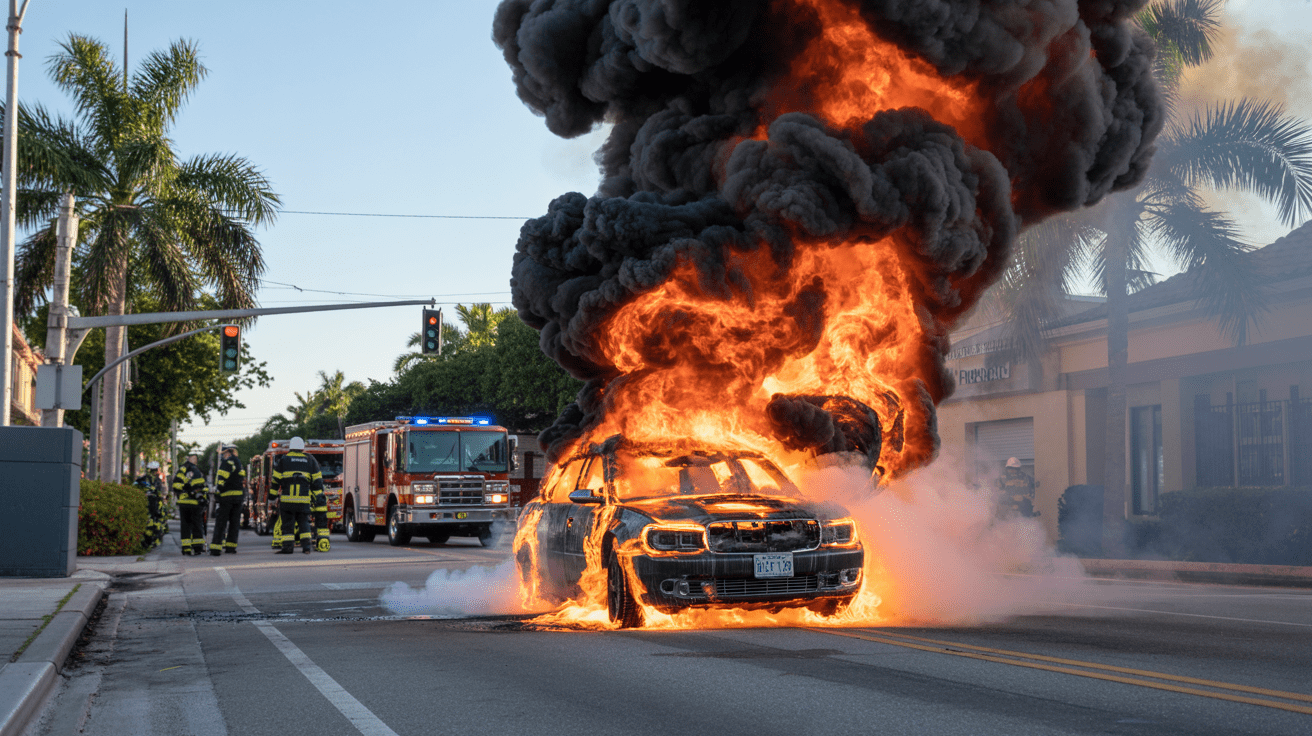
Proving Liability in Fort Lauderdale Vehicle Fire Car Accident Cases
Pin down liability in a Fort Lauderdale vehicle fire case by assembling facts, not assumptions. You begin with a disciplined scene examination, documenting burn patterns, ignition sources, and vehicle damage. Preserve the car, collect surveillance footage, and secure 911 recordings.
Obtain the fire marshal’s report, then pursue an independent arson investigation if the origin appears suspicious. Your goal is to identify human error, product defects, or third-party negligence that ignited or intensified the fire.
Interview eyewitnesses quickly, while memories are reliable. Retrieve event data recorder information, phone metadata, and maintenance records. Analyze recalls and technical service bulletins to expose fuel system, electrical, or battery failures. When applicable, retain experts in fire cause and origin, human factors, and automotive engineering.
Trace responsibility across all actors: reckless drivers, negligent repair shops, parts manufacturers, and property owners with unsafe premises. Build a clear causation chain, corroborate it with qualified testimony, and lock it in through organized, verifiable evidence.
Compensation for Fort Lauderdale Vehicle Fire Damages
With liability grounded in evidence, the next step is converting that proof into full and fair compensation for every loss the fire caused.
With liability established, the focus shifts to securing full, fair compensation for every fire-related loss.
You can pursue economic damages for medical care, rehabilitation, prosthetics, and future treatment, as well as wage loss, diminished earning capacity, and out-of-pocket expenses.
Property losses include the vehicle, personal items, and emergency towing or storage fees. Non-economic damages cover pain, mental anguish, scarring, disfigurement, and loss of enjoyment of life.
You also may seek punitive damages when conduct is egregious, including cases tied to defective components or intentional acts uncovered through arson investigations.
We structure claims to document each category, using experts to quantify future costs and to support the link between the fire and your injuries.
Insurance disputes often arise over coverage exclusions, total loss valuations, and medical causation. We resolve them by presenting authoritative reports, negotiating firmly, and, when necessary, litigating to protect your rights and maximize recovery.
The Statute of Limitations for Fort Lauderdale Vehicle Fire Cases
Although your recovery should be the priority after a vehicle fire, Florida’s statute of limitations sets strict deadlines that can determine whether your claim survives. You must act within the applicable statute deadlines, or a court will likely dismiss your case.
In many negligence actions involving vehicle fires, Florida law generally provides two years from the date of injury to file suit, though exceptions may alter this period. Claims involving wrongful death, governmental entities, or product defects can trigger different filing timelines, notice requirements, or tolling rules.
You protect others and yourself by preserving evidence early. Document the scene, secure medical records, and identify all potentially responsible parties before time erodes your claim. Track every deadline on a calendar, and confirm whether any pre-suit notice is required.
If an insurer engages in delay, don’t let settlement talks cause you to miss the filing date. Timely action preserves leverage, safeguards your rights, and positions your case for a fair resolution.
Why You Need an Experienced Fort Lauderdale Vehicle Fire Injury Lawyer
Because vehicle fire cases involve elaborate fact patterns and aggressive insurers, you need a Fort Lauderdale attorney who understands fire causation, product defect theories, and Florida’s evidentiary and procedural rules.
An experienced lawyer recognizes how small details, like post-crash fuel system failures or aftermarket modifications, can establish liability. They also secure the scene, preserve spoliation-sensitive parts, and coordinate timely inspections that protect your rights.
You’ll face Insurance disputes that demand strategic negotiation and, when necessary, decisive litigation. A seasoned advocate develops a cohesive theory using Expert testimony from fire investigators, mechanical engineers, and medical specialists, translating complicated findings into clear, admissible evidence.
Your attorney manages records, subpoenas, and discovery, ensuring deadlines are met and defenses are anticipated.
This level of counsel also quantifies damages precisely, accounting for future care, vocational losses, and pain linked to burns and smoke injuries. With professional guidance, you can focus on healing while your case is built for maximum accountability and recovery.
How to Choose the Right Fort Lauderdale Vehicle Fire Injury Lawyer for Your Case
Before you hire anyone, define the intricacy of your case and match it to a lawyer’s demonstrable experience in vehicle fire litigation. Ask how often they’ve handled fuel system failures, thermal burn injuries, or post-crash fire causation, and request case results that reflect comparable fact patterns. Verify their credentials, trial readiness, and access to fire origin-and-cause experts, biomechanical consultants, and reconstruction authorities.
Evaluate client communication from the first call. You should receive timely updates, clear explanations, and direct access to the attorney—not only staff. Discuss the fee structure in detail, including contingency percentages, litigation costs, expert fees, and how expenses are advanced and reconciled. Transparency here prevents disputes and protects your recovery.
Assess workload and resources to guarantee prompt investigations, preserved evidence, and coordinated medical documentation. Check independent reviews and disciplinary history, then confirm there are no conflicts. Finally, choose the attorney who demonstrates integrity, strategic clarity, and a service mindset aligned with your goals.
About the Law Offices of Anidjar and Levine
Having identified what to look for in counsel, you’ll find the Law Offices of Anidjar and Levine meet those standards with a focused, resource-driven practice. You work with a team that prioritizes responsiveness, clear communication, and disciplined case management.
The firm’s attorneys prepare each matter as if it will go to trial, which strengthens negotiations and safeguards your rights when the stakes are high.
You’ll appreciate a service model centered on your recovery. The firm coordinates medical care, meticulously documents losses, and pursues every liable party, including manufacturers, maintenance providers, and insurers.
Their client testimonials highlight consistent follow-through, respectful guidance, and meaningful results. You’re never left guessing about next steps, timelines, or expectations.
Beyond the courtroom, their commitment to community outreach reflects values you share—supporting safety initiatives, education, and local partnerships.
This culture reinforces a mission-driven approach to advocacy. When you seek principled representation, you gain a firm that blends legal precision, practical resources, and unwavering accountability.
Frequently Asked Questions
What Documentation Should I Bring to My Initial Consultation?
Bring identification, the accident report, medical records and bills, photographs of the scene and injuries, and witness contact information.
Include Insurance policies, claim numbers, and all correspondence with insurers.
Provide Repair estimates, towing and rental receipts, and vehicle ownership documents.
Share pay stubs or tax records showing lost income, plus a written account of events and pain.
Compile prior medical histories relevant to injuries.
Organize everything chronologically, using folders, so your consultation proceeds efficiently and accurately.
Can You Assist With Rental Car and Temporary Transportation Needs?
Yes. You’ll receive guidance coordinating rental cars, public transit, or ride-hailing, and we’ll pursue rental reimbursement through applicable insurance. We’ll review coverage limits, negotiate with carriers, and document expenses to protect your out‑of‑pocket costs.
If your home or vehicle loss disrupts daily life, we’ll also assist with temporary relocation logistics, including short‑term housing referrals. Throughout, you’ll get clear instructions, timely updates, and decisive advocacy to secure prompt, practical transportation solutions.
How Are Medical Liens Handled After a Settlement or Verdict?
Medical liens are paid from settlement or verdict funds before you receive net proceeds. You must identify all lienholders, verify balances, and resolve medical subrogation claims from health insurers, Medicare, Medicaid, or providers.
Through lien negotiation, you seek reductions based on statutory rights, hardship, or procurement-cost offsets. After agreements, funds are disbursed: attorney fees and costs, lien payments, and then your net.
You’ll maintain documentation, obtain written releases, and make certain no residual obligations remain.
Will My Health Insurance Affect My Vehicle Fire Claim Recovery?
Yes, your health insurance can affect your vehicle fire claim recovery. Your plan may assert subrogation or reimbursement rights, which can affect insurance priority and coverage coordination.
If your insurer pays first, it may seek repayment from your settlement, reducing your net recovery. ERISA or Medicare rules can strengthen these claims.
You should document all payments, verify the policy language, and negotiate reductions where appropriate to preserve funds for care and restore resources to support your responsibilities.
Do You Work With Bilingual Staff for Spanish-Speaking Clients?
Yes, we work with bilingual Spanish-speaking staff to ensure you’re understood at every stage. You’ll communicate in your preferred language, receive clear explanations, and sign documents with full confidence.
We prioritize cultural competence and respect your values, family roles, and communication preferences. You won’t rely on ad hoc interpreters, and we maintain confidentiality.
We coordinate translations for meetings, medical records, and negotiations, so your voice remains central and your interests are protected with precision.
Conclusion
You deserve skilled counsel to protect your rights after a Fort Lauderdale vehicle fire.
With prompt investigation, careful evidence preservation, and strategic advocacy, you can pursue compensation for medical bills, lost income, and pain and suffering. Act quickly to meet deadlines and strengthen your claim.
An experienced attorney will identify liable parties, negotiate assertively, and litigate when necessary. If you’re ready to move forward, contact the Law Offices of Anidjar and Levine for a free consultation and focused, results-driven representation.
Learn more here: Fort Lauderdale Car Accident Lawyer